Whoops. A little trigger happy! I guess I needed to go to Paris sooner than planned :-)!
Even now, the City of Light beckons. The fruit grocer still mans his post, providing fresh produce to shoppers who leave their flats for essentials. Walks/outside time is limited to 30 minutes per day. Police fine those who flout these restrictions.
But the resolve, vivid color, and poetry of French life continues even in this adjusted, more limited world.
Here is an information sign from Paris: “I stay home, you stay home, he stays home, she stays home, and life will become beautiful again!”
In the evenings, neighbors across Paris open their windows and wave to each other. Everyone is craving connection and a reprieve from this feeling isolation (new phraseology to temper that sense of overwhelm from isolation is “physical distancing” instead of “social distancing,” but let’s be honest, call it what you will I’ve barely left my house in 3 weeks and I know it). Still, it helps to try to focus on the notion of remaining social while distant.
The other night my family sat around the dinner table and shared our rose (positive), thorn (negative), and bud (what we are looking forward to) for the day. We all said we were looking forward to when this quarantine period ends and the tsunami passes over. But I want to rephrase that so it’s more in the moment when we do that exercise again and ask instead, “what about this quarantine period will you miss when it’s over?”
What are you craving when you return to “normal”? What will you miss about these slow, quiet quarantine days?
France reads: The Little Paris Bookshop by Nina George is a very sweet trip down the Seine surrounded by books and a main character, Monsieur Perdu with a penchant for prescribing books for the hardships of life to mend hearts and souls. What do you think Monsieur Perdu would prescribe for today? Perdu means lost in French. Anyone else feeling a little perdu these days?
And a delicious French-ish movie is Chocolat (just the way it’s said makes my mouth water. Plus, I mean, chocolate is really one of the saving graces of these times.)
Let’s zip up across the border to the United States now and do a deep dive on how things are faring there. There’s a lot of good stuff and a lot of questionable stuff happening, both in terms of policies and initiatives as well as my state of mind. For reference (and a splash of color!), here it is:
Personally, I have begun to notice that I hit a WALL around 3pm. And that’s when all the positivity and good cheer and we-got-this come crashing down. I have been observing this disaster-in-the-making for the past couple of days. And I think I have the data I need to try something new. Before I get all hyperventilated and claustrophobic and panicky and irritable I am attempting to catch myself spiraling down the wormhole and NO I am not going to stop myself or judge myself or tell myself I am a bad person or that I need to be tougher and just stick it out. Nope. I am going to call a Mommy time out and catch my breath. Alone in my room. For as long as I need. So far, I really only need 5 or 10 minutes. But the critical part is knowing you need to exit stage left, how to excuse yourself, and how far gone you are by the time you do so. That’s where I need practice.
I share this because I spend a lot of time looking on the bright side and trying to find the silver lining in everything. But I’d never want anyone to think that I don’t have a deep well of vulnerability and moments of hopelessness or anxiety or grief, too. We are all going through those moments now, probably more regularly than usual. The trick is to catch it and notice it and figure out how to take care of yourself amidst all of this, too.
For me, I have to laugh because I can hear in my mind my mom and my aunt telling me one of their favorite stories about me as a little girl. They would say, smiles on both of their faces, “It was Thanksgiving and we were all together in the house on Rural Lane. When you were a little girl, maybe 5 years old, you were sent to your room for something or other. About 20 minutes later you brought yourself back downstairs and announced, “I feel much better now.'” They would laugh and look at each other with dancing eyes, remembering what a precocious (and surely adorable and maybe nearly perfect – ha!) child I was and that moment together as they shared it with me.
What I recognize from that story is that I am the SAME EXACT PERSON now. I often don’t even need 20 minutes, but I DO need time just to myself and I always have. So, if no one is going to send me to my room, I am going to have to do it myself! And that knowledge of self and honoring it, my friends, is what will help us get through this with our sanity and relationships not only intact, but quite probably stronger. This is such good and important information about who we are and how we work.
So that’s the state of my mind here. But you should also know about some really cool and beautiful projects happening in these parts:
Have you heard of the #frontstepsproject yet? Area photographers are going out into the world and capturing families (from 10 feet away) on their front porches. In exchange for the quick but professional family photo, the participants are encouraged to make a donation to their local food pantry. Not only does this mean that my Instagram and FB feeds are filling up with smiling family portraits – teenagers and all! – but it’s breaking down that sensation of isolation. Read more here!
Another really great initiative that was started in my neighborhood are Window Walks. Kids create artwork along a certain theme – last week was rainbows, this week hearts, and next week bears. As families take their daily walks to get some fresh air, this turns into a community scavenger hunt of sorts as kids delight in counting how many rainbows (hearts, or bears) they can find.
And how about WBUR’s Kind World newsletters? Or the effort to sew home-made face masks? And/or collect and deliver needed medical equipment (check out #getusPPE). Or about the letters children have written to elders confined to their assisted living homes at this time? Have you heard about that? What a wonderfully touching and human way to reach out to people who are the most vulnerable, most likely to be alone, and almost completely isolated.
Once again, I implore you, to breathe. And wash your hands. And try to stick to a routine. And, if you have kids at home, talk to them about this experience, because we are ALL living it and wrestling with it in our own ways. Let their creativity lead your days. Sometimes.
Touching down in Guatemala City, you’ll be surprised to see how modern the airport is. I was expecting it to be really rugged since Guatemala is a “developing country,” but it’s not – the airport anyway.
Oh, look! A mariachi band is waiting for us! You can see the glimmering floors, the drop ceiling and recessed lighting, the very modern arrivals area in the below video.
We are going to have a real adventure and take a chicken bus to a more rural part of Guatemala, mostly because I just love saying chicken bus and because, well, look at it! The chicken bus is a retired yellow school bus that migrated from the United States to Guatemala where it was given new life and transformed with wild paint, flashing lights, and blaring music into a means of public transportation. Pile on. No number of passengers is too many for the chicken bus! Did you take your dramamine? It’s a long, windy route to get where we are headed.
Notice as we leave Guatemala City heading West toward Solola and Lake Atitlan all of the U.S. influence here. Papa Gino’s, Starbucks, and Domino’s abound.
Outside the dirty bus window, you can watch the stunning Guatemala countryside whiz by as we navigate the chaotic and crowded roads at an uncomfortable clip. The weather is perennially spring-time – 75 degrees or so during the day, generally sunny, and 50’s at night. The countryside is lush and verdant, the bright pinks and yellows of tropical flowers adorning the roadside even in the most barren places. In the distance, Volcan del Fuego perpetually puffs wisps of smoke into the air. The smells of cooking, wood burning, and exhaust permeate the air. There is rarely a moment of quiet between the honking cars, chirping birds, and barking dogs.
Sunset over Lake Atitlan
Everywhere you look you will see women in their traditional dress, the traje. The Mayan culture remains strong, despite the Spanish colonial and American influences. The cultural customs of modesty and honoring the ancestors remain guiding pillars of life here, especially in rural communities. Twenty-one (21) different Mayan languages are still the primary languages used in Guatemala’s Mayan communities.
Which is where we run headlong into an issue with the Coronavirus. This virus has the potential to be a crisis on an epic scale in developing countries like Guatemala. The health system here was already one of the weakest in the hemisphere. All of the government information – and it is abundant (Guatemala has closed its borders and has been incredibly restrictive and proactive about isolating the virus) – is in Spanish.
Most rural communities here are remote, have no internet access, do not speak Spanish, and typically do not read or write. Radio remains the primary form of communication. Which is why it’s all the more stunning and impressive to see the MAIA Impact School, based in Solola, immediately begin to assess where their skills and relationships can be most helpful and take proactive action. In this space of limited resources, MAIA leads with ingenuity and heart.
As a school for rural, poor, indigenous girls run by indigenous women, MAIA works with some of the most vulnerable populations in this part of the world. MAIA has worked hard to build relationships with families and to gain the trust of community councils in the region they serve. Family engagement is an enormous part of each student’s education (as this video shows).
As soon as Coronavirus began creeping its way across the world, MAIA realized it was uniquely positioned to assist the rural villages and address some of the issues that the they will face. The first thing they did was to quickly compile home school packets for all of the students. Without access to the internet, this pause in school could prove to be a major setback for learners who already had substantial obstacles in their way. These home school materials aim to keep the girls connected to their MAIA community and persevering through this pause on the path toward their educational goals.
Preparing Homeschool Packages
Preparing COVID Information Videos
The second initiative they undertook was to begin to address the major information gap facing rural villages. They created videos that translate the government’s Spanish information into the Mayan languages of the rural villages and posted those videos on MAIA’s social media pages. The videos quickly became the most viewed and shared content on their pages ever. You can watch them here. Better, though, for the state of our souls currently, are the bloopers. They exude humanity and love and light even if you don’t understand the words.
MAIA continues to explore ways to reach the rural villages, but also is trying to figure out how best to report out from the villages to media outlets. The plight of rural villages will be profoundly difficult and there is a real risk that it will go unnoticed since there is no movement in or out of these places.
As we move along in our virtual travels and in our individual worlds, in this moment of profound quiet, how can we be proactive? How are we each uniquely positioned to make a meaningful difference, now and going forward? What’s next when we get through this period of “new normal”? Back to normal? Is that good enough?
I am wondering how we can galvanize this moment of extreme slowing down and re-evaluating to shepherd in a new paradigm; how we can look to a future that does things differently, more equitably, a world that engages more people more completely. MAIA models a different way of doing things, and a respectful and bold approach to change. This is our collective moment to rise up, not only to get through this social isolation but to fundamentally change business as usual.
You will be all right. WE will be all right. And, in fact, we can be better.
Stay well, stay home.
I am currently reading Guns, Germs, and Steel: The Fates of Human Societies by Jared Diamond.
Specific reading to Guatemala:
Half the Sky: Turning Oppression into Opportunity for Women Worldwide” – Nicholas Kristof and Sheryl WuDunn
Silence on the Mountain: Stories of Terror, Betrayal, and Forgetting in Guatemala” – Daniel Wilkinson
When the Ground Turns in Its Sleep: This is a beautiful novel that will give you a sense of time, place, and history—all woven together into a compelling narrative that makes it endlessly readable.
A Forest of Kings: The Untold Story of the Ancient Maya: Descend into the Mayan culture throughout Mexico, Belize and Guatemala in this travel narrative that dives deep into the regional culture, ancient Mayan beliefs about time, as well as a look at modern Mayan culture.
My son tells me that people usually stay two days on average in places they visit, that that’s a fact. I don’t know where he gets his info, but he’s a tween and he seems to know everything these days so I’ll go with it. Based on this sage advice, but erring on the side of that-seems-really-ambitious-because-no-one-will-be-fed-in-that-case, I will post a new location in our journey every three days until I run out of ideas or run out of steam. Follow my blog to have these little visits arrive directly into your email box.
I’ll warn you, fellow travelers, that when I travel I want to see it ALL (except if it involves a museum, in which I case I’ll wait for you outside unless it’s raining). I also do not travel in a linear fashion (that quote “all who wander are not lost” may or may not have been about me).
So, yep, while I excel at being efficient and organized, I also tend to be driven by my passion (and the cheapest plane fare). I can assure you that there are just a few places between Maui and Spain that require a stopover, but, for now, we just have to go to Spain because I have stories to share from there that just can’t wait. Everyone in between, if you have an empowering story that needs to be shared here, email it to me at misste259@gmail.com!
I have two stories from Spain and both fall into the category of “things are not always what they seem.” Such simple and beautiful displays of humanity.
First stop, Vigo, the largest fishing port in Europe and an industrial mainstay in the Spanish economy. It’s a city that’s a funny mix of industrial meets Roman architecture meets the seaside on the northwestern coast of Spain just north of Portugal.
Map of Spain – Vector illustration
An 80-something man named Hermann lives in Vigo. Here here is playing his harmonica from the window of his apartment. In the background you can hear voracious clapping. Is it for his music? I don’t want to spoil it. Watch and then read on…
Quarantined in their homes, everywhere across Spain, every night at a designated time, people come to their windows or balconies and clap for the medical staff.
Imagine that. At the same time, all across the country, doctors and nurses are given a standing ovation. As they should be.
But where does Hermann fit in this? Hermann has Alzheimer’s, but has not forgotten how to play his harmonica. His caregiver says to him, “What a concert, Hermann! You got nervous. Such a big audience. I understand.”
Look at the delight on his face. I mean, what else is there to say? There is such beauty and love captured in this moment, both as we share this man’s wonder in his moment of stardom as well as the love of his caregiver, while on a national level we witness citizens come out in unison to honor the medical community. It leaves me speechless.
But, wait, that’s not all! We aren’t done here in Spain yet! Let’s jet way on over to the other side, sliding right off the eastern coast for a brief dip in the Mediterranean before we reach the island of Mallorca. The land here is mountainous, rocky, sandy, salty, and also stunningly beautiful. Plants and trees – and people – find ways to grow and thrive in the most surprising and challenging of places – and times. Olive groves abound. In the air is the faint smell of orange and lemon trees warming in the sun. Almonds are in bloom at this time of year, white flowers blossoming as far as the eye can see.
And on the streets, during this time of quarantine, the police are keeping an eye on things and making sure that everyone is safe and well:
In this case, the police came to entertain the children and cheer them up. That was not what I expected. And it warmed my heart.
This is a good time to remember how we sooth children when they have nightmares. We do not google the symptoms or entertain all the “what if” scenarios and fan the flames. Instead, we calm, we console, we give hugs, we reassure. That’s what we need to do for ourselves right now. All of us. Collectively. A big, compassionate hug. Because when you aren’t living a nightmare and stressing out completely, you can be strong and resilient, committed and compassionate. And that’s what we all need right now.
You will be all right. WE will be all right.
For books on or in Spain, you can always pick up Ernest Hemingway’s For Whom the Bell Tolls or The Sun Also Rises. Based on some of my Facebook feeds, I wonder if I would do well to recommend regional wines as well ;-).
See you next time…off to another Spanish-speaking country next, but this one a former colony. Hasta luego! Stay well, stay home.
Feel the warm sun on your face, a gentle, tropical breeze fanning your cheeks, playing with loose tendrils of your hair. Hear the ocean waves crashing against the shore, the tropical birds singing their exuberant songs. See the palm tree leaves slowly dancing in the breeze. Welcome to the Rainbow state. Life goes on in the natural world, unfazed. Take a big deep breath. Smell the salt air. Ahhh. AND – bonus -no jetlag!
Merwin’s Garden, Photograph by Larry Cameron
We find ourselves today at the Merwin Conservancy, a palm forest in Haiku, Maui. The forest is the embodiment of hope in the face if futility and death. In the late 1970’s, William S. Merwin, a Pulitzer Prize-winning U.S. Poet Laureate, came across a parcel of agricultural wasteland in the small valley of Pe‘ahi Stream. The soil here was decimated and eroded by a failed pineapple plantation. Merwin and his wife, Paula, set about a nearly 40-year journey to give back to the land, cultivating seedling-by-seedling and tree-by-tree a lush botanical garden, transforming a once-barren space into one of the largest and most extensive private collections of palm trees in the entire world (adapted from the Merwin Conservancy website).
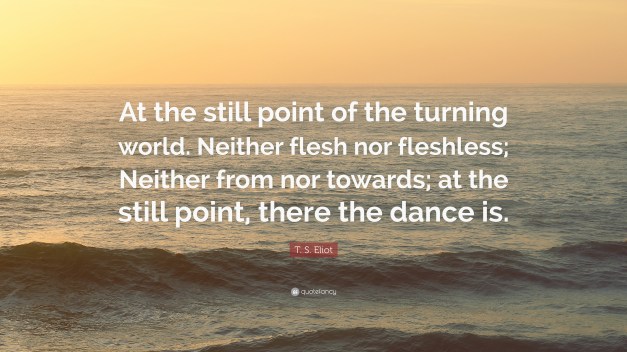
The Conservancy’s Executive Director, Sonnet Coggins, wrote last week that “We are in the garden this morning, finding and keeping stillness as turmoil swirls around the globe. I am coming to understand our current moment of uncertainty and isolation as an invitation. We are lifted out of our daily routines, maybe our ruts, and invited into a place where imaginations awaken. It brings me to a deeper understanding of the way William lived his life—always fully awake to the world around him, honoring its possibilities through daily actions and practices.
Today we will read, walk, and remember William and Paula among the palms, and will imagine that many of you are doing the same, in places that are dear to you.”
In order to fully immerse yourself in this place, watch the one-minute video of Merwin reading his poem Rain Light in his Maui garden. “my mother said I am going now, when you are alone you will be alright…even though the whole world is burning”
You will be alright.
Find your stillness. Dive into simplicity and quiet. Read and walk among the natural spaces in your area, and really notice what’s going on around you. Make space for yourself, for all of your feelings, and honor them. Turn this moment over, slowly, in your mind. Consider it fully from all sides, and see what it may have to teach. It is through silence, reflection, and adversity that we learn the greatest lessons. It is our time to rise up; it is our time to stay home. This is where we must be and what we must do for now.
Be strong, be resourceful, be wise, be resilient. You will be alright.
I am overwhelmed. I am going to put that straight out in front. This is one helluva time and I think I have experienced every emotion under the sun (or rain) in the past 9 days. Has it been 9 days? Who knows. What day is it? Does it really matter?
Let’s start where we should all be starting, especially these days: with a big deep breath.
Always, always start here. Breathe.
Cherish every single deep, easy breath you have. I notice and value those long, slow exhales and rejuvenating inhales now more than ever. Breathing deep and clear is a gift. Enjoy every single one.
Another gift: how much the notion of putting your own oxygen mask on first resonates in this moment. I certainly pray that no one needs an actual oxygen mask anytime soon, but also hope that this metaphorical one will provide sustenance and inspiration during these uncertain times. Tune in when you need hope, solidarity, or just something to do! I am no FDR, but hopefully you’ll find reassurance in this modern day fireside chat and Olaf-like warm (virtual) hug.
As I was saying, this last week was something else. I found myself embracing the moment (or trying to) while grieving for the sudden rupture in our lives. One moment I was riding the tide of enthusiasm and I-can-do-this, the next I was crashing headlong into I-am-not-a-circus-performer and I need some serious me-time. I am despondent over the impact on the economy, small businesses and those who are financially insecure or otherwise vulnerable. I have dug myself emotionally into a hole and climbed back out again, struggling at times, on multiple occasions. I have reckoned with my mortality and what we need to do to get our affairs in order – just in case – while attempting to keep my kids content, reassured, and in some semblance of a routine. Did I mention me-time? I don’t understand quite how it happened, but while I go nowhere I simultaneously have less time and way more to do.
What I have learned, once again and in spades, is that I cannot be all things to all people all the time. First and foremost in this current iteration of life, I am not a teacher, and certainly not of math. All hail teachers! I’ve always wondered how they do it, and daily I accept more fully that it’s a calling and it’s not mine. But I totally get this equation, and this is what I really want to talk about:
Anxiety = Uncertainty * Powerlessness
My intrepid and wise friend, Nicole, of Sailor’s Sweet Life, shared that with me and encouraged me to find ways to empower myself to combat that sense of powerlessness.
As I go about my days here, cleaning and cooking and doing obscene amounts of laundry and dishes and teaching and loving and trying to work and wanting to write and also wanting to run away (flee instinct firmly intact), I have been reflecting on that notion of empowerment and what empowers me. And I realized that I feel most empowered when I am engaging with and learning about other people and how they see and experience life. If I have a calling, connecting with people from all over the world and then connecting them to each other is possibly it. I love to discover what makes us similar, how we are different, to hear their stories and learn more about their lives.
In this odd moment in history, we are all connected perhaps more than ever. And we are all existing and navigating this moment in our own ways, with our own perspectives. Never has the broader world been so inaccessible yet so connected. Instead of feeling grounded and trapped, I have decided to embark on an adventure of connection and imagination.
So, fasten your seat belts and put your tray table up because we are going to travel together, virtually, all around the globe. My upcoming blog posts will feature the brilliant, simple, proactive, compassionate, empowering acts of humanity, humility, kindness, beauty, and wonder that I have seen unfolding during this unusual and uncertain time. I’ll try to tie our travels to a good book recommendation related to that destination, as reading is one of life’s simplest and most wonderful of pleasures (IMO!). Please share with me stories from your corner of the world, too!
And, remember, in an emergency oxygen masks will automatically drop down from the overhead compartment. To start the flow of oxygen, take a deep breath and then continue to breathe normally. Although nothing really changes, oxygen is flowing and you will feel so much better. If you are travelling with a child or someone who requires assistance, secure your mask first, and then assist the other person.
And we are off! Next stop: MAUI and the Merwin Conservancy! Pack Moloka’i by Alan Brennert for this journey. Or The Folding Cliffs by The Merwin Conservancy’s W.S. Merwin himself!
This is our hour to rise up. This is the time to love our neighbors as ourselves (from a safe distance). We need to act, as one – now – to save lives and to avoid totally preventable loss and suffering. Never before has it been possible to do so much for so many with the simple act of staying home. It’s simple, and it’s also so hard. I get that. But it’s completely necessary. Let’s do this. Rally! Rally! Rally #flattenthecurve #stayhome #cometravel(virtually)withme #putyourownoxygenmaskonfirst #whatsparksjoyismysanity #permissiontobehuman
I AM the vulnerable. You wouldn’t guess it to see me bouncing around on a daily basis in my Energizer Bunny way, but it’s true. I am a healthy, young (ish!), active mom, daughter, wife, sister, friend, employee, and athlete. But I also have an autoimmune disease.
Whenever you are washing your hands extra carefully or extra often, considering whether or not to cancel or attend a big event, wondering if this is all overblown, it’s not just the elderly or some hypothetical distant someone that you are protecting. It’s also people like me, the mom who lives just around the corner, who volunteers at the school, who you see cheering at the sporting events. There are more of us than you might realize, and this is a good time for everyone to understand that. Not because we need your sympathy or pity. But because we need your solidarity. Because the reason I can be an active, healthy mom and athlete is the boat load of immuno-suppressant drugs I take. I am in my 40’s but for over a decade this has been my norm:
You know when they review your medications when you go to the doctor? We run through my lengthy list every time and the conversation nearly always ends with the nurse saying, “Anything else?” and me responding, “Isn’t that enough?” I mean, for real. Don’t even get me started about how many doctors appointments I have in a year or how much I pay annually in co-pays for medication even though I have health insurance. That’s for another time.
For now, I am here to tell you that immuno-compromised people worry every year about the flu and infection in general. And every year I dutifully get my flu shot, as does my family, mainly to protect me. And then we go about our lives like normal. Similarly, when I went to Guatemala last fall, before I left I had to think through carefully with my physicians the potential implications of my immuno-compromised state. I got 4 vaccines and filled 2 prescriptions for antibiotics to bring with me in case I got sick while there. No one else I was traveling with needed anything. But I went (and, incidentally, I loved it!). I live my life knowing I am generally at higher risk than others, aware of the implications of both my disease and my medications, but I choose to keep on stretching and living.
I say all this so you understand my reality. It’s a reality I have mostly accepted. I live a pretty normal life, and I am grateful for that. I have learned to work with the cards I have been dealt.
In light of all that, I have been taking this Coronavirus, I think, pretty well overall. I am aware of what’s happening, but have been measured in my response. I have not been panicking or buying shelves-worth of Purel. I did not completely stop socializing or obsess over every new headline. My heart beats at a fairly normal rate, day in and day out.
But early this week my doctors advised me, for now, not be on a cruise boat, a commercial airline, in a crowd, or to have visitors who have flown recently. They are taking this seriously and, in turn, so should I.
I’ll admit that my blood pressure and heart rate increased rapidly during that doctor’s visit, as the realization of the seriousness of the situation and my vulnerability to it dawned on me more fully. While my vital signs returned to normal shortly after, it took me a while to notice that I have spent the last couple of days feeling like I am already sick. By that, I mean, that I started to think more like an incident commander, to go into prevention and protection mode, to dwell more on the news. I have been lethargic and blue, unfocused and distracted, my head spinning with headlines and what if scenarios fast-tracking through my mind. Basically I forgot to live.
And then I caught myself. I woke up and realized this is going to be a marathon and I cannot exhaust myself in the first couple of miles. It also occured to me that I could be an excellent fiction writer because I am constantly making up narratives that just are not true! It’s called anxiety. And instead of allowing my anxiety to come along for the ride, I let it drive for the last couple of days. I started contacting puppy breeders so I won’t be alone in my isolation, for goodness sake. This is not rational behavior (though it was a lovely divergence). Puppies for everyone!
Don’t you feel better already?
In all seriousness, I suspect – I KNOW – that I am not alone. Anxiety buttons are being pushed the world over. The illusion that we have control in this life has been de-masked. We never did have control, folks, but now we can’t even pretend. So we control what we can: we buy all the Purel on the shelves and we read the news ad nauseum and we perseverate over what to do. But we have no more control over this after all that than we did before. Really. We can prepare, but we also need to make room to sit with this uncertainty and acknowledge it. And, then, deal with the cards we have been dealt. This is how I plan to do that:
Seriously, wash your hands and wash them well (how to video here);
Don’t freak out – it doesn’t move the needle one bit to do so. Take a deep breath, or, better, a couple (try 5 deep breaths every hour). Sit with the discomfort. This is a great time to get really good at accepting that we can’t hide or fix or control everything (or, really, anything). Sometimes the best thing to do is to acknowledge that and sit with it. Meditation is a good way to do that. But so is taking a deep breath and recognizing anxiety for what it is and not letting it drive.
Limit yourself to checking social media and the news only once or twice a day; trust me, if something really important happens in the interim, you will get the deluge of texts and phone calls or see the helicopters overhead that will clue you in that something happened. Otherwise, it’s just an anxiety mob feeding on itself.
This virus is clearly an equal opportunity event – anyone is as likely to get it as anyone else. Don’t be a racist or an asshole or a racist asshole and make negative assumptions about people. This is good advice in general. But, in particular, Chinese food, Corona beer, Chinese people, and immigrants of any stripe have nothing to do with whether or not you are going to get sick. So chill and show some humanity and compassion.
Speaking of racism, take a minute to consider how devastating this virus could be – WILL BE – in places without strong medical facilities and protocols.
Speaking of racism two – there is a massive locust swarm happening across parts of Asia and Africa right now. Thousands (possibly millions) of people WILL die from starvation as a result of this, and ever more will emigrate toward Europe in an attempt to save themselves. Have you read anything at all about it? Because a ton of human beings are dying already and it ain’t from the coronavirus. Locust Swarms Put Millions at Risk Across Asia and Africa; Hundreds of Billions of Locusts Swarm Across East Africa
There are great lessons we can learn from this – for starters, we are all living creatures, human beings of all colors and types, and we are all a little anxious and concerned about ourselves and our loved ones. Compassion, kindness, and caring for and about something bigger than ourselves are values we should espouse ALL THE TIME, not just in times of crisis; but now is a great time to up the ante.
Words matter and so does your mindset. For example, use the word distancing instead of isolating; I kept saying I was isolated and it made me want to buy a puppy; distancing is less weighty.
All of us are in this together, and many are uncomfortable about the situation. Hold that worry, concern, fear, sadness in the light and honor it.
Maybe try just half a cupcake instead of eating the whole thing when you feel the need for comfort. I’m not going to tell you that I ain’t been panic eating. Sugar is still bad for you, but I am not going to judge.
Consider the greater impacts of your actions – this is a good idea in general, but specifically now. It’s not all about you, nor should it be.
For now. For now is a great phrase. Because difficult things are easier to bear when there is a perceived finiteness to them. For now gives the sense that things are temporary. And, it’s true, we will learn more about COVID-19 and eventually this crisis will be in the past. We need to take it seriously NOW, for now, and we need to show compassion and urgency to get there without too many lost lives along the way.
If you or your kid is sick, own it. Don’t pretend that Motrin or Tylenol masking the symptoms is a reasonable choice for carrying on with your day. Sending sick kids to school or going to work sick isn’t a good idea under normal circumstances. It is a very bad idea right now. I get that work beckons, but, damn, that’s just wrong on so many levels.
Don’t buy a puppy or any other living creature on a whim. Also good advice beyond a pandemic.
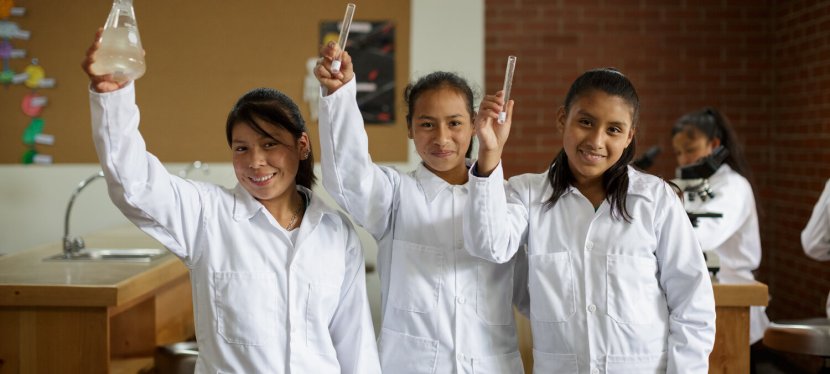
I have another guest blog to share today! This post was written by Isabela Lyrio and was first published on the MAIA Impact School website. As we approach International Women’s Day on March 8, this is a timely reminder of how much progress women have made in terms of gender equality as well as how much room there is to still grow. Isabela’s piece focuses on STEM education for girls broadly, and specifically on how the MAIA Impact School incorporates STEM learning into the curriculum. The feature picture I chose of MAIA Girl Pioneers working in a lab is groundbreaking in its historic significance. This intentionality around vastly expanding education and opportunity in every dimension imaginable for this overlooked population is game changing. These young women are examples of hope in action, personified. And with that, take it away Isabela:
Why is it important for girls to learn and excel in STEM not only in the classroom, but in the workforce as well? STEM is science, technology, engineering, and math, careers considered to be the changing forces for the future. It is estimated that 65 to 85 percent of jobs today will no longer exist in the next 20 to 30 years, in large part due to automation and ever-changing local and global economies. Women in developing countries are most threatened by this change because they are overrepresented in occupations that are most likely to become automated. The STEM fields are some of the fastest growing sectors of the global job market; however, women only represent 35 percent of the student body pursuing university degrees in STEM fields.
MAIA believes in the importance of representation. When girls and women lead innovation, they make it more inclusive, impact a larger population, and act as role models for more girls to get involved in this field in the future.
In Guatemala, the opportunity for indigenous women in STEM is almost nonexistent. This marginalization is reflective of greater social context, the poor quality of public education, and gender and cultural norms. According to the Ministry of Education’s 2017 national assessment of high school graduates, only 9.6 percent are considered proficient in math, only .59 percent better than the 2016 results. Similarly, in literacy only 32 percent of high school graduates are considered proficient, a .01 percent improvement from the previous year. This problem is compounded when considering that only 10 percent of indigenous girls graduate from high school and 1 percent receive a university degree.
Girl Pioneers in Science Class; Photo by Anna Watts
The MAIA Impact School is working to transform these statistics and provide the tools Girl Pioneers need to have a choice-filled life and become leaders in the industry of their choice. MAIA offers a rigorous, culturally adapted curriculum that is delivered by educators who are pioneers in their own fields and come from the same rural towns as the Girl Pioneers. MAIA’s educators are powerful local role models for girls in Guatemala.
Marlen Cumes, MAIA’s natural science educator, is from a small town in the Guatemalan highlands. When she was deciding on her career path, Marlen wanted to study agroforestry in university but was met with resistance from her family—they believed this was not a woman’s career. Marlen fought for her beliefs and passions and pursued her career as an agronomist. It was challenging for Marlen to follow her dreams and overcome deeply embedded stereotypes of what a woman’s career should be in rural Guatemala. Her graduating class was equally balanced, 50 percent men and 50 percent women. However, only 11 percent of the women were indigenous. During her studies, Marlen became passionate about soil preservation and climate change but would hit brick walls when trying to engage with adults in her community on this topic. Many adults already had their minds made up and would not respect her expertise as a woman in a male-dominated field. That’s why Marlen sought opportunities as an educator, where she could teach passionate young students who have open minds and want to make a difference in the world. Once she was hired as MAIA’s natural science educator at the Impact School, she found that she was in the perfect place to teach the next generation of changemakers in an organization that is breaking paradigms just as she did.
Marlen Cumes, MAIA’s Natural Science Educator; Photo by Livvy Runyon
MAIA is a bold organization that asserts the right of indigenous girls to pursue a high-quality education by emboldening them to use their voice in spaces where indigenous women’s representation has been limited, especially in STEM and technology. Divisions in access to technology reflect socioeconomic divisions and amplify the lack of access to opportunities marginalized groups face in developing countries. By investing in computers, a cutting-edge science lab, talented local educators, and intentional partnerships, MAIA is ensuring Girl Pioneers will have the skills and opportunities to become leaders in STEM fields.
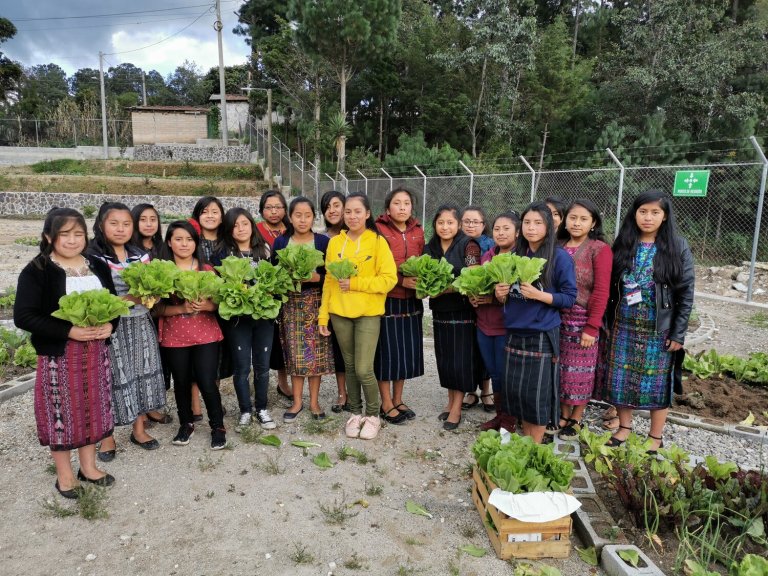
Girl Pioneers at the MAIA Impact School Zayed Garden; Photo by Layla Rojas
Indigenous culture is integrated with MAIA’s identity and academic instruction, this is important because it creates an environment that is familiar and fertile for learning. One example of the integration of indigenous identity and academics is MAIA’s Zayed Sustainability Garden. MAIA was awarded the 2019 Zayed Sustainability Prize as the most “innovative and inclusive school in the Americas” and received $100,000 to launch the Zayed Garden at the Impact School. The Zayed Garden combines STEM learning opportunities with traditional Mayan farming practices, organic gardening techniques, and nutrition. As part of the Zayed curriculum, Girl Pioneers learn about traditional medicinal plants as well as organic and permaculture gardening. By integrating medicinal plants as part of the natural science curriculum, Girl Pioneers learn to integrate the knowledge of their ancestors with STEM subjects, giving them unique insight and experience in this field.
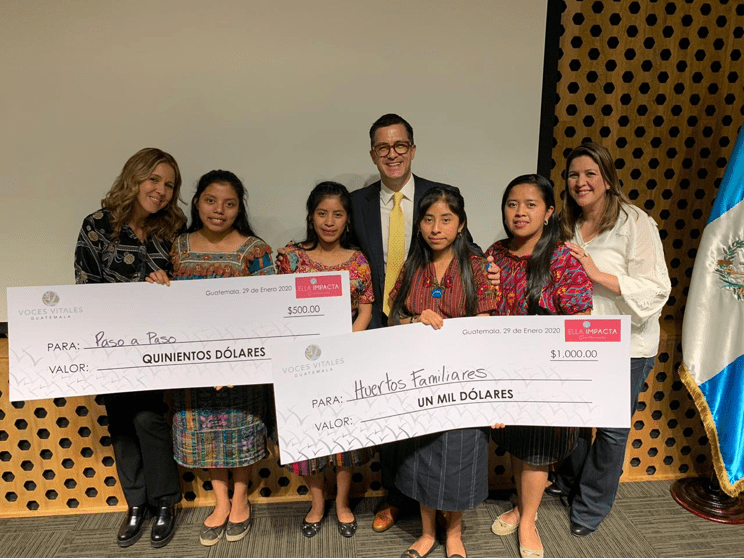
Claudia Marisol, a 10th-grader, recently participated in Ella Impacta, a competition sponsored by Vital Voices in Guatemala City, and competed against students from elite schools from all over the country to receive seed funding for community-based projects. Claudia proposed a project of family gardens, where families grow organic vegetables in their homes, with the goal of increasing access to fresh vegetables but also to address the problem of malnutrition in her community. This project would increase access to nutritious organic vegetables and diminish the use of chemicals and pesticides in rural communities, thereby fortifying nutrients in the soil, protecting water sources, and sharing information and resources about the advantages of organic gardening with community members. Claudia Marisol won $1,000 in funding for her project, and is applying what she learned at the MAIA Impact School to become a changemaker in her community. She’ll use the intersection of traditional permaculture techniques and the natural science curriculum (with support from her educator, Marlen).
Girl Pioneers with their Ella Impacta seed funding and Xoco MAIA Supporters in Guatemala City
It is essential to establish a sense of belonging for female minorities in STEM fields. According to a study in the STEM Education Journal, the biggest reason minority groups drop out of STEM majors in university is that they feel they don’t belong in that space. This is attributed to interpersonal relationships, perceived competence, personal interest, and science identity. At MAIA, we create a positive learning environment in STEM and other culturally relevant subject areas, so Girl Pioneers feel a sense of belonging rather than alienation in these fields. We ensure they know they have the ability and expertise for any field of their choice, and if they choose to pursue a career in STEM that they have the tools they need to become leaders.
Marlen is a trailblazer in her community, ensuring younger generations can learn from her and follow her example. We see Girl Pioneers like Claudia Marisol following this path and multiplying impact to benefit the community. At MAIA, we are guided by the question “how far can she go?” and we are just beginning to witness the infinite impact of Girl Pioneers and their passion for learning and social transformation.
Let me start by saying thank you for reading! I am so grateful for your interest and your time. I certainly have days, sometimes full strings of days, where I can’t read beyond the news headlines let alone a deep dive into a blog post. So, thank you for setting aside time to read on! As I have mentioned before, I also have days in which I wonder what’s the point, does it really matter, is anybody out there? But then I hear from readers who tell me that what I wrote changed how they felt and, well, that is the very definition of making a difference.
Imagine: if in our daily lives we are confronted with feelings of “what’s the point?”, “it’s bigger than me,” “I couldn’t possibly make a difference,” what must it be like as an indigenous girl in rural Guatemala, where from any early age you are taught that you have no worth and where everything you experience tells you that you are an afterthought? Worse, as you get older, the tide pushes ever harder against you because of cultural norms and systemic racism, poverty, limited and inadequate educational options, no professional network, the wrong last name. How many times must these women feel hopeless and powerless in the face of forces much bigger than them?
But then someone with a bold and completely audacious vision steps in and begins to construct the building blocks to change all that by educating one girl, one family at a time. And guess what? OH MY GOSH, it is working!MAIA set out ten years ago with a mission to unlock and maximize the potential of young women to lead transformational change. And the MAIA Girl Pioneers are doing it!
The most recent proof of that? On Wednesday night three Girl Pioneers competed in the final round of a national competition called Ella Impacta (She Impacts). The contest, sponsored by the international organization Vital Voices, focused on giving young women a stage to share their social impact visions. Contestants came from across Guatemala, including the elite private schools and universities. Over the past few months, the contestants received mentorship and training on how to design and present projects. On Wednesday night they each made their final “pitch” to a panel of judges.
MAIA Girl Pioneers won 1st, 2nd, and 3rd place!
MAIA Contestants with their Mentor and XocoMAIA (Guatemala City) Supporters
Remember, in Guatemala, the average Maya teenage girl obtains only 3.5 years of education. Only 10 percent of indigenous girls in rural Guatemala are enrolled in secondary school, and fewer than one percent continue on to university. Add to those disturbing statistics that even when families do invest in the promise of education, the substandard quality of Guatemalan schools fails them. According to the Guatemalan Ministry of Education only 10 percent of high school graduates meet international standards of literacy, and only 9 percent reach the standards of math comprehension.
Given all of those statistics, it’s incredible that these girls are even at the table. But a clean sweep of the competition?!?!? These pioneers are no longer in the shadows. They are striving forward, proving out a model for change. The formula: bold, audacious, committed action towards a vision; building robust partnerships within the community and beyond, from mentors to the XocoMAIA supporters in Guatemala City to Guatemalan and U.S. donors; living a growth mindset, perseverance and resiliency daily. You want an example of grit? MAIA and the Girl Pioneers live it every single day.
So, what were the projects that these pioneering young women put forth?
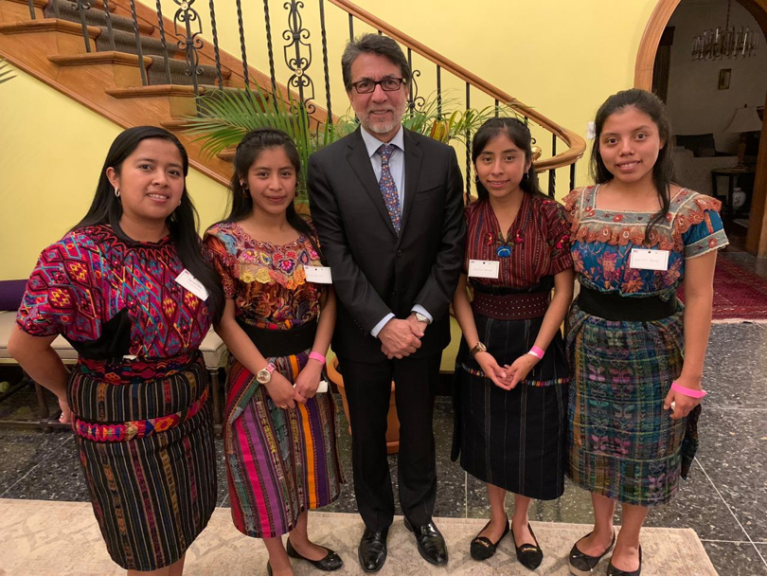
The first place winner, a 10th grader named Claudia Marisol, designed a project called Huertos Familiares (Family Orchards) to address malnutrition in her village by growing diverse fruits and vegetables locally. This project builds on her experience with the MAIA garden plot that was jumpstarted by the school’s 2019 Zayed Sustainability Prize award. Claudia received $1,000 as seed money to launch her initiative and will travel to New York City for the next stage of the competition.
The second place winner, Norma Alicia, pitched a pre-school called Paso A Paso (Step By Step) for her community to give kids a running start into elementary school. She won $500 to begin her project.
The third place winner, Rosa Angelica, proposed a social entrepreneurship project to augment the opportunities for female artisanal crafters in her community.
(Left to Right:) MAIA Mentor Silvia, MAIA Student Rosa Angelica, U.S. Ambassador Luis Arreaga, MAIA Student Claudia Marisol, and MAIA Student Norma Alicia
What’s the point? This, this right here. The problem is too big? It is big, and there are lots of big problems. You couldn’t possibly make a difference? Start by making a difference one person at a time. A small kindness, a shared story, an honest vulnerability, an unexpected smile to a stranger, a hug and gentle reassurance to an Alzheimer’s patient, even if they won’t remember.
Dive in! Too many too big problems means there is ample opportunity to create meaningful change and make an impact in someone’s life. It’s amazing what people can do with hope, a path, resources, and support. And, if you are very lucky, one day you get the chance to watch them soar. Today is my lucky day. Congratulations to all of the students and staff at MAIA Impact School! Abrazos fuertes a todos!
Apparently the existential thinking of my French studies sunk in somewhere after all despite the fact that I would desperately wish for the French novels and films of my academic years to come to a conclusion or point of some sort. Mercy!
Several decades later, as I travel in my little world, I notice how the holiday lights proliferate by the day and how the reflecting snow augments their brightness. It’s no mystery that the season of light happens on the longest and darkest of days as we (in the northern hemisphere, anyway!) descend towards winter. As I witness and delight in the decorations springing up around me, and as I set up my own decorations, I can’t help but also think about the darkness.
Darkness usually has such a negative connotation. Certainly at this time of year, darkness comes ever earlier and, as the sun sets, the cold burrows deeper into your bones. Personally, I have trouble leaving the warmth of my home to venture out into the dark. As far as I am concerned, when it’s dark the day is over. That doesn’t work out so well when it is dark at 4:30 in the afternoon. But as I set up my decorations, I find myself anticipating the dark, knowing that the lights are muted, invisible, meaningless without it.
Maybe I’ve spent too much time freezing my toes off in a snowbank recently, but my brain has been firmly veering toward the existential. What would light be if we didn’t have darkness? Not much. It turns out, the darkness I generally dread is the platform for the delight of the glimmering lights all around me. This makes me think further about gratitude and love: Would we even understand our good fortune without suffering? Isn’t grief one of the deepest and most profound expressions of love?
I think about the trials I have faced in my life, about times and places I never want to revisit or repeat, about the people I have loved and lost (or am still losing slowly, every day). I recognize how the challenges transformed me into the person I am today, that the slow loss of my mom to Alzheimer’s forced me to pay attention and to spend extra time with her while we could still talk, that the sudden loss of my aunt drew me closer to my uncle and cousins, that “grief is just love with no place to go.”
Adversity and challenge can be blessings in disguise. With them comes introspection, awareness, knowledge, compassion, connection, and gratitude. Without them is a life unquestioned, many paths not taken. Adversity led me to work in the woods of northern Maine and to travel to the other side of the world to study in Madagascar. It was the discomfort and emptiness of my questioning, who-am-I-and-where-do-I-fit teenage years that gave me courage, that forced me to stretch myself, that showed me who I really was and helped me define my passions, and that taught me to see with gratitude the blessings that exist every day in my life. Once again, the darkness was the platform for the light.
At this consumeristic time of year, I am even more mindful of my many blessings, especially the basics. Here is my short list of cherished things. We should never take these (and many more) for granted. Trust me.
Shelter – I see the snow on the ground, hear the wind howling outside. I have woken with wet toes when the bottom of my sleeping bag slid out from under the tarp that protected me from the rain; I have slept outside when temperatures have dipped below 20 degrees, every article of clothing I could carry on my body, my sleeping bag hood drawn down to my eyes around my head. But my nose was still so cold I had trouble sleeping. I am so grateful to have a roof over my head and heat to keep to me warm;
Umbrellas – You only have to get soaked in a rainstorm once to understand what a wonderful invention these are. Live in the woods working days on end in the rain and you will never forget the comfort of being warm and dry;
Washing machine – As a mom, laundry is, admittedly, the bane of my existence at times. But, oh my gosh, the machine does it all by itself! And we are fortunate enough to have one in our home. One bout of stomach flu running through the family is all it takes to realize how awful life could truly be. Imagine walking your laundry to the laundromat down the street when you are recovering from the flu. That’s right. We are blessed beyond measure.
Clean water – I fill my water bottle directly from the tap. If you have never experienced anything else, it’s easy to see how having clean water, on demand, anytime you need it wouldn’t register as a luxury. But many countries don’t have treated water and many women spend the better part of their days fetching water from miles away. I knew that the parasites and bacteria in untreated water wreaked havoc on more delicate American and European GI systems (sometimes called Montezuma’s revenge), but only recently did it strike me that those who live in developing countries also get sick from the water. Water they drink every single day. Five months in Madagascar taught me clearly how impossible it is to work, go to school, be healthy and strong – live – with constant tummy troubles.
A quality education – Education is a much less tangible “thing,” but it’s so critical that I have to include it. An education is both a foundation and a launchpad. A quality education is something that should be a right and a guarantee. But it isn’t, not in many developing countries (where many girls are fetching water instead of going to school), but also not equitably in the U.S. An education provides a path toward financial security, a way to access broader opportunities, and, fundamentally, hope. She’s The First recently launched a powerful video about how imperative and transformative an education is. One of the extraordinary women profiled is a graduate of the MAIA Impact School in Guatemala.
I could go on. But those are my top five.
Hopelessness is the darkest of places to be. In this season of light and giving, I encourage you to think about how you can shine your light into the darkness. Shine your light on all of your blessings, no matter how small they may be. Reach out to those who are in need of hope. If each of us were to be a ray of light for even just one other person this year, think about how much hope we could fill the world with. Let’s make 2020 EXTRA-ordinary, each in our own ways.
In thinking about something bigger than us as individuals, and in the giving spirit, here are some of my favorite organizations that are doing the difficult, audacious, and awesome work of providing high-quality education, clean water, and recognizing our common humanity across the world. I am holding them and all of my readers in the light this holiday season.
MAIA Impact School – Unlocking and maximizing the potential of young women to lead transformational change.
Water for People – We believe in a world where everyone has safe drinking water, forever.
One Revolution – It’s not what happens to you, it’s what you do with what happens to you.




 Touching down in Guatemala City, you’ll be surprised to see how modern the airport is. I was expecting it to be really rugged since Guatemala is a “developing country,” but it’s not – the airport anyway.




 Tune in when you need hope, solidarity, or just something to do! I am no FDR, but hopefully you’ll find reassurance in this modern day fireside chat and Olaf-like warm (virtual) hug.








 Put Your Own Oxygen Mask on First