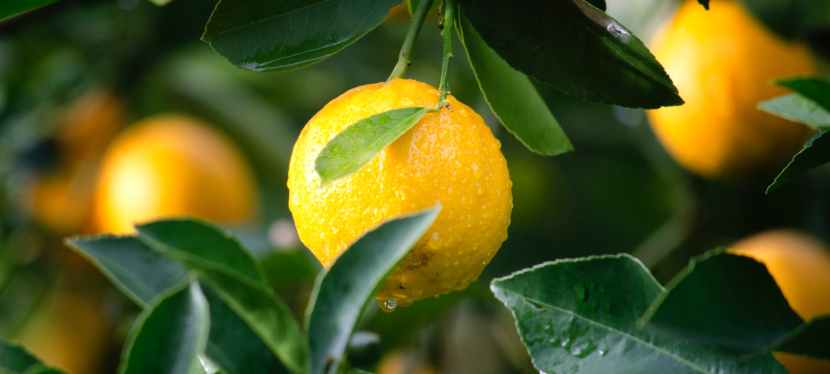
The Parable of the Lemon Seed

If ever there was a time to make lemonade out of lemons, it is now.

But where to start? It’s small, simple acts that take the circumstances we are given and flip the expected outcome on its head. This is exactly the story of Keki and the Lemon Seed, a true, modern day parable. Never heard of it? That makes sense because it has never before been told. But here it is:

There once was a woman named Keki. She lived in Hawai’i, where her work required her to fly between the islands regularly (back in the day when that was possible). In those 20 minute puddle jumps the airlines attempted to quickly serve beverages between take off and landing. The cabin crew would roll their carts down the aisle passing out drinks in little plastic cups to each of the passengers and then hurriedly collecting them and any other trash before landing. This was true all day long, every day, on the little flights that hopped between each Hawai’ian island.

As a series of islands, Hawai’ians tend to be extra careful about their environmental impact. And, yet, this standard way of operating persisted. Keki typically just said no thank you to the cabin crew and brought her own, re-useable water bottle. But one day she forgot her water bottle and was incredibly thirsty so she resorted to the only option available: to take the airline plastic cup.

This bothered her – A LOT. As she sipped her airline water, she thought about what she could do to ameliorate the fate of the single-use plastic she was holding in her hand. She didn’t have a lot of time to think since it was such a short flight, but as the cabin crew came around to collect everyone’s trash, Keki held onto her cup and the lemon slice inside it. When she got home, Keki filled the plastic cup with soil and buried one of the lemon seeds deep within it. She then placed the little airline cup in a sunny window. Within days, a sprout had pushed through the soil, the budding of a lemon tree.

Keki’s was a simple gesture, and also an incredibly authentic and refreshing one. Keki repurposed a tiny plastic cup that would have gone straight to a landfill into something beautiful and alive. She didn’t exactly make lemonade out of lemons, but she did make lemons out of landfill.

Imagine if we all took stock of our daily impact on the Earth, as well as our connection to it, with the same consideration and consciousness. Imagine if we all went about our days intentionally, thoughtfully considering our choices and contemplating the way we live and act. Imagine if we weighed the impact of our actions on our global community as well as our local neighborhood. In the middle of a pandemic that has upended the world completely, if ever there were a time and a call to make lemonade out of our lemons, it is now.

For more on what we can do, the United Nations recently published a series of Sustainable Development Goals and monthly actions. That’s a great place to start.

As a reminder, I know I say this every time, but I can’t emphasize it enough. WE are the solution. At a time when nothing feels within our control and the problems seem extraordinarily large and insurmountable, we need to dig deep inside, pivot, and rise to the occasion. Small but measured steps – planting one little lemon seed at a time – is the way it is going to get done. Don’t wait for someone else to do it for you. We need to do better starting now – and we can.

Rebuilding in Times of Uncertainty

The only way to hear another’s story and to truly see their reality, is to be assured that our own stories have been heard, that we have been seen. Social isolation drives a stake deeper into the systemic social divisions that already exist between us, wedging ever wider the yawning gap between our reality and that of “others.”

Malcolm Jenkins Narrative

Months of coronavirus isolation have provided a stark window into how isolation affects an individual and a community. We are living what happens when people are cut-off and feel they have no control over their life: hopelessness prevails; children fall behind academically and emotionally; a scarcity mindset stokes protectionism and hoarding; anger and frustration simmer and then boil over.

Fear, powerlessness, and uncertainty have become unwelcome, familiar feelings. With the sand perpetually shifting beneath our feet, we find ourselves quagmired by the overwhelming tidal wave of disillusionment, division, and disenfranchisement. We can’t stay here. We need to take a deep breath, set our course, and keep moving forward so inertia and negativity don’t suck us in.

You might wonder where exactly we are supposed to move forward to, being in the middle of a pandemic and the wheels clearly coming off the cart and all? While everyone is focused on the loss of now, on this period of sacrifice and challenge, we have to constantly remind ourselves that this is a finite moment in time; that great opportunity comes from overcoming adversity; that history is full of stories of struggle, resilience, and hope.

There is SO MUCH WORK to be done to move our society toward being more whole and equitable. As a country reckoning with a heightened awareness of our divisions, how do we do better?

The way to begin to heal is to come together, solving the issues of isolation and racial division through deliberate, intentional connection and engagement. North Brookfield, a rural community of 4,800 in central Massachusetts, is spearheading a regional creative arts program – ROAR (Rural Opportunity through Art and Restoration) – to do just that.

The Brookfields region has been wrestling with its identity and isolation for twenty-five years. As with many rural communities nation-wide, un- or underemployment, intergenerational poverty, depression, and drug dependency have permeated the region. Small businesses that were the life-blood of small town centers were decimated as retail was sucked outward to major highways and big box shopping centers. Health care and social supports are difficult to access. Though Vibram continues to manufacture shoe soles locally, employment and advancement opportunities have declined. Isolation here has become status quo.

The Friends of the North Brookfield Town House (“Friends”) have worked for over a decade to preserve their community’s vacant town hall, an architectural masterpiece and once “the center of everything.” The deteriorating building’s location in a small, isolated community has meant that a traditional commercial use would be challenging, if not infeasible. Two years ago the Friends contacted Architectural Heritage Foundation (AHF), a Boston-based preservation organization, to help them with the puzzle of how to sustainably occupy the building.

AHF collaborated as a thought-partner, helping the Friends to recognize that renovating the Town House could catalyze change in their community and throughout the region, but only if complemented by additional economic development efforts. AHF recommended repainting the building, a small, empowering act that proved transformative in garnering broader support. The repainted Town House caught the attention of many area residents and was the catalytic spark that ignited a partnership with local recording company Long View Entertainment. Long View worked with the Friends to envision the building as an art and music center for at-risk rural communities.

ROAR, an expansion of Long View’s award-winning after-school program, will partner with Boston’s Berklee College of Music to offer educational and cultural programming featuring music, writing, storytelling, audio and video production, art, and theater click here for program offerings). Creative commerce education will build life skills, foster change, and inject energy – and hope. The program, anchored in a centrally-located historic structure that is meaningful to the community, will address from the inside-out the impacts of social isolation that divide and perpetuate separateness. ROAR will also provide work experience for Berklee students, infusing artistic talent from beyond the region and tearing down the rural-urban divide.

How does this help to heal? Data shows that tight family and community social networks can shield people psychologically from the stresses of having lower incomes, lower educational levels, or generally stressful living conditions. Dr. Tony Iton, from the University of California Berkeley, found that the social vulnerability resulting from poor schools, housing, transportation, and lack of access to healthy foods creates incubators of chronic stress that reduce life expectancy by 15 to 20 years as compared to higher income, healthier environments.[1] While Iton’s research primarily focuses on the inner city, poor rural areas face similar issues and outcomes. Meanwhile, a January 2019 National Governors Association report showed that rural counties that are home to performing arts organizations experienced higher incomes, population growth, and greater well-being and social inclusion than rural counties that lack performing arts institutions.[2]

Arts programing aimed at connection and diversification addresses both the turmoil boiling in our streets and economic vitality in distressed regions. In fact, the 2019 Massachusetts Rural Development Policy Plan highlighted “encouraging dialog and partnership between towns and regions; forming strong partnerships with regional academic institutions; developing youth leadership programs; redeveloping and reusing vacant industrial sites; growing local jobs and leveraging local assets; devoting more money to education; developing tourism and hospitality services; and promoting racial diversity”[3] as best practice. ROAR is all of these things.

ROAR at the Town House is piloting a replicable model that can be applied in other communities, not only in the Brookfields’ region but across Massachusetts and the nation. According to the New England Foundation for the Arts, “The creative economy is a powerful engine of growth and community vitality. A thriving cultural sector leads to thriving communities.” Creating a regional hub at the North Brookfield Town House will address downtown economic depression as well as rural social isolation.

When the world stopped, the arts, in all its forms, entertained and comforted us. It broke the barriers of quarantine and isolation by drawing us together. Now more than ever we need to be brought together to tell our stories, to be heard and seen, and to listen and learn.

All photographs are by Jason Baker @ jasonbakerphotography/

Footnotes:

[1] Iton, Dr. Anthony. (November 4, 2016 You Tube). “Change the Odds for Health,” TedX San Francisco, https://youtu.be/0H6yte4RXx0.

[2] Rood, Sally for the National Governor’s Association. “Rural Prosperity through the Arts & Creative Sector: A Rural Action Guide for Governors and States.” January 2019.

[3] Rural Policy Advisory Commission. Rural Policy Plan. Commonwealth of Massachusetts. October 2019, pg. 22.


A Plea and a Prayer for the Voiceless and Vulnerable

Where do I even start? I am rendered speechless by some of what I see happening in the world right now. And not speechless in a good way.

I understand rationally that anger stems from fear, powerlessness, and uncertainty, which we have in spades currently. So I get to some degree that what we are seeing with regards to the virus, opening plans, and people flouting the very simple protocols for keeping everyone safe from wearing masks to maintaining their distance are symptomatic of that. I recently read an article from Psychology Today, in fact, entitled What Your Anger May Be Hiding that explains anger very rationally. Did you know that when someone is angry the brain releases a chemical that stimulates a numbing sensation while establishing a sense of security and control over a situation? I did not, but it explains so much.

I guess I thought and hoped we were more evolved than that and that we could recognize anger for what it is and modify our behavior. Clearly not. And that’s disappointing. Most disappointing of all is how there appears to be a cultural disregard for the most vulnerable people among us currently. If I hear one more time, “oh, yea, a lot of people have died but most of them were old” I am going to explode. WTF kind of attitude is that? Damn.

“What young people didn’t know, she thought, lying down beside this man, his hand on her shoulder, her arm; oh, what young people did not know. They did not know that lumpy, aged, and wrinkled bodies were as needy as their own young, firm ones, that love was not to be tossed away carelessly, as if it were a tart on a platter with others that got passed around again. No, if love was available, one chose it, or didn’t choose it. And if her platter had been full with the goodness of Henry and she had found it burdensome, had flicked it off crumbs at a time, it was because she had not known what one should know: that day after day was unconsciously squandered.” from Olive Kitteridge, by Elizabeth Strout

Anyway, I am rambling. I felt like I needed to acknowledge that because it’s been bugging me and making me sad. But I don’t want to focus on it. What I want to do is to say a prayer for the voiceless and vulnerable, for the elderly, our elders; for those with Alzheimer’s and dementia; for those in care homes; for those with other health vulnerabilities; for those in places like rural Guatemala and rural Madagascar and so many other places in the world (including the inner city and parts of rural America) that are disconnected from the regular news cycle so we don’t hear their plight – both because they don’t have a platform to tell it and because no one is listening. Amidst all the quiet of this time, it’s remarkable the cacophony we humans can stir up to distract ourselves and still not LISTEN.

I don’t want to dwell on this. I want to focus on the good stuff, the stories of hope and kindness where you would least expect to find them! It’s my whole mission here and really this is the stuff of grace and humanity that needs to be celebrated and shouted from the rooftops!

In today’s episode, we have video footage of Girl Pioneers from the MAIA Impact School reporting from their homes in rural Guatemala on what life is like in quarantine for them, thanks to donated devices that have been distributed to the students and the MAIA Impact School’s on-going work to give these girls and their families a platform from which to be heard and seen.

You can read more about the students, their lives, and MAIA’s response to COVID @ https://www.maiaimpact.org/maias-response-covid19

More to come!

Each day is a blessing in whatever form it comes – don’t squander it!

Stay well, stay home.

You will be alright.

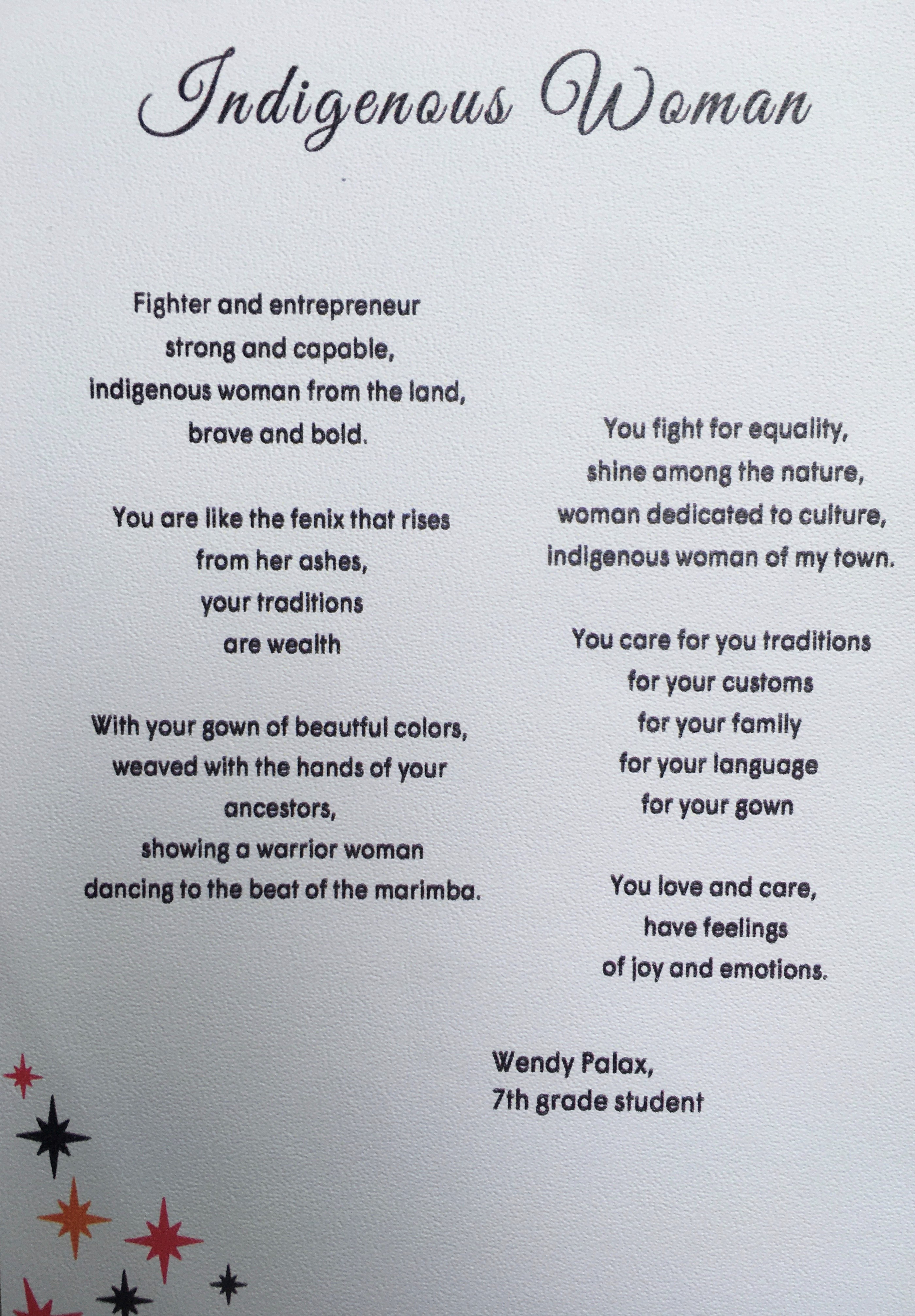
Indigenous Woman Poem


The Time of Quiet

I’ve gone quiet suddenly, here in the blogosphere anyway. It’s like I returned from a long trip and suddenly I was very, very tired. And I had endless mountains of laundry to do. Apparently our virtual world tour has come to an end. I just fizzled one day. For once, I let myself get lost in that with no apologies. If I can’t learn to be in the moment, in THIS moment, now; to face into the fire and not turn away to avoid it, now; to source my strength from within, now, then when will I ever?

It’s often said that it takes 66 days to create a new habit. Today is, in fact, day 66. What new habits have you made? Which will you keep going forward?

Me? I hope to hold onto this conscientious quiet because I cherish the simplicity and peace that comes with it. In my typical suburban existence, I crave calm and quiet, and now I see clearly that so much busyness is self-created. I do like to be busy, but there’s busy and then there’s manic. It’s really refreshing for life to be so plodding that my whirring around checking boxes off my never-ending to-do list eventually has to stop and for once I just sit down and think. Or breathe. Remember that one? I always forget. But now I’ve had 66 days of practice so who knows what the future holds?!? Have you ever seen the short Warren Buffet and Bill Gates clip Busy is the New Stupid? Well, there you are.

Breathe

I also hope some of my meal plan-ahead skills will endure (but mostly I really want take -out). And I imagine I will never stop washing my hands as well as I do now.  Remember that the “new normal” isn’t normal. And it isn’t forever, either, incidentally.

In The Time of Quiet

No one’s told the daffodils about the pause to Spring
And no one’s told the birds to roost and asked them not to sing
No one’s asked the lazy bee to cease his bumbling round
And no one’s stopped the bright green shoots emerging through the ground
No one’s told the sap to rest, deep within the wood
And stop the sleepy trees from waking, wreathed about in bud
No one’s told the sky to douse its brightest shades of blue
And stop the scudding clouds from puffing headlong into view
No one’s asked the lambs to still the springs beneath their feet,
To stop their rapid rush and quell each joyful bleat
No one’s told the stream to halt its gurgle or its flow
And warned the playful breezes, not to gust and blow
No one’s asked the raindrops not to fall upon the earth
And fail to quench the soil in the season of rebirth
No one’s locked the sun down, or dimmed the shimmer of the moon
And even in the darkest night, the stars are still immune
Remember what you value, remember who is dear
Close the doors to danger and keep your family near
In the quiet all around us take the time to sit and stare
And wonder at the glory unfurling everywhere
Look towards the future, after the ordeal
And keep faith in Mother Nature’s power & will to heal.

I have seen this beautiful poem attributed to Pablo Neruda, a Nobel Prize-winning Chilean poet and diplomat. But a little hunt of the world wide web revealed that it was actually written by Philippa Atkin and posted on her blog March 27, 2020.

Pablo Neruda’s poem, also beautiful, is called Keeping Quiet. I am not exactly sure when it was written, but Neruda died in 1973 so we can be sure that he did not predict the internet age taking us over, our addiction to screens or busyness, and certainly not a global pandemic. It is also remarkably appropriate for today :

Now we will count to twelve
and we will all keep still
for once on the face of the earth,
let’s not speak in any language;
let’s stop for a second,
and not move our arms so much.It would be an exotic moment
without rush, without engines;
we would all be together
in a sudden strangeness.

Fishermen in the cold sea
would not harm whales
and the man gathering salt
would not look at his hurt hands.

Those who prepare green wars,
wars with gas, wars with fire,
victories with no survivors,
would put on clean clothes
and walk about with their brothers
in the shade, doing nothing.

What I want should not be confused
with total inactivity.
Life is what it is about;
I want no truck with death.

If we were not so single-minded
about keeping our lives moving,
and for once could do nothing,
perhaps a huge silence
might interrupt this sadness
of never understanding ourselves
and of threatening ourselves with death.
Perhaps the earth can teach us
as when everything seems dead
and later proves to be alive.Now I’ll count up to twelve
and you keep quiet and I will go.

Stay well, stay home.

You will be alright.


Views from All Over

Well, it finally happened, folks. I hit a wall. It’s not that I am uninspired. I am just tired. So today will be short and sweet. I am diving into living in the moment at home, making sure I am paying enough attention to my kids in a less distracted way, and tending to my mom’s health situation and needs, which are acute at the moment.

Right now my kids and I are sitting on the porch in winter coats and blankets, basking in the sun’s warm rays like cats. We are listening to what’s around us, observing. Yesterday we set up a post at our dining room table to return to each week. We fling the wooden blinds wide and watch how our little world changes outside that one focused spot each week. It’s actually kind of miraculous, and I have never taken the time to watch spring unfold slowly before. If this were a recipe I’d say it’s one part making-the-best-of-things, a dash of keeping-my-kids-occupied-any-way-I-can, and a smidge of look-what-happens- when-you-slow-down-a-little.

This video, called When the World Stopped, takes us on a tour of the quiet that has enfolded on a global scale during this isolation period. Like my daily quest, it is both beauty and tragedy wrapped into one.

Stay well, stay home.

You will be alright.

Mary Oliver quote

COVID Gets Real and Hits Home

Taking a break from gallivanting around the world to bring it to you straight here. This is HARD. Today is day 41 by my count. My mom was hospitalized three weeks ago and diagnosed COVID positive. It got REAL around here fast. I wrote an essay about it that HuffPost published this morning. Check it out in my Clips. Also, the featured photo today is a painting my brother did. Just sayin’. So damn talented.

At any given moment I am shades of overwhelmed, fine, depressed, grateful and everything in between. I miss the grocery store. I mean, that’s low. What used to be a chore has become a dreamed-of escape. That’s where we are.

I spend my days cooking, cleaning, doing laundry, procuring food items, entertaining my children (I have stopped calling it homeschooling because that would imply they are learning something when, frankly, I have no idea if they are. I am just happy when we get through another day mostly intact), and trying to keep up with my quarantine journal (which is remarkably challenging to find time for, an odd situation to find myself in since I never leave my home). My mom being unwell has added a layer of intensity to this isolation existence as I have worried for her well-being and tried to navigate emotionally once again how quickly life can be upended. There were days during the past three weeks when I needed to call the hospital to check on my mom but also really, really needed to grab that grocery delivery time one week out (the first available) to ensure my family had the provisions we need. So bizarre. The brave neighbors and friends who are still going to the grocery store jumped in and saved us as my juggling act came crashing down, even sometimes adding a bouquet of flowers to the items they dropped for us on the front porch.

Rest assured, when I am not virtually traveling the world with you, I am keeping it really real here. Our virtual travels and hope-filled stories bring me tremendous joy and give me meaning and perspective (and, boy, have I needed that lately). It’s helpful to focus my busy brain on positive things, to spend time learning about places I’ve never been and remembering places I have.

It all feels so futile sometimes. Life. This version of life in particular. My mom alone in a hospital, sick and unable to communicate. All of us at home. Futile and frustrating and fraught.

And then I remember: One day at a time. Tomorrow is a new day. Breathe.

We need to continue to have hope and to find the fun where we can. My mom, and my beloved aunt Nancy, and their mom would say – this too shall pass. And so it shall.

Today is Marathon Monday in the Boston area. It’s literally a state holiday and a true rite of passage to spring. Obviously the marathon isn’t happening. My family is participating in the #BackyardBostonMarathon instead. I am running around my house 26.2 times; my kids are doing the same around the backyard. My husband is doing an insane number of push ups and sit-ups (to get to 262) plus a 2.62 mile run.

It’s not the marathon, not by a long shot. But if we all do it together (I mean, apart together, of course – stay home! do NOT go on the marathon course), that’ll channel the spirit of the event and that’s meaningful. My mom’s care home and hospital are along the marathon route. Give her a virtual wave and hug as you “run” by. We can use all the spirit of the marathon more than ever because, folks, we are in one right now. I am personally seized up on Heartbreak Hill. So cheer me through and I’ll cheer for you, too. I’d love to see your photos!

Stay well, stay home.

You will be alright.

Hope is like a drop of honey quote

Island Hopping – to Jamaica and Cuba!

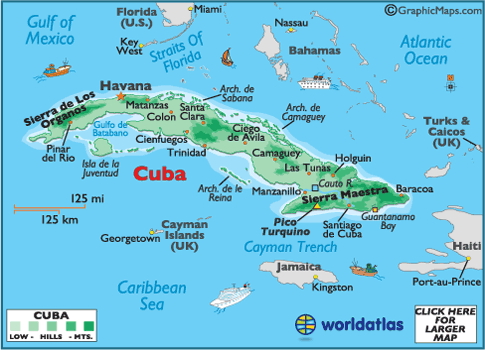
Our tour of island nations continues, but this time we are traveling to the green-blue and warm waters of the Caribbean and the beautiful island nations of Jamaica and Cuba!!!

Map of Cuba and Jamaica

Cuba is a mysterious and alluring country. It is also mountainous, which I did not expect. In my mind for some reason I assumed it was flat. But it’s not. Not at all. From the Gulf of Mexico you can see it’s undulating, lush hillsides and somewhat imagine what it must look like within. Unique and beautiful historic architecture, brightly colored buildings, and old time cars that have been miraculously preserved and maintained define most people’s mental image of Cuba. If we have a notion of Cuba at all, it is these images from Havana that dominate. Today we are so lucky to be able to wander through Cuba in our imaginations thanks to photographer and creative Janice Kwan (follow her on Instagram @jwkwan and @kitrknits for more photos and other awesome creative work, including her gorgeous hand-knit pieces).

She has so many awesome images I didn’t even know where to start so I put together a slideshow. Check out the colors, the cobblestoned streets, the lighting, the purples and blues in the sky contrasted against those heavy, hovering clouds, Castro’s omnipresence. What do you see?

This slideshow requires JavaScript.

Outside of Havana, the Cuba is more rural. You can get a real taste for Cuba and some powerful visual descriptions and cultural (and revolutionary) understanding by reading Our Woman in Havana by Vicky Huddleston (a former U.S. diplomat to Cuba) and Next Year in Havana by Chanel Cleeton. 

Just south of Cuba is Jamaica. In fact Jamaica is very close to Guantanamo Bay. I don’t know how I missed it, but Guantanamo Bay is on the island of Cuba, just kind of fenced off from the rest of Cuba. I of course have heard of Guantanamo Bay, but it didn’t occur to me to think about exactly where it was. I was pretty surprised to discover it’s on Cuba of all places.

Anyway, a Jamaican friend sent me news from late March reporting that 144 Cuban health workers had arrived in Jamaica to help with the Coronavirus outbreak. This was his example of good news happening in his part of the world.

I had to pause to weigh how opportunistic versus humanitarian this show of support was on Cuba’s part and to wrestle with the possibility of our differing perspectives on Cuba’s intent. Since I am U.S.-based, the Cuban government’s actions come laden with a dose of skepticism. What is opportunistic propaganda and what is solidarity and selflessness? I am going to guess that there is gray area, perhaps it’s a bit of both, and it depends who you ask. Of course I am not professing to the U.S. government’s innocence either, to be clear. Surely many good deeds are born of strategic as well as altruistic intent.

Cuba has been sending doctors on international medical missions primarily to poorer countries all over the world for years. Currently, in fact, it has about 37,000 workers in 67 different countries. They provide more health care personnel to the developing world than all of the G8 countries combined. This is partially propaganda, but it is also a major source of revenue for the Cuban government. The U.S. has called into question the labor conditions and pay of Cuban physicians, and as part of increasing sanctions the U.S. discourages other countries from hosting these Cuban medical missions (for more on that, click this link to an Associated Press article from April 3). That said, Cuban physicians are generally quite well-trained, well-liked, and well-received wherever they go.

In the case of COVID, Cuban doctors have been on the front line in Italy since mid-March. From a practical standpoint, they are experienced with this virus and ready to assist better than many in the western hemisphere. There are also A LOT of them. Did you know that Cuba has more doctors per capita than the U.S.? In fact, it is ranked third in the world for the number of doctors per capita (67.2 per 10,000 people according to the World Atlas). WHY are there so many doctors in Cuba, you ask? That results from half of the nation’s doctors fleeing during the Cuban revolution in 1959 and Fidel Castro subsequently promoting medical education as part of a national project to reconstitute their medical corps. Universal health care is also a defining feature of communist principles.

Of course, it’s possible that the training required to become a doctor in Cuba isn’t the same as in other countries, and that that is part of the explanation for the differential in numbers. But Cuba’s health care system is widely praised and life expectancy and infant mortality in Cuba are the same as in the U.S. (if you believe the Cuban government’s statistics, which they do not allow to be independently verified). It appears they are onto something there, but no matter how you slice it, for a virus that seems to require all hands on deck a surplus of well-trained physicians seems like a welcome bright spot on an otherwise gloomy horizon. Propaganda or not, well-trained medical personnel descending en masse to help a neighboring country that isn’t as well prepared to manage it is good news.

Stay well, stay home.

You will be alright.


Off to Jersey

Recently there’s been a proliferation of organizations working to feed the medical front line as they care for the overwhelming volume of sick patients. I came across one in Jersey and thought that would be a cool place to go visit so Feed Our Frontline and the lovely island of Jersey get the spotlight today.

No, not NEW Jersey. Jersey. The original Jerz. As in one of the Channel Islands. The other large Channel Island you might have heard of is Guernsey.

Feed Our Frontline provides meals to healthcare workers while also supporting local restaurants. They work with area hospitals to identify those with the greatest need. Meals can be purchased for individuals as well as their families. Service has been expanded to include the elderly and vulnerable individuals across the islands. A U.S.-based organization, Off Their Plate, is doing similar work, simultaneously feeding the front line while providing employment to hourly shift workers at restaurants.

Ever since I read The Guernsey Literary and Potato Peel Pie Society (which I highly recommend) I have been fascinated with these islands floating out in the English Channel in between France and England. I can’t imagine what it must be like to live on an island. Okay, I can imagine it, but I can’t imagine actually doing it myself.

So I think about these places and wonder what it must be like to live there in general, but specifically what it must have been like to live there when they were occupied by the Germans in World War II and now what it must be like to live there during a pandemic. I can’t decide if we all live on islands now or if that sensation of nowhere to run would be all the more intense on an island. I imagine that the impacts of a pandemic would be experienced exponentially on an island where there are more personal connections to families for generations, more limited supply lines coming from offshore, possibly more likelihood of the virus just being passed around and around (not sure, I am not an epidemiologist, just speculating).

A bit of history – both Jersey and Guernsey are closer to France than to England but speak English as their primary language (though a portion of the population does also still speak their own version of French (Jerriais or Guernesiais)). From what I understand, because it’s a little complicated, the islands are parliamentary representative democracies and British Crown dependencies. They are fairly self-run, doing their own thing in terms of governance and trade, but at the same time they are preparing for Brexit and are protected by the UK in terms of defense. It’s beyond the scope of my brain capacity at this exact moment to delve deeper into that. Maybe I will at another point in history when I am not interrupted every 5 minutes and then suddenly two days goes by between my last cohesive thought and my next one. Both islands use the British Pound for currency and have the same international calling code as the UK (44). They simultaneously have French influence so you can get your baguette and cafe and then run down the street for some fish and chips.

Fun facts: Jersey has toads and snakes on it but Guernsey doesn’t. Victor Hugo spent many years in exile on both Jersey and Guernsey. And they also have a bit of a reputation for being tax havens, but let’s not dwell on that for the moment.

I have yet to make it to the Channel islands myself, but in 2016 I had a neat email encounter with a Guernsian who runs a robust shop on rue de L’Epinal in Forest, Guernsey, called Ounsworth Decor. If you know me, you’ll know why that caught my eye.

I had just finished reading The Guernsey Literary and Potato Peel Pie Society again and this time did a little google search to learn more about the island. I reached out to the shop to ask about the shop’s history and the island itself and was delighted to receive a reply. From that, I learned that Guernsey is 30 square miles with a population of 63,000. Most “Guerns” originate in Normandy, France (though the founder of Ounsworth Decor came from Yorkshire, England).

They speak English with a Cornish/Australian accent. There is a local dialect called Guernesiais which was spoken by most islanders up until the first world war. There is a strong Breton (Brittany in France) connection. With regards to sport Guerns always support England but that doesn’t stop some from having a strong French connection. A lot of locals have property in France. Guernsey has their own football team (soccer), Guernsey FC, that play in the UK league.

All goods come to Guernsey from the UK and they use the Guernsey Pound on the island. It is however not valid in the UK, though the UK Pound is valid in Guernsey. Guernsey is was never part of the EU, though the UK was/is?

So, there you have it! A little window into an unfamiliar world. And, by the way, The Guernsey Literary and Potato Peel Pie Society is now a film. It’s filmed in Cornwall, England, but unless you live on Jersey or Guernsey you likely won’t know the difference.

Stay well, stay home.

You will be alright.

Hope is like a drop of honey quote


Song for the times

This one speaks for itself. The words are perfect for right now, even though the song was released in 1994! I remember it from then, but if you haven’t heard it before it’s timeless and super appropriate for now. The emphasis added by bolding is mine. Those lines get me every time. In 1994 and today. And, also, I am apparently old :-).

None of us will miss this storm. It’s raging all around us now. I’d love to know the end of this chapter, to avoid some of the tougher parts, to know how it’s going to turn out (and of course dreaming that it’s going to turn out okay). But we can’t know that. We are in this and we are in deep. Dive into the well of courage and inner-strength in your heart (dig a deeper well if you need to – moments like these, when we face adversity and are tested, force us to evolve and flex our resiliency muscles), love your neighbors and lift them up (all of them – remember we are ALL human and we are all in this together), and think about how we can do and be better on the other side. Hold on tight. This is one rickety old roller coaster and we are in for some shaking. But that’s where we need to go. And then we will move forward and move on. Changed. Wounded. But oddly stronger.

Woodsong by the Indigo Girls

The thin horizon of a plan is almost clear
My friends and I have had a tough time
Bruising our brains hard up against change
All the old dogs and the magician

Now I see we’re in the boat in two by twos
Only the heart that we have for a tool we could use
And the very close quarters are hard to get used to
Love weighs the hull down with its weight

But the wood is tired and the wood is old
And we’ll make it fine if the weather holds
But if the weather holds we’ll have missed the point
That’s where I need to go

No way construction of this tricky plan
Was built by other than a greater hand
With a love that passes all out understanding
Watching closely over the journey

Yeah but what it takes to cross the great divide
Seems more than all the courage I can muster up inside
Although we get to have some answers when we reach the other side
The prize is always worth the rocky ride

But the wood is tired and the wood is old
And we’ll make it fine if the weather holds
But if the weather holds we’ll have missed the point
That’s where I need to go

Sometimes I ask to sneak a closer look
Skip to the final chapter of the book
And then maybe steer us clear from some of the pain it took
To get us where we are this far yeah

But the question drowns in it’s futility
And even I have got to laugh at me
No one gets to miss the storm of what will be
Just holding on for the ride

The wood is tired and the wood is old
We’ll make it fine if the weather holds
But if the weather holds we’ll have missed the point
That’s where I need to go

Listen here.

Songwriters: EMILY ANN SALIERS

© Sony/ATV Music Publishing LLC
For non-commercial use only.
Data From: LyricFind

Stay well, stay home.

You will be alright.

Hardy Chalk art2

Staying Put

To be fair, the U.S. is so big there’s no way I could get to all the stories in one little post. So, here’s more!

First, I finally finished my puzzle. So yeah! Small victories.

Second, the suddenly open access to culture and museums and places and worlds that were previously held at a distance to us mere mortals is one of the silver linings of this challenging time. Within days of our outer worlds shutting down, cultural opportunities proliferated.

Thanks to this, ummm, situation I went to my first opera at the MET. They have been allowing free streaming of their Live in HD performances. I have always been curious about this esteemed cultural institution, so this was an exciting opportunity to check out what it’s all about. Truth? Opera isn’t for me. But even an unsophisticated observer like me can appreciate the costumes, the voice ranges, and the talent required to combine singing like that with acting.

More up my alley, the Indigo Girls played a live show that we could all stream in our living rooms. And there were tears in my living room, I can tell you. It was such an unexpected portal into the broader world. Hearing the Indigo Girls transported me right out of here and now and into the past with a heaping dose of unexpected nostalgia.

Beyond the Indigo Girls and opera, talented professionals across many creative fields have generously opened their homes, studios, museums, and performance venues to entertain us. Children’s authors Jarrett Krosoczka and Mo Willems hold daily writing and drawing classes for children. Olaf from the movie Frozen is reading bedtime stories to children. Yoga and crossfit studios have gone digital. You can tour numerous museums, go to the zoo, or visit a national park. And of course there is @John Krasinski from the Office totally stealing my idea and creating the Some Good News (@somegoodnews) news program that ONLY FEATURES GOOD NEWS. What a novel idea. And of course he is hilarious and just slightly more famous than me so I support his effort.

Is experiencing these cultural places virtually the same as seeing it, being there, experiencing it for real? No, of course not. But, does it break through isolation and provide access to worlds previously held at a distance, places that many would never have been able to experience at all? Well, yes, it does. And, boy, does it ever gives us all something to dream about, not to mention something to do!

I dream of one day going to every single place I profile during this virtual journey and hugging ALL the people, everywhere. Dreams help enormously right now. A little escapism never hurt anyone, right? Generous people giving of their talents to keep us all entertained at this time help tremendously. And, I want to note that I find this sudden turn toward the stalwarts of civilization – books, art, music, culture- fascinating. In the U.S. the arts often don’t get their fair shake. They are considered superfluous and perpetually underfunded. And, yet, when the shit hits the fan, look what anchors us all.

I’ll leave you with this. Truly, what the world needs now is love. And hope.

OH! And I forgot to recommend some good books for this part of the tour. Well, one of my favorites is Wallace Stegner’s Angle of Repose. A truly gorgeous book about pioneering in the American West. Or how about The Overstory by Richard Powers? Or The Great Alone by Kristin Hannah? Hillbilly Elegy by J. D. Vance could also be interesting during this time to frame the political conundrum, to put it gently, the U.S. finds itself in. Those should keep you busy for a while.

Until next time.

Stay home, stay well.

You will be alright. WE will be alright.

Prayers to all of us during this season of Passover and Easter. Hopefully the tempest will pass over soon and we will all be finding re-birth and renewal in its wake.