On the plane from Miami to Guatemala City. This is my first extended solo excursion since having children, my first trip to Central America, my first trip to the developing world in a very long time. It’s a lot of first’s and with that comes excitement and joy and a re-awakening of my spirit or some part of me that’s been quiet for some time…as well as a visceral, biological longing and sadness that I can’t control and didn’t expect. It’s hard to say goodbye to my family and, much as I am sometimes desperate to bust out of the routine and the daily grind, it’s also incredibly difficult to break away.
By chance, the man who drove me to the airport this morning grew up in Guatemala. He was stunned that that was where I was headed. It feels like the universe conspired to cross our paths. I told him (between sniffles) that I hadn’t really done much for myself in 11 years and that I wanted to soak in the moment. He said, “You are like a comet, passing through so rarely but shining so brightly.” I like that idea!
So, here I am, halfway to Guatemala with my journal out and two books sitting beside me – Open Veins of Latin America (by Eduardo Galeano) and Less (by Andrew Sean Greer) – that I might actually be able to read with all this uninterrupted time. For the time being, though, my mind keeps jumping between thoughts of travel past and the younger me; about my kids, already anticipating our reunion; and imaginings about what this trip will be like! And this tells me that maybe I should take a couple minutes to just sit and be, quietly…but, first, a haiku:
The top solution for reducing climate change probably isn’t what you think. I am an avid outdoorsperson and have been a proponent of sustainable development and living lightly on the land for decades. But I missed one big factor in considering our environmental impact entirely until relatively recently. During all my years thinking about environmental issues and solutions, I thought very directly and narrowly about the more obvious aspects of the environment from pollution to deforestation.
I have had an epiphany in my thinking about environmental priorities lately, as well as long-term solutions. Project Drawdown, founded by author, entrepreneur, and environmentalist Paul Hawken in 2014, maps, measures, and models the most substantive solutions to stop global warming, and communicates those findings to the world. Project Drawdown researchers published a list of their top solutions to climate change. It’s not recycling more and it’s not riding your bike everywhere or giving up your car – though doing more recycling and less driving aren’t bad ideas either.
What is it? It’s educating girls. If you look at their list of solutions, you will see Educating Girls listed as number 6 and Family Planning listed as number 7. If you combine the total atmospheric CO2-EQ reduction (GT) of these two solutions, which has been arbitrarily split in half by the list-makers, it climbs to the top of the list.
By chance, at the same time this solutions list came across my plate, I had just read The Education Crisis: Being in School is Not the Same as Learning. To quote the article, “Global experience shows us that countries that have rapidly accelerated development and prosperity all share the common characteristic of taking education seriously and investing appropriately.”
This data amplifies the power and importance of what I witnessed at the MAIA Impact School in Sololá, Guatemala. MAIA is an incubator of best practices in education from all over the world. The approach is community-based and culturally appropriate. And they are completely open source, sharing their knowledge and experience with 30 local organizations per year.
Empowered Woman, Infinite Impact
Chilly Back to School
Learning about Sustainable Gardening
I am a little late to the party in figuring this out, but it is abundantly clear that education is the fundamental tool to unlocking the chains of systemic poverty and catalyzing positive, long-term change in communities across the world. Incredibly, by investing in something that is intrinsically good, we simultaneously reduce our impact on the environment. For $250 per month (or about $8 per day), a Guatemalan girl can attend the Impact School, becoming a stronger, more empowered and more self-sufficient individual, while leading the way towards a stable and sustainable future for both her country and our world. That is a transformative, life-altering and life-affirming impact. That is the kind of investment that makes the world a substantially better place – for everyone.
“The schools of the future are being built today. These are schools where all teachers have the right competencies and motivation, where technology empowers them to deliver quality learning, and where all students learn fundamental skills, including socio-emotional, and digital skills. These schools are safe and affordable to everyone and are places where children and young people learn with joy, rigor, and purpose.” – World Bank
I know a thing or two about pain. Emotional and physical.
Any woman who has had a baby knows about breathing through pain. And I am here to say that I am absolutely as imperfect as they come when it comes to breathing through anything. I get so angry and frustrated and want to just wallow in my misery sometimes. Very graceful. Very zen. I am more of a just-give-me-a-to-do-list-and-I’ll-do-it kind of person.
As with most new parents, we didn’t sleep much those first few months. Our baby was fussy and needed to be held all the time and, being the worried new mom that I was, I spent what little “free time” I had researching what I was doing wrong and the many ways I may never sleep again.
I am from a family that says things like, “I am not sick, I just don’t feel well”. We push through and don’t complain. So when my hands started to hurt about six weeks postpartum I chalked it up to constantly holding a heavy baby and exhaustion. The pain would come and go, and time was a very slippery and elusive concept in those days, so carpal tunnel syndrome seemed like a legitimate possibility. Sure some days my legs kind of ached, too, but that’s what atrophy feels like, isn’t it? I distinctly remember hobbling down the stairs to the backyard saying to my mom, “I feel like I am getting worse and not better. Is this normal?”. Then one day my knee visibly swelled up. Having barely left the house in months, let alone done anything active enough to cause an injury, I finally couldn’t find an answer for that one.
I was diagnosed with Rheumatoid Arthritis (RA) two weeks later. Cue record scratch. Arthritis is for old people, isn’t it?
I’d love to say that I went home from the doctor with my chin held high and soldiered on with zero self-pity. Ha! No, no, no. There were some serious bellyaching moments and I definitely asked “why me” more than once. I was shocked, almost offended, that this could happen to me. What the heck did I do to deserve this? Very zen, like I said. For me, RA meant one big old Rude Awakening.
Pro tip – don’t google your newly diagnosed disease when you get home from the doctor. It doesn’t end well. Ignorance truly is bliss.
With the words “severe prognosis” ringing in my ears, I was sent home to begin to ween my baby off breastmilk so I could start on some pretty powerful medications to try to change the course of the disease. I remember calling my OB and asking for advice on how to ween a baby, explaining what had happened and why in this age of “breastmilk is best” pressure I was stopping. The nurse I spoke with, thank goodness, was so compassionate. I will never forget her kindness and her words, “You did such a good job”. I needed to hear that. It’s very lonely to be sick, have a brand new baby with all the societal judgment that comes with parenting, and your choices aren’t yours anymore.
That was part of the emotional pain of RA for me. The diagnosis, whether you have a little baby or not, brings a flood of fears and unknowns. Google told me that 1/3 of people with RA are so disabled after five years that they can no longer work; I was denied short-term disability; the medication side effects and disclaimers were terrifying to read. The disease itself is an unpredictable roller coaster ride. Some days are better than others, some medications work well, others make you nauseous. It’s all trial and error. No lists.
And the physical pain? Well, it’s like nothing else, quite. A broken arm? Maybe. Childbirth? I guess so. It’s intense and deep and unrelenting. 40mg of prednisone and 800mg of ibuprofen wouldn’t even touch it some days. I couldn’t lift my baby out of the crib because I was cradling my arm so gingerly. Some days I couldn’t walk. I never knew where the pain would go next, which joint would be affected. Hips, shoulders, jaw – those are the worst. You can work around a hand or a finger, but it’s impossible to eat or even smile when your jaw joint is inflamed. I begged my dentist to tell me it wasn’t RA and I just needed a root canal. Anything, like I said, for someone to just fix it.
I have tried to figure out what triggers my flare ups. I cut out sugar and caffeine and alcohol and gluten – pretty much all joy – and it made no discernable difference except that I was more miserable and now high maintenance as well. I have submitted myself to science and participated in pain studies. Mostly I learned that I have a high tolerance for pain and that ice is my friend. I have no idea why some days are better than others. Remember how I said that I like order and a nice to do list? Yeah, RA doesn’t work like that.
It turns out that that kind of checklist mentality, where if you just check the right boxes you are in control, is a false premise. That remains a disappointing life lesson for me. But I am working on it.
Long, long story short, eventually the meds did their thing and my RA went into remission. For the time being, I don’t have any pain and haven’t had any permanent damage to my bones or joints. That in and of itself is a miracle. Truly. I’ll write a whole post on how different the outlook is for RA patients who were diagnosed after methotrexate started to be used to treat RA as compared to previously when all that could be done was attempt to manage the pain.
It took a lot of time, a lot of deep breathing, thousands of laps in the pool, sometimes screaming underwater, sometimes also crying into my goggles, for all the emotional toxicity to work its way through my system. But eventually, that piece settled, too.
Now I swim in a masters swim program. I participated in a triathlon a year ago, something that was absolutely unimaginable only a year prior. I go to crossfit. I traveled to Guatemala! Hope abounds.
I am tempted to say that I conquered RA, that I win. But that would mean that I haven’t learned anything from all of this. I have been around the block enough times now to know that my RA and I are just in a temporary place of peace, and that it will inevitably come back. And when it does, honestly, it will be really hard for me. I don’t expect that my despair will be as deep, but I’ll surely still long for that elusive checklist and the return to normalcy. Now I know, though, that I CAN come back, that RA is just one part of my story, and that I am not less than because of this. As Dory says in Finding Nemo, “Just keep swimming, just keep swimming”. Seems like some pretty darn good life advice. One day at a time. One breath at a time. One lap at a time. One foot in front of the other.
Post Triathlon with my “I have RA AND I am an athlete” shirt on
What’s so noteworthy about the following picture, do you think?
If you said, “That’s a bathroom stall”, you’d be correct. But you’d be more correct and I’d be more impressed if you said, “That’s a wheelchair accessible bathroom stall! With a ramp to the door! In Guatemala!”
My cousin Chris has been in a wheelchair since a skiing accident in college. He is an accomplished athlete and motivational speaker. In his memoirs, he shares what it was like for him after his accident, learning how to adapt physically and mentally to his new and challenging reality.
Because of Chris’ experiences, specifically his time in Tanzania preparing to climb Mount Kilimanjaro, I may be more attuned to the challenges people with disabilities face, especially in the developing world. Have you ever noticed how rare a curb cut or an accessible bathroom is outside of the United States? Have you ever considered how difficult it might be to get around in a wheelchair period, let alone on a dirt path? In the snow? Without ramps? Without an elevator? With no wheelchair at all?
Needless to say, when I saw this bathroom in the small community of San Juan La Laguna in Guatemala I about fell over with surprise and joy. So today I wanted to share the important and meaningful work that Alma de Colores, a “labor and social inclusion program for people with disabilities” is doing in Lake Atitlan, Guatemala. And to encourage everyone to think for a minute about how hard it is to live in the developing world as an able-bodied individual. Or how difficult it can be to live in the U.S. as a disabled individual, even with the accessibility standards we have. And to simply be aware of that as you go about your day today.
My cousin spends a lot of his time speaking at schools with his Nametags educational program, shining a light on the disabled community so that they are seen, so we all start to see their potential and our own potential, instead of focusing on the limitations. The Nametags program teaches about resiliency, and also about the labels we put on ourselves and others.
Chris and Tajiri on top of Kili
Chris Skiing
Waypoint Adventure puts much of what Chris’ Nametags program talks about into action. Their mission is to “challenge youth and adults with disabilities to discover their purpose, talents and strengths through the transforming power of adventure”. And their work is incredibly powerful! The liberation and delight that comes from triumphing over an “I could never do that” mindset is truly thrilling.
Shel Shilverstein wrote the following poem in Where the Sidewalk Ends:
Listen to the MUSTN’TS, child, Listen to the DON’TS Listen to the SHOULDN’TS The IMPOSSIBLE, the WON’TS, Listen to the NEVER HAVES Then listen close to me – Anything can happen, child, ANYTHING can be.
Alma de Colores, Nametags and Waypoint Adventure provide the support and structure to make the impossible possible. They teach about the power of community and inclusion, that no one climbs a mountain alone, that together we can transform people’s view of their abilities. Those are phenomenal messages that transcend international boundaries. Those are the universal messages of our common humanity.
It would be disingenuous of me not to share how HARD it was for me to go to Guatemala. That may have been clear from my earlier post that mentions the soul-searching I went through to decide to go in the first place. I am nothing if not risk averse. Or from the tears I cried when it was actually time to go to the airport. It was really HARD to leave – there were so many unknowns and my old friend self-doubt had a lot to say about my decision.
Sure, I’ve been brave before – ostensibly. I’ve traveled all over the world, I’ve taken jobs in states and countries I had previously never even been to before arriving for work. But so much of that bravery was born of desperation or an “it can’t be worse than this” attitude, not actual courage. And so much of it was before having children. Going to Guatemala, on the other hand, was a choice to do something different when things were going perfectly fine. And that kind of rocked me.
One of my favorite all time quotes is: “I went to the woods because I wished to live deliberately, to front only the essential facts of life, and see if I could not learn what it had to teach, and not, when I came to die, discover that I had not lived”. That’s from Henry David Thoreau’s Walden. It’s a message I picked up decades ago, and it’s one I’ve carried with me since.
In my twenties, I would literally go to the woods, especially my sanctuary around Katahdin in Maine, where I found my people, my place, my footing in this world when I needed it most. I find life there to be a little less noisy, a little more simple, and the scenery so beautiful that it soothes my busy brain.
As I’ve gotten older and my responsibilities to and for others have expanded, I try to find ways to simplify my life, to front only the essential things, to bring the peace that I find when I am in the woods home with me. Despite all my family responsibilities, my anxiety, my self-doubt, I don’t want to forget to live. I want to live authentically and bravely and not, like Thoreau says, from the vantage point of looking back at the end of my days, discover that I had not lived.
And so I choose, daily, to face into the fear. I get on the plane (heck, I buy the plane tickets!) to Guatemala; I push the publish button on this blog while cowering behind the screen awash in vulnerability; I belay at the rock gym even though, fully trained to belay, my mind still tells me it’s awfully risky; I participate in a triathlon for the first time ever when my Rheumatoid Arthritis is finally in remission and I think “maybe I can still do something like this after all”; I drive my beautiful, vivacious, young and also scared mom to the doctor and hear the Alzheimer’s diagnosis we have suspected but been dreading; I go to the woods with my kids and share with them the joy I’ve found there, though it’s not nearly as simple or quiet with them in tow! I stretch the boundaries of my comfort zone. I breath through the self-doubt and the fear and I LIVE.
My life has been the very definition of bittersweet these last several years. And I am so incredibly grateful for all of it. Without the fear, how would I find my courage? Without the bitter, how would I taste the sweet?
Thanksgiving is a holiday that is all about gratitude, giving thanks, coming together with family and friends to break bread and re-connect. I could write entire individual blog posts on each item I have to be thankful for: my family, my friends, my health, a roof over my head, feeling safe, the ability to travel freely. I’ll start right away with a THANK YOU. I am so grateful for each of those things and more.
For the sake of this not becoming a dissertation, I am going to limit my list to some of the basics that I don’t believe many of us in the U.S. spend much time thinking about. I am thankful for: clean water that is readily available and inexpensive; ample supplies of food; toilets that flush and plumbing that works; clean and functional hospitals; libraries (FREE books that you can just take at will!); public education for all through 12th grade; a postal service that efficiently gets correspondence, bills, and packages from point A to point B (yes some countries – Guatemala being one – don’t have that).
Of course there are exceptions to even those examples – residents of Flint, MI, surely would not highlight their water system; food insecurity is real and healthy food can be very expensive and unaffordable on many budgets; some people live off the grid without flush toilets and plumbing; we all know the U.S. healthcare system has its issues; libraries and public education are free but widely variable in quality depending on the local tax base; and the postal service is having trouble keeping up with the times.
Yes, there are haves and have nots, there will always be people with more and those with less (see Desiderata poem), and corruption and inequity exist here, too. But, overall, damn we are lucky. It’s not that there aren’t problems or that it’s perfect; but we have a basic standard of living in the U.S. that exceeds the norm in many places. And that’s something I want to acknowledge and say thank you for.
As I traveled through Guatemala, I was simultaneously reminded about all that I take for granted while being struck by the contrasts that so often exist within a developing country. There is such beauty and yet such poverty. It’s a compelling place to visit, but such a challenging place to live. There are resources available to travelers from afar that people who live in the country couldn’t dream of accessing (due to the vast difference in the value of a dollar against local currencies).
The issues facing disenfranchised communities in the U.S. and abroad are big and overwhelming. The scope of the problems and the sense of hopelessness can be paralyzing. I have spent a lot of time on the sidelines wondering how I could possibly help, worrying that my involvement as a “helper” could be counter-productive, and generally so caught up in not knowing which direction to head that I headed nowhere.
Recently, though, I have changed my mindset. I am choosing gratitude over guilt. I am choosing to face into problems and be part of the solution, versus doing nothing because it all feels too big or uncomfortable.
So what will I do? What can we do? Champion. Invite. Invest. Find people doing good work and shine the light on them. In the Quaker faith, they “hold someone in the light” to bring attention to a person’s suffering. Essentially the concept is to shine a light on hard times. Hold people and communities up to the light in their time of need. Bring attention to the issues that matter to you and be an ally to positive change. Invite others to join you, to see these places and people, to face into the problems and be part of the solution. And, if you have some money to spare, invest in the good work that is happening and the real changemakers doing it.
Thanksgiving is about inviting everyone to the table for a meal and saying thank you. It is not always easy, it can be stressful, and it also has a conflicted history. But the concept is right on. As I enjoy the bounty of good food and the company of family, I will be conscious of my good fortune, I will be saying thank you, and I will be holding those who are struggling in the light.
Thank you for reading and Happy Thanksgiving! Gobble gobble.
Let me back up a bit and talk about how I came to be in Guatemala in the first place.
I am a people person, a connector, a collector of friends. I take keeping in touch seriously, as my GPA my first year of college reflects. It turns out that spending countless hours in the library sending emails is not exactly the same thing as spending countless hours in the library studying. I, unfortunately, did not learn a tremendous amount by carrying my books back and forth to the library and sitting in the computer lab. Educational osmosis, apparently, is not a thing. Ah, life lessons. But I digress…
The point of my connector story is that I traveled to Guatemala with a friend I met on a semester abroad program during college. We have kept in touch for over twenty years, and though we hadn’t seen each other in seven years I texted her out of the blue one quiet weekend day this fall and mentioned that “I was trying to get ideas about where I can put my efforts to save the world and researching what others were up to”. Her response, to paraphrase, was to check out the Maia Impact School program in Guatemala and consider joining her for a trip she was organizing to attend the inauguration of the new Colegio Impacto school building at the end of October. The rest is history.
But it wasn’t as easy as an idea and an action. There was a heck of a lot of soul-searching and then logisticating to get me on the plane. The soul-searching was primarily around leaving my family. I had never really done that before! I love to travel, but I hadn’t traveled solo in over a decade and in fact hadn’t left my kids for more than two nights ever. Life got busy and complicated and for a long time I wasn’t in any condition physically or emotionally to go anywhere. I didn’t have time to plan a trip, let alone go on one, so it just wasn’t part of my reality for a while.
But I’ve been around long enough to know that life is short and I’ve faced enough adversity to know that it’s also unpredictable. I take the phrase “seize the day” to heart. And, honestly, I was desperate to go on this trip, but also terrified of leaving and rocking the boat. I am a worrier and a thinker, and now that I have little people and a husband counting on me, I kept hearing these messages in my mind that “life is good, it isn’t worth the risk”.
And then my village stepped in. The women in my community not only told me that I should go, but that I NEEDED to. One friend explained how important it was that my children see me as a person, with my own interests and passions. Two others gave me a crash course in Spanish. And all of them offered before and after school childcare coverage to make it possible, while emphasizing that my husband and children would be okay, and pointing out that since I would be leaving on October 31 they could survive (probably quite happily) on Halloween candy if absolutely necessary.
So I booked my flight and visited the local hospital’s travel clinic (because even though Guatemala is fairly innocuous as developing countries go, I need to be extra thoughtful about travel with my medical condition) and before I knew it I was leaving for the airport. That’s when my flee instinct really kicked in. In the predawn hours, with my ride waiting outside, I insisted to my husband that I didn’t actually have to go, that just dreaming of the trip was enough. He reassured me that I’d feel better by the time I got on the plane and that they’d be fine. And so I went. And, he was right, I was okay by the time I arrived at the airport. And, wow, how luxurious to be alone, to read a book, to watch a movie, to think, to sleep…all uninterrupted!
Before I knew it, I was touching down in Guatemala City (check out my Arriving in Guatemala post). Within Guatemala I traveled to Antigua, Sololá, Panajachel, San Juan La Laguna, and Santa Catarina. I traveled with a group of women who were immediately like family, all kindred spirits, all seasoned travelers, and all strong, smart, kind, passionate women. They each brought different strengths to the group; different insights when we would talk about the problems in Guatemala, in our own country, in our own lives; different interests and pasts; and different dreams and hopes. But we were connected in this moment in time, in this spectacular place, at an incredibly powerful moment for the organization and the girls we were there supporting. Through this trip I connected with new friends; I reconnected with friends from my past; and I reconnected with myself, my passions, and what stirs my soul. I couldn’t have done that without taking a chance and taking this trip. I couldn’t have done that without the support of my family and my community.
While traveling I recommended Brene Brown’s “The Power of Vulnerability” Ted talk to one of my fellow travelers. Brene Brown is a research professor at the University of Houston who studies courage, vulnerability, shame, and empathy. Whatever my co-traveler and I had been talking about, it seemed relevant. Needless to say, I hadn’t actually watched it in ages and didn’t have enough battery power or cell service on my phone while I was traveling to re-view it myself. It’s been an open weblink on my Iphone for a couple weeks now, but I finally got to watch the first ten minutes of it again this past weekend. I couldn’t believe what I was hearing so I jotted down the notes. In her shame research, Brene found that:
[The one difference, the one variable, between people who have a sense of worthiness, who have a strong sense of love and belonging, versus those who struggle for it and who always wonder if they are good enough, is that they believe they are worthy of it.] “The one thing that keeps us out of connection is a fear that we are not worthy of connection…what these people had in common was a sense of courage. Courage, the original definition…was to tell the story of who you are with your whole heart. These folks had, very simply, the courage to be imperfect. They had the compassion to be kind to themselves first and then to others because, as it turns out, we can’t practice compassion with other people if we can’t treat ourselves kindly. And the last part is that they had connection. And this is the hard part – as a result of authenticity. They were willing to let go of who they thought they should be in order to be who they were. You have to do that – absolutely – for connection.”
I take from this and my own life experience three main things:
1. Always be true to (imperfect) you.
2. You can’t practice compassion with other people without being compassionate with yourself sounds an awful lot like you can’t take care of other people if you don’t take care of yourself (oxygen mask people!).
And, 3. Meaningful connection with other people is incredibly important.
In my previous posts I provided a very brief history and economic background for Guatemala and then discussed the pioneering efforts Colegio Impacto/MAIA is making in educating indigenous girls. Well-intentioned development work happens the world over, but with widely varying intentions and results. Some development creates greater dependency on aide, intentionally or not, versus establishing systems to foster sustainability and independence. Some development work downright backfires. Some development work is positive but incremental, which can be okay depending on the circumstances. And then there are the game changers, those organizations with a belief that incremental change is not sufficient, that the challenge is too acute, and that a new approach is needed.
So, what’s the magic formula that creates a successful development project? I wish I knew the answer to that question! But I don’t and I don’t currently have the capacity to embark on a scientifically evaluated study either. I can, however, outline the components of an exemplary development program based on what I saw with the MAIA program.
Norma Bajan is the MAIA Impact School program’s Country Director. She is an intelligent, empowered, courageous woman, who has an amazing story to tell. Follow this link to read the text of the speech Norma gave at the Amplify Her Voice Annual Event in Colorado, in which she describes her childhood and her journey to where she is today.
Norma is a Mayan woman. And it is she who leads the MAIA program in Guatemala. She has a tremendous partnership with the Executive Director, Travis Ning, and incredible support from the U.S. Board, but the program is based in Guatemala and run mainly by indigenous people. And that is by design. MAIA aims to empower the local community and the U.S. team endeavors to be so successful in doing so that they work themselves out of a job. Norma, her colleagues, and her Guatemalan Board want change to happen in their country and also to honor their culture. As a result, the Maia school program covers the traditional subjects one would expect from science to math to writing and reading. But the students also study Kachiquel, their native Mayan language, alongside learning fluent Spanish and some English. The positive aspects of the students’ Mayan heritage are incorporated while the girls study new academic and social skills. Home visits and mentoring and other aspects of the program go beyond the typical school day to foster new ways of communicating and relating in the girls’ homes and their communities.
Travis and Norma, Ribbon-Cutting Ceremony
Norma Bajan and a Student
In sum, the MAIA development model is exemplary because it: demonstrates strong, selfless leadership; maintains healthy, cooperative partnerships (between the administrative team, the Guatemalan Board, the U.S. Board, and their allies and supporters); reflects a community-based approach that is culturally appropriate; is an incubator for best practices from all over the world; and is completely open source, sharing their knowledge and experience with 30 local organizations per year. The MAIA program inspires emboldened self-sufficiency and long-term stability and sustainability. What more could a parent hope for for their child, for their family’s future, for their country, than that?
See what I mean? Hope springs eternal, and human connections – to each other and to our own humanity – are the link.
It turns out that setting up a little bloggy-blog takes a bit more time and has a steeper learning curve than maybe would have been expected. I spent most of my “writing time” yesterday on formatting and figuring out this blog platform situation (oh, yeah, and chaperoning a second grade field trip). So I am going to take my own advice and step back for a minute and take some time today to breath and catch up.
For today I am posting a few pictures of the beauty that is Guatemala as well as one of my favorite quotes. Stayed tuned for more on Colegio Impacto/Maia and Guatemala; on community and friendship; on more local stories of hope and courage; on my personal reckoning after a diagnosis with Rheumatoid Arthritis; on my journey in caring for a parent with Alzheimer’s. But that’s all for another day…
The Guest House by Rumi
This being human is a guest house. Every morning a new arrival.
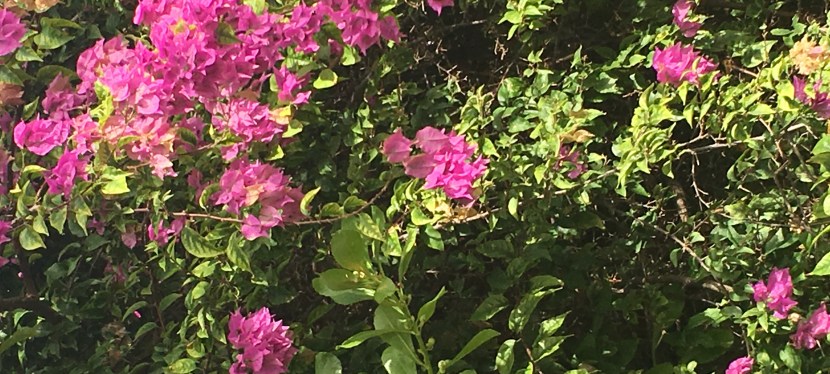
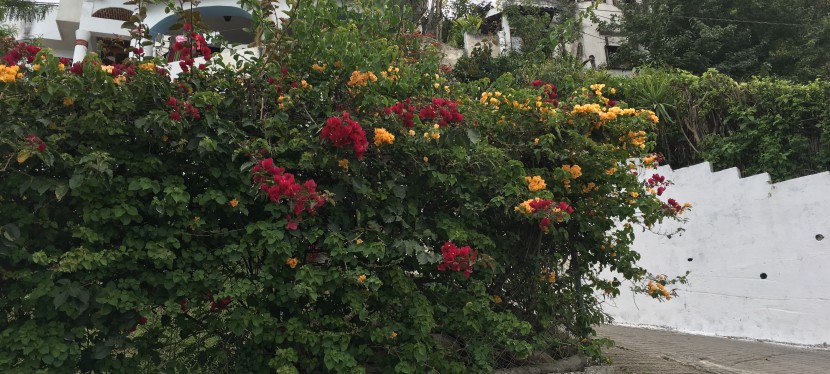
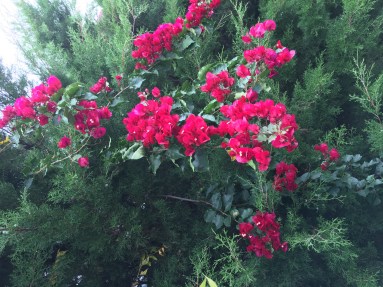
Flowers of Guatemala
A joy, a depression, a meanness, some momentary awareness comes As an unexpected visitor.
Welcome and entertain them all! Even if they’re a crowd of sorrows, who violently sweep your house empty of its furniture, still treat each guest honorably. He may be clearing you out for some new delight.
The dark thought, the shame, the malice, meet them at the door laughing, and invite them in.
Be grateful for whoever comes, because each has been sent as a guide from beyond.
So where is the hope in the story of Guatemala? The statistics, especially for the indigenous population, are bleak. In my previous post I outlined some of the headwinds facing Guatemala, especially within the indigenous population and particularly for females. I didn’t even mention the 36-year civil war that only ended in 1996, and the 200,000 deaths due to that war, 93% of which were indigenous people.
How does change happen, how does one ever move the needle to dismantle entrenched systems of inequality, how do people rise up and out of day-to-day survival to a more sustainable life? The obstacles appear insurmountable. And, yet, I had the opportunity to meet a girl pioneer from the Colegio Impacto/Starfish (now Maia Impact) program and her family in their home. I had the opportunity to tour the newly-built school that will begin to welcome students in the classrooms, using the computer and science labs, reading Harry Potter and Percy Jackson and Charlotte’s Web, among many others, in the library in January of 2019. I witnessed with my own eyes the families, this caravan of hope, walk through the gates of that school after the ribbon-cutting ceremony on November 3, 2018, and I glimpsed a powerful new narrative and a promising future for Guatemala.
New Colegio Impacto
Ribbon Cutting
The Colegio Impacto/Maia program in Guatemala provides a model for education and economic development that can and should be replicated. Maia Impact School is a school and mentoring program designed for indigenous girls that is run by indigenous women. Maia works with young women from low-income, traditionally marginalized communities who have the talent and desire to succeed but lack access to opportunity. The program’s goal is “to create truly meaningful and long-lasting change” through the core fundamentals of community, academics, and culture. Maia believes in empowerment, equality, and opportunity for all. Check out their website – www.maiaimpact.org – for more information. I can’t do justice to the full scope and impact of their work here. But the work is powerful and they have results and success stories to demonstrate that this model works.
One success story I can share is the example of the girl pioneer, Zonia, who I had the good fortune to meet while I was there. Her grandmother is about 75 years old, was never educated, and cannot read or write. Her mother is in her late 40’s and finished only 6th grade. This level of educational attainment is pretty typical in rural Guatemala. They live in a simple home, a short walk down a dirt path through open fields and corn stalks from a secondary road in their village of Chaquijyá, a division of Sololá. This is an agricultural community and it is the 5th poorest in the country, according to data from WeGuatemala as of 2013. In 2013, 34% of people in their community were surviving on $1USD per day. There are no modern amenities or conveniences in the home. Laundry is cleaned on a scrub board outside and hung to dry. A wood fire heats the stove for cooking. The sink is outside, as is the pit toilet. The ceilings are low, maybe 5’5” at the door. Potable water is a limited resource.
Fields in Chaquijyá
Zonia’s House
Zonia is 20 years old, petit, quiet, and polite. She finished high school at the Colegio Impacto, and is now in her third year of a six-year nursing program. Her family took a chance on this exceptional young girl. Her family made a commitment to her education, and they broke the mold of the way it has always been. They and all the Maia families had to be unbelievably brave. They had to sacrifice in the present on behalf of their child’s future, giving up the child’s short-term earning potential selling goods, their help caring for other children in the family, their help going to the market, making meals, working in the fields. They had to have the courage, in the face of disapproval from their neighbors, their community, and possibly within their own family, to try something different, something new, and something previously untested.
Zonia (in blue), her mother, her grandmother, and our Maia group
One of the goals of the Maia program is for the girls to be able to earn a middle class wage when they complete their studies and enter the workforce. This would be approximately $3,500USD per year, an 8 to 9 fold increase from typical wages in this region. Zonia is still studying, but she has already been able to help her community by administering medication and triaging sicknesses to prevent or delay travel to a health clinic. Her family, and their broader community, is already reaping the rewards of Zonia’s hard work and her family’s commitment. Her dream is to finish her studies, which currently require her to travel a fair distance from home, and to return to her family and to work in the Sololá community. She has a high school education, is working towards a professional degree, and speaks two languages (Spanish and her native Kachiquel) while having stayed true to her Mayan roots. Her potential, the horizon for her future, is truly infinite…
And now there is a magnificent, modern, new school building in Sololá in which other girls like Zonia will learn and become leaders for their communities and hope for their country.
Students Placing Locks on the Gates with Their Families During Commitment Ceremony
Norma Bajan and a Student
Students in Science Lab
The concept of the Colegio Impacto having its own building was a dream; the reality was many years in the making. I can’t imagine the hurdles the Maia team had to overcome to pull all the necessary pieces together to make it happen. But happen it did, and watching the Maia team, the students, and the neighbors marvel at the reality of it during the inauguration ceremony was humbling and powerful.
The building is unique in the Sololá landscape. There isn’t much that compares to it in terms of modernity, sophistication, architecture and sheer size in the whole country. The details are extraordinary, with the architecture suggesting the patterns of Mayan textile weaving, and symbolizing the drawing together of the community, the girls’ families, and the program’s allies as well as the past and the future. This building is a beacon of promise, and a vision of hope for what could be.










 Put Your Own Oxygen Mask on First