The Unsung Solution to Climate Change

The top solution for reducing climate change probably isn’t what you think. I am an avid outdoorsperson and have been a proponent of sustainable development and living lightly on the land for decades. But I missed one big factor in considering our environmental impact entirely until relatively recently. During all my years thinking about environmental issues and solutions, I thought very directly and narrowly about the more obvious aspects of the environment from pollution to deforestation.

I have had an epiphany in my thinking about environmental priorities lately, as well as long-term solutions. Project Drawdown, founded by author, entrepreneur, and environmentalist Paul Hawken in 2014, maps, measures, and models the most substantive solutions to stop global warming, and communicates those findings to the world. Project Drawdown researchers published a list of their top solutions to climate change. It’s not recycling more and it’s not riding your bike everywhere or giving up your car – though doing more recycling and less driving aren’t bad ideas either.

What is it? It’s educating girls. If you look at their list of solutions, you will see Educating Girls listed as number 6 and Family Planning listed as number 7. If you combine the total atmospheric CO2-EQ reduction (GT) of these two solutions, which has been arbitrarily split in half by the list-makers, it climbs to the top of the list.

By chance, at the same time this solutions list came across my plate, I had just read The Education Crisis: Being in School is Not the Same as Learning. To quote the article, “Global experience shows us that countries that have rapidly accelerated development and prosperity all share the common characteristic of taking education seriously and investing appropriately.”

This data amplifies the power and importance of what I witnessed at the MAIA Impact School in Sololá, Guatemala. MAIA is an incubator of best practices in education from all over the world. The approach is community-based and culturally appropriate. And they are completely open source, sharing their knowledge and experience with 30 local organizations per year.

I am a little late to the party in figuring this out, but it is abundantly clear that education is the fundamental tool to unlocking the chains of systemic poverty and catalyzing positive, long-term change in communities across the world. Incredibly, by investing in something that is intrinsically good, we simultaneously reduce our impact on the environment. For $250 per month (or about $8 per day), a Guatemalan girl can attend the Impact School, becoming a stronger, more empowered and more self-sufficient individual, while leading the way towards a stable and sustainable future for both her country and our world. That is a transformative, life-altering and life-affirming impact. That is the kind of investment that makes the world a substantially better place – for everyone.

“The schools of the future are being built today. These are schools where all teachers have the right competencies and motivation, where technology empowers them to deliver quality learning, and where all students learn fundamental skills, including socio-emotional, and digital skills. These schools are safe and affordable to everyone and are places where children and young people learn with joy, rigor, and purpose.” – World Bank

#maiaimpact #educationmatters #investinpeople


Can Your Skin Cream Transform Your Mind?

“Our teachers weren’t kidding when they said we’d take lots of walks and that people in the villages are very content to do nothing. No plans, nothing. I thought I’d handle that well because I, too, like to do nothing. But I only really do nothing for brief interludes during the day, in between finding something else to do. When I sit and knit, read, write letters, make necklaces, etc., I consider that pretty much doing nothing. Here they just sit. It’s not an easy lifestyle to adjust to.” – me, March 2, 1996

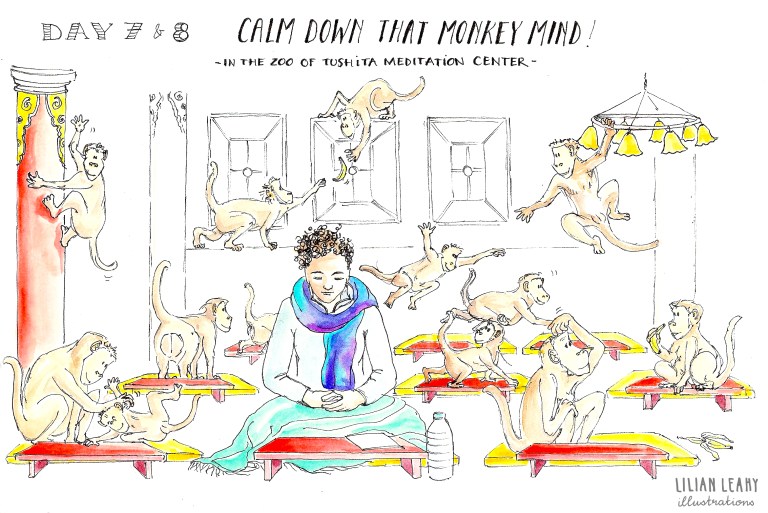
I had to laugh when I read this journal entry from my village homestay in Madagascar. In the U.S. we live in a culture that is so go-go-go that I didn’t even recognize that my doing nothing was still doing something. That was true 20 years ago, and it remains true today. I just happen to be more aware of it now. Doing nothing and remembering to breathe are literally things I need to practice. Five minutes sitting still without my mind wandering to a hundred different items on my to-do list is impossible. Truly. Try it and you’ll see it’s not just me! “Monkey mind” is the Buddhist term for the incessant chatter and sense of unsettledness in one’s mind. It looks like this:

Monkey Mind image
This is what a monkey mind looks like; illustration by Lilian Leahy

That phrase evokes images that just crack me up, quite like this Lilian Leahy illustration. The ring-tailed lemurs shown in the following photos that I took in Madagascar also crack me up. They are very Zen. This is NOT what having a “monkey mind” looks like.

When I was diagnosed with Rheumatoid Arthritis, and finally accepted it (that’s another story altogether), I considered all options for how to live my healthiest life given the cards I had been dealt. Besides doing all the regular stuff my doctor asks – take all the prescribed medications, see her every three months, have bloodwork done at the lab regularly, get exercise – I wondered if there was anything else that would help. I had two very little kids when I was diagnosed. And I love leading a busy and active life. I want to be as healthy as possible and have left no stone unturned in my quest.

Having RA has taught me many, many philosophical but also practical things about life. My diagnosis and subsequent eventual acceptance was like a massive 2×4 smacked across the head saying, “ummm, hellooooo, for real, you need to pay attention.” It has taught me about cherishing the little things in life, and not taking any day or any thing for granted. It’s like a constant anatomy lesson – yes! that pain I was wishing could be solved by a root canal is in fact a jaw joint (too bad for me). It has taught me about control, and that it turns out I am not in it. And, it has taught me about how stress and my monkey mind can be implicated in RA flares and general feelings of being overwhelmed.

After a bit of research and a lot of finagling of schedules, five years ago I enrolled in an 8-week course at the Benson Henry Institute for Mind Body Medicine (BHI) at Massachusetts General Hospital. This course introduced me to the term “monkey mind,” not to mention to the fact that I have an extremely active monkey. You may have already figured that out from the sheer breadth of subjects I write about. I am not exactly focused on one thing, rarely one thing at a time, and I am passionate about many!

For the record, I am not one to buy into the concepts of meditation and relaxation easily. The term self-care makes me cringe, as do the words snuggle and cuddle (but that’s an aside). Bluck. All that touchy-feely stuff gives me the shivers. So you could say that I entered BHI skeptical at best. But I figured since I had devoted my time to this, I might as well go all in and have an open mind (pun intended).

Did my life change overnight and was my RA banished for good? No. It takes a long time to learn new habits, and the brain tends to tack back to its well-trod neural pathways. It takes effort and practice to become aware of the mind’s motivation. For me, sitting still and doing nothing were bad words. My inclination is still more towards whirling dervish than calm Buddha.

But I learned an incredible amount about how important the act of doing nothing and sitting still is for the brain. It’s a biological reality that is now backed up with MRI studies and scientific data. The scientifically validated benefits of mindfulness include: decreased stress; reduced symptoms associated with depression, anxiety disorders, pain and insomnia; an enhanced ability to pay attention; and a higher quality of life. Don’t believe me? Check out Harvard researcher Sara Lazar’s TEDx talk on the effect of meditation on the brain.

Or Dan Harris, the ABC anchor who had a panic attack on live television that led him to meditation and eventually to writing the book 10% Happier.

Personally, my most notable takeaway from the course happened on the first night. The instructor flashed a powerpoint slide that read, “If you can’t make room for exercise now, you’ll have to make room for illness later.”

I was already making room, lots of room, for illness. But I wasn’t prioritizing myself. AT ALL. This one quote completely changed the way I viewed my calendar and what was and was not negotiable on it. I began swimming and made it a permanent item on my calendar. I trained myself to take a deep breath every time I come to a stop sign or stoplight. I downloaded a million mindfulness apps (still working on pausing long enough to actually use them).

My message to you is this – skin creams may help with wrinkles and dry skin, but meditation enhances a wrinkled mind. 

Breathe. Deeply. And often. It helps.

Serenity Prayer

Grant me the serenity to accept the things I cannot change,
Courage to change the things I can,
And wisdom to know the difference.

Reinhold Neibuhr

Vanilla, Powerfully Plain

I mentioned that my family has bit of a love affair with the chocolate chip cookie. You know what the smallest make or break ingredient in a chocolate chip cookie is? The vanilla. The difference in taste that a single teaspoon of vanilla makes is astounding.

But I have often heard vanilla used as a synonym for plain. In fact, Merriam Webster dictionary defines vanilla as, “lacking distinction : plain, ordinary, conventional.” And, yet, a world without the vanilla bean would be flavorless and bland.

Where does the majority of the world’s vanilla grow, you ask? In one of the least plain, ordinary, or conventional places on Earth. That’s right, my old love, Madagascar.

Madagascar boasts more than 75% of the world’s vanilla fields. All of Madagascar’s vanilla is grown in the SAVA (Sambava, Antalaha, Vohemar and Andapa) region in the country’s northeast. Vanilla is Madagascar’s largest export, which is pretty remarkable given that the plant, which was introduced from Mexico during the French colonial period, needs to be hand-pollinated.

This CBS video from 2017 discusses the recent vanilla bean shortage, a little about the price fluctuations over the past two decades, and the impact of the shortage on US businesses. What the video alludes to but doesn’t dive into, is what life is like for vanilla farmers in Madagascar now that vanilla is second only to saffron as the most expensive spice in the world.

Used to flavor so many sweet treats in the west, with the US, France, and Germany being the primary importers of its vanilla, vanilla beans in Madagascar are labor-intensive to cultivate. In a developing country like Madagascar, where the rule of law is flimsy at best, corruption is rampant, poverty is beyond most westerners’ comprehension, and cyclones can wreak havoc on a crop that takes three years to be marketable, sustainable livelihoods are elusive.

When Madagascar was a French colony, the French government set prices for vanilla producers. Madagascar gained its independence in 1960, after which the Malagasy government set the vanilla prices. During both of these periods, prices were low and predictable. In the mid-1990s, however, just about when I arrived in Madagascar, the Malagasy government de-regulated vanilla prices because of pressure from global financial institutions. This was the beginning of the dramatic vanilla bean price fluctuations that have been on-going ever since.

Increased demand and higher prices would, ostensibly, seem to be a good thing for Madagascar, one of the world’s poorest countries by GDP (the 10th poorest according to the World Atlas). Global vanilla prices were hovering at about $450 to $500 per kilogram as of August 2018, with the expectation that this year the prices would decline somewhat due to increased production. For context, this is about the same as the price for silver.

Demand pressures, however, have led to farmers harvesting beans too early to prevent theft; increased need for security at vanilla fields; and generally more dangerous conditions for vanilla farmers. Much of the vanilla profits go to middlemen, though the SAVA region has also benefited from this boom period. For vanilla farmers, it has been documented that they typically don’t know what to do with the windfall. In the context of rural Madagascar, where the closest bank is often a day’s walk along routes patrolled by armed bandits, long-term savings are not realistic. A large influx of cash in rural Madagascar turns into a liability pretty quickly.

Because of the vanilla boom, in addition to demand for rosewood, protected rainforests in the northeastern part of Madagascar, like Masoala National Park, have been illegally cut to create more vanilla fields. It makes logical sense from the perspective of the local population, the majority of whom are barely surviving on a daily basis, with absolutely no social safety nets. No one wants to miss the opportunity to become a “vanillionaire”, and the long-term implications of their actions on the island’s unique flora and fauna, like the use of its vanilla beans, are luxuries that appeal to those who live in another world. They are irrelevant to day to day survival.

Except that, in the end, it isn’t irrelevant at all.

For the long-term sustainability of the region, of the very vanilla plant that is the source of such demand, it makes no sense at all (check out this 10-minute BBC documentary to learn more, starting around minute 7:30). Other aspects of the local economy benefit from tourists interested in seeing lemurs, wild orchids, and rosewood trees in their natural habitats. Even more esoteric to the rural population, but still meaningful, is the potential for medicines cultivated from plants that grow in Madagascar’s forests, such as from the Madagascar periwinkle, which is an ingredient in leukemia treatments. These are much the same issues I observed in 1996.

Where do we go from here? Trust me, this is a question I have been asking myself for over 20 years, since I first set foot in Madagascar. There are no easy answers. Education has to be one component. Functional government is inevitably another. There aren’t short-term solutions for long-term, sustainable outcomes. For creative ideas, I like this World Bank blog that reports on initiatives happening in Madagascar, and also Madecasse’s efforts to establish bean-to-bottle production within Madagascar. As in so many aspects of life, I also think it’s a good idea to have small, specific, achievable goals that can be accomplished in the short-term, but that begin to establish the path toward a larger, long-term goal.

So, for now, the next time you buy vanilla extract or vanilla ice cream or almost any sweet treat, think about that little dab of vanilla and what a difference it makes to your taste buds, but also what an impact it has on a little country way on the other side of the world. The story of vanilla is more complex that it appears, and it is far from plain.

Pictures courtesy of Madecasse and National Geographic


The Void

Have you ever felt like you were being chased by silence? Or felt the weight of nothing?

The sudden loss of someone you love does that. There’s this constant sensation that something is missing, this echoing emptiness enveloping you. In quiet moments, the sadness creeps in, sneaks up behind you and surprises you with its tenacity. It’s still here…

My mind searches and searches for answers, attempting to fill this void, but the result is always the same. She is gone and it’s incomprehensible. She was so vibrant and full of life one minute (actually for 71 years of minutes!), and then she was gone. Who knew that the absence of someone could take up so much space in a room? Who knew that silence could be so loud? That emptiness could be so heavy?

Everywhere I look I see the negative space in the composition of my life with Nancy. Where once the space around her defined her physical presence, now the space where she isn’t defines her absence. I first learned the concept of negative space in 11th grade art class. I am not 100% sure I am interpreting it accurately, but this abstract way of thinking resonates with where my grieving mind keeps landing.

We went skiing last weekend, one of Nancy’s favorite activities. When I opened the door to the condo, I expected her to be there, as if maybe our paths just haven’t crossed this past month. Her smile and her voice are so vivid, my mind insists that she’s here somewhere. Out at dinner, the lack of a chair reserved for her made my chest ache. Her absence weighs on us and fills the space between us. I thought I saw her walk by the ski lodge when I was waiting in line inside to get lift tickets. My heart leapt and I almost ran out to call her name. And then my brain caught up with what my eyes thought they were seeing.

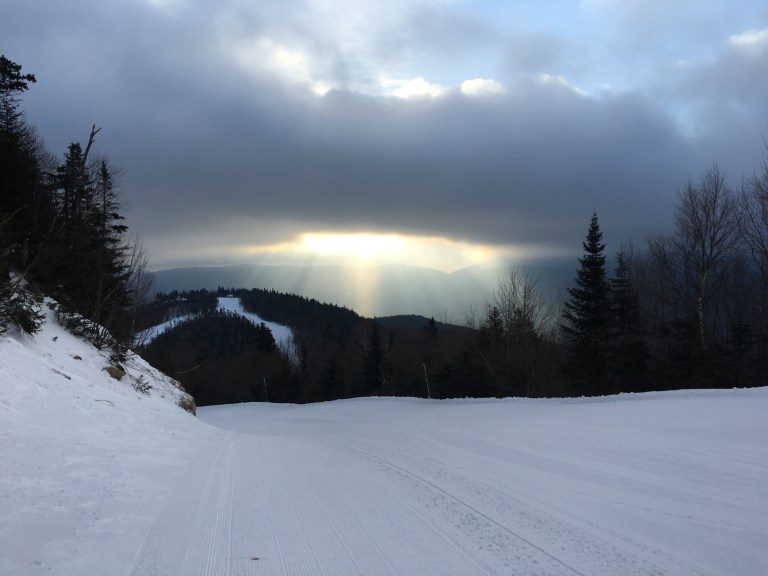
On our first run, laying down the first tracks that day after hitting the chairlift for the opening bell, the sun’s rays shone brilliantly through the clouds. I always call this God lighting. In that breathtakingly magical moment, I knew Nancy was with us, that this was her peeking through to whisper hello and good morning and I love you all.

Sun Rays at first run
Nancy’s Hello

What I wouldn’t give for a hug from Nancy right now. How she would have enjoyed being with us.

It was great to see how much fun the kids had, how life goes on for them with so much less heaviness. They happily and fondly and vocally remember her. We talk about her a lot. She is still very much with us, her positive spirit guiding us and encouraging us onward. She would absolutely be telling us to go, live, and enjoy life. And we are…but, for a while anyway, there’s also this mental leap of loss, this inescapable physical void that accompanies us.

I’ll close with this beautiful Maya Angelou poem that the amazing author, storyteller, life coach, and my kindred spirit Susie Rinehart sent to me recently. It expresses so eloquently what I am stumbling through here. Enjoy. And go out there and live!

They Existed, by Maya Angelou

“When great trees fall,
rocks on distant hills shudder,
lions hunker down
in tall grasses,
and even elephants
lumber after safety.

When great trees fall
in forests,
small things recoil into silence,
their senses
eroded beyond fear.

When great souls die,
the air around us becomes
light, rare, sterile.
We breathe, briefly.
Our eyes, briefly,
see with
a hurtful clarity.
Our memory, suddenly sharpened,
examines,
gnaws on kind words
unsaid,
promised walks
never taken.

Great souls die and
our reality, bound to
them, takes leave of us.
Our souls,
dependent upon their
nurture,
now shrink, wizened.
Our minds, formed
and informed by their
radiance,
fall away.
We are not so much maddened
as reduced to the unutterable ignorance of dark, cold
caves.

And when great souls die,
after a period peace blooms,
slowly and always
irregularly. Spaces fill
with a kind of
soothing electric vibration.
Our senses, restored, never
to be the same, whisper to us.
They existed. They existed.
We can be. Be and be
better. For they existed.”

Madagascar, and I don’t mean the movie

If there is a traditional or typical path in life, I am almost assuredly not on it. Because I tend to wander down uncharted paths, a lot of my stories require a backstory to answer the inevitable “how the heck did you end up there?” And so it is with Madagascar. I have a lot to say about Madagascar, but I’ll start with the backstory for now.

In college, I went through a bit of a lost soul phase. The university I had chosen to attend wasn’t the best fit for me, and I belatedly discovered that just because I was physically going to the library didn’t mean I was actually learning anything (mostly because I was spending my time there sending email and writing funny haikus). I had been a pretty strong student in high school, but that wasn’t translating well into college. I temporarily lost track of who I thought I was and had a bit of an identity crisis.

The good news is that my crisis made me brave. I felt like I had nothing to lose so I kept trying new things. One particularly fraught semester I read a description in the Student Conservation Association catalogue for the backcountry trail crew at Baxter State Park in Northern Maine. I had only been to Maine once before, but I nonetheless decided that that was where I would find salvation. My attitude at the time was, “it can’t be worse than this,” so I applied. Long story short, sometime in late May, my mom dropped me off at the Molly Pitcher rest stop on I-95 in New Jersey where I had arranged for one of my new trail crew-mates to pick me up. And off I went into the wilderness for three months. Really? This was the plan? I can’t imagine what it was like to be my parents during those years. I mean, you dropped your kid off at a rest stop on I-95 in New Jersey? Clearly this was well before helicopter parenting became a thing.

Living in northern Maine was absolutely one of the best curves on the path of my life. I was immersed in a brand new environment, living completely off the grid in a physically stunning and remote rural area. I lived in close quarters with people from widely varied backgrounds, with different interests and challenges in their lives. I had tons of time for reflection – countless miles on the trail deep in thought, and no phone or electricity at the rustic cabin where we lived. There were few distractions. I hiked, I read, I wrote, I thought. We made a single trip to town each Friday to collect mail, use the payphone, do laundry, and go to the grocery store. We worked incredibly, mind-numbingly, body-achingly hard. Life in the park was basic and simple and incredibly rich.

One part of our job was to spend a solo week on “mountain patrol”. When it was my turn, I climbed Katahdin daily to be a resource for Park visitors about the trails, the flora and fauna, or whatever other questions they might have. In my backpack I carried extra water, a first aid kit, and a hand-held radio. I spent my days patrolling the trails above treeline and talking with hikers. Did I mention that I grew up in Philadelphia? This was one of the most foreign environments compared to my prior life experience in which I could find myself. And I loved it.

While patrolling the summit, I came across a group of campers enjoying lunch with a view before descending. Their group leader had lots of questions about my job, what I was studying at school, and what I planned to do next. I explained that my parents had encouraged me to learn a second language, and were hoping that I would spend a semester studying in France to solidify my French fluency. The notion of living in a big city, even if that city happened to be Paris, held zero appeal to me. I couldn’t fathom what I would find of interest there and I knew with 100% certainty that I’d cheat and speak English most of the time anyway. “Have you ever heard of the School for International Training?” she said. “You could study in another French-speaking country,” she said. And then she rattled the school’s phone number off the top of her head and I wrote it down on the back of my park trail map.

As soon as I got out to town, I called the 800 number from the payphone to request a program catalogue. This was at the dawn of the internet, so cellphones, google and email were not yet widely available. It was old fashioned phone and snail mail (and, no, this wasn’t the Dark Ages. It was the mid-90s). When I read the course description for the Madagascar program my eyes welled up with tears. The program combined all of my academic interests, from French language to environmental issues, and also the mystery of exploring Madagascar. I felt called to be there, like finally someone was speaking my language.

That February I touched down in Antananarivo and began the most transformative five months of my life.

What is the point of this story? I ask myself that question all the time. Sometimes, admittedly, there is no point and it’s just a good story. In this case, the point is that taking the less traveled path can be a good idea (just ask Robert Frost) and that being open to unfamiliar worlds -environments, people, lifestyles – is important, eye-opening, and life-changing. You learn a lot more about yourself when the familiar is stripped away. And you learn a lot more about others when you meet them where they are and attempt to understand their reality and see the world through their eyes.

“The real treasure, to end our misery and trials, is never far away – it is not to be sought in any distant region; it lies buried in the innermost recess of our own home, that is to say, our own being…if only we could dig. But there is an odd and persistent fact that it is only after a faithful journey to a distant region, a foreign country, a strange land, that the meaning of the inner voice that is to guide us on our quest can be revealed to us. And together with this odd and persistent fact there goes another, namely, that the one who reveals to us the meaning of our cryptic inner message must be a stranger, of another creed and foreign race.” – Heinrich Zimmer, “Myths and Symbols in Indian Art and Civilization”

“The real voyage of discovery consists not in seeking new landscapes but in having new eyes” – Marcel Proust


Audacious Ambassadors

I wrote my original posts on this blog about the inauguration of the MAIA (formerly Starfish) Impact School’s new building and my impressions of Guatemala as a first time visitor. The school’s impact continues to expand, boldly challenging the narrative and compelling us all to be braver and to rethink what our expectations are – of ourselves and others – and why.

It is impossible to overstate the impact that enhancing educational opportunities for girls in Guatemala can have. The average rural Mayan teenage girl has received only 3.5 years of education. Fewer than 1% of indigenous girls from rural areas go to university. The culture has historically emphasized that girls have no voice. The existing social systems are designed to make girls and women disappear – girls are not supported in getting an education; women are taught to be quiet and not to speak up; making eye contact is considered disrespectful.

And yet, globally, countries that have greater levels of gender equality are safer and more prosperous. Educating girls is also among the top forms of combating climate change. The MAIA Impact School, in its third year of operation, exists to “unlock and maximize the potential of young women to lead transformational change.” One way MAIA actively addresses the inequities in Guatemalan society is by incorporating vocal empowerment techniques from Speak educators to help the students find both their physical and emotional voice.

MAIA’s holistic approach also challenges the cultural norms by extending beyond the walls of the school to work with the students’ families in their homes. A MAIA mentor visits each student’s family monthly, during which time they engage with many aspects of the school curriculum such as personal and family goal-setting; emotional, mental, and physical health; vocal empowerment and healthy communication; and community development. As part of the admission process, families must commit to supporting their daughters through the completion of their secondary education. As a symbol of this commitment, when the girls start school, they and their families attach a lock to the gates of the school that will not be removed until they graduate.

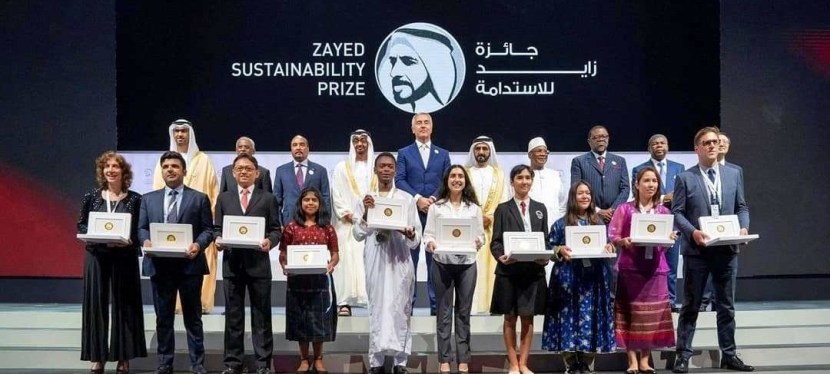
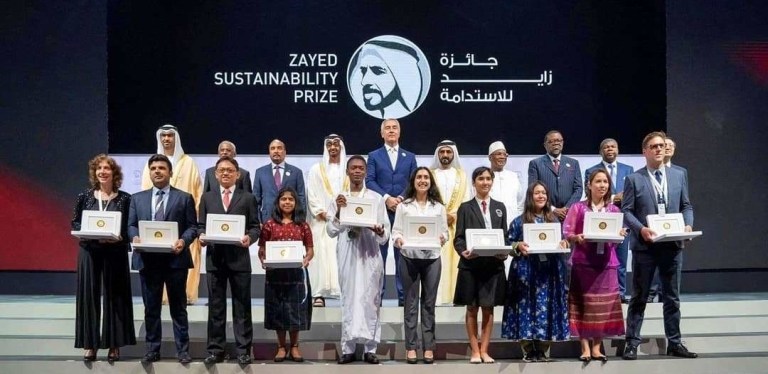
As a testament to the profound steps MAIA is taking, last week the school was awarded the Zayed Sustainability Prize for Global High Schools in the Americas category. The school was one of 10 chosen winners from 2,100 applications that represented 130 countries. “This prize is given to global high schools in six geographic regions that can demonstrate impact, innovation, and inspiration to enable inclusive and equitable access to quality education.”

zayed prize
Prize Recipients, MAIA representative Front Row 4th from Left

Three representatives from MAIA attended the Sustainability Conference and award ceremony in Abu Dhabi, United Arab Emerites (UAE). It boggles the mind to see these women, who were raised in a culture that told them that they weren’t valuable, embarking on their voyage to UAE.

Take a minute to think about the daily challenges you face. And then think about how brave these women have to be every day, to break the mold, to find their voice, to dare to reach for more in life. Think about Ester, a 9th grader from rural Sololá, Guatemala. Attending school beyond 6th grade was an enormous leap just a couple of years ago. Last week she traveled to the other side of the world. She crossed a vast stage to receive a prize for her school, a tangible testament to how meaningful and impactful all of the effort and sacrifice have been. She met people from all over the world – from UAE, Chile, and Croatia, to name a few – and represented on a global scale her school, her heritage, and her country. These MAIA representatives, these courageous Mayan women, are teaching the world about Guatemala while showing us all what is possible. This is bold. This is audacious. This is hope.


Tell me, what is it you plan to do with your one wild and precious life?

The poet Mary Oliver died today. My favorite poem of hers is The Summer Day, so I copied it here. I especially love the last three lines. It’s a great reminder to pay attention to the details, to find pleasure in the little things, and to remember that we get just one precious life. It is uniquely ours. And we are each unique. So, as Oscar Wilde said, “Be yourself. Everyone else is taken.” Live authentically, with passion, and with love.

The Summer Day

Who made the world?
Who made the swan, and the black bear?
Who made the grasshopper?
This grasshopper, I mean-
the one who has flung herself out of the grass,
the one who is eating sugar out of my hand,
who is moving her jaws back and forth instead of up and down-
who is gazing around with her enormous and complicated eyes.
Now she lifts her pale forearms and thoroughly washes her face.
Now she snaps her wings open, and floats away.
I don't know exactly what a prayer is.
I do know how to pay attention, how to fall down
into the grass, how to kneel down in the grass,
how to be idle and blessed, how to stroll through the fields,
which is what I have been doing all day.
Tell me, what else should I have done?
Doesn't everything die at last, and too soon?
Tell me, what is it you plan to do
with your one wild and precious life?

from New and Selected Poems, 1992
Beacon Press, Boston, MA

Copyright 1992 by Mary Oliver.
All rights reserved.

Good Grief, Charlie Brown

Is there such thing as good grief? Because it feels like an oxymoron. Grief is heavy and hard and, of course, sad. It implies the loss of something important. How could that ever be good?

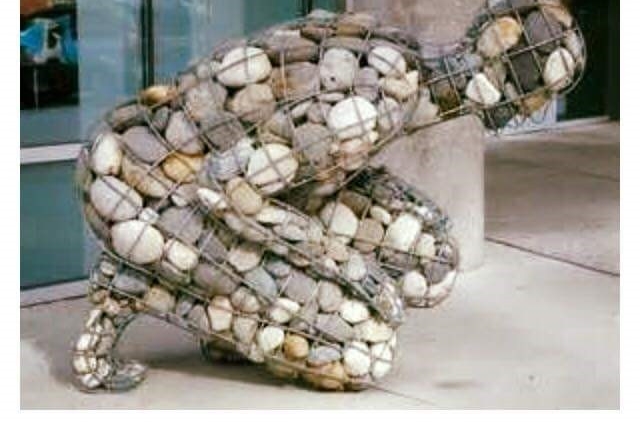
I was saying to a friend the other day that I’ve grieved so much lately that I must be on the path to enlightenment. Right??? I mean, what else is the point of all this suffering and introspection? I get it, I really get it. Life is fragile and short and beautiful and hard. And grieving is something you have to live through; there are no shortcuts. The Weight of Grief, a sculpture by Celeste Roberge, accurately and poignantly reflects how it feels.

grief
The Weight of Grief by Celeste Roberge

Grief is a funny thing. I can be ambling along quite pleasantly in my “normal” life and it just sneaks up, welling up unexpectedly in my chest from seemingly nowhere to overcome me. I’d love to call out, “MERCY”, to the universe and actually get a reprieve. But, instead, here I am facing again the reality that this life journey isn’t something that’s totally in my control and diving deeper into gratitude for what I have and authentically living for what really matters.

Here’s where the good in grief lies. Grief amplifies the otherwise mundane, magnifying the importance of the smallest gesture. I had never understood the importance of ritual, for example. Generally speaking, I am not a huge fan of ceremony or tradition. But when we joined hands in a circle around my aunt to pray together, though our brains were addled with grief and a sensation of numbness was overcoming us, we all knew verbatim the words. It required no shuffling of papers or notes, no cueing, no preamble. There was incredible solidarity in that harsh and deeply painful moment.

Food is another item that ascends to the pinnacle of significance during times of grief. People deliver food to grieving families as a way of saying, “I love you and I don’t know what else to do so here’s one less thing to worry about.” Food becomes an important means of connection, both literal and figurative sustenance.

When my aunt died unexpectedly two weeks ago, she had been anticipating our arrival to visit for a couple of days. Her refrigerator was full of some of the family favorites: her homemade mac and cheese, broccoli (our staple veggie), pasta and meatballs, and ricotta cookies. We decided that we should gather as a family and enjoy the meals she had prepared. My husband was given the task of packing up the food and bringing it to my cousin’s house. He felt strongly that he was delivering something sacred, so he packed the car with ceremony and care. Nancy had baked her love for us into each morsel of that food. The food was emblematic of her devotion to us and her anticipation of the time we would be spending together. It always tastes good, but never before had consuming mac and cheese been so poignant.
I can’t talk about food and not mention the chocolate chip cookie, which is hands down one of our family’s most treasured delicacies. My mom and my aunt were like some sort of chocolate chip cookie ambassadors, working industriously to spread their love of this perfect cookie far and wide. Chocolate chippers were regularly in the cookie jar on our kitchen counter, homemade and delicious. Every time I came home from college my mom was pulling a fresh batch from the oven, the smell of melting brown and white sugar, butter, and gooey chocolate chips permeating the kitchen. Our exchange students from France, Germany, Serbia, and countless visitors from elsewhere, were quickly indoctrinated to this most American delight. When traveling abroad, my mom even brought brown sugar and chocolate chips with her so she could reproduce the official chocolate chipper there. When I lived in Madagascar, I improvised using chopped up chocolate bars to make some for my homestay family. I am not kidding at all when I say that we believe with an almost religious zeal in the chocolate chip cookie as the quintessential unifier and the answer to almost any question. At Nancy’s celebration of life, we served chocolate chip cookies.

The last item I wanted to highlight are the plentiful rocks and shells on a New England beach. They can seem like nothing much at times, commonplace and a regular part of the beach landscape. Many people just walk by them, preoccupied with their thoughts or focused on the ocean. But in the midst of our intense grief, my cousin’s wife had the presence of mind to collect various shells and rocks from the beach near where Nancy lived. She put them into a wooden box for each of us, and instructed us to build a cairn of remembrance for Nancy at our homes. The cairn, she wrote, will “act as a landmark and a compass to guide us back to the people, places, and communities that Nancy loved.” She also gave each of us half of a shell that another family member has in their collection, a symbolic way to keep us connected across the days and miles between us now that we have returned home. With these beautiful words and her extraordinarily thoughtful gesture, instantly these otherwise ordinary items became a coveted treasure imbued with deep meaning and value.

In grieving there is renewal in connection with family and friends and community. It always comes back to this. That was on display in spades at Nancy’s celebration of life (Community Pays Tribute to Nancy Waddell), and in the food that kept arriving at our doorsteps. In loss we are reminded of what we have and somehow we appreciate it more fully. Out of grief, new friendships and connections are made (I’m looking at you WV Adaptive and HFCC!). In my sorrow, but also in how I have deliberately chosen to live every day of these past two weeks, my aunt is present. Her example, her capacious heart, and her compassionate spirit guide my actions. I can tell she will never leave me. Good grief, that’s an astonishing gift.

charlie brown good grief
Good Grief image by Charles Schulz

Nancy Waddell, Practically Perfect in Every Way

On December 30, 2018, my vibrant, caring, full-of-life aunt, Nancy Waddell, died from complications of a heart attack. Her passing was sudden and quick and far too soon. She spent the morning of December 29 teaching skiing lessons with the adaptive program in Waterville Valley, NH, before coming in for lunch and complaining that she wasn’t feeling well. It was mere hours later that we were facing the unthinkable, that the glue to our family and our greatest cheerleader might be leaving us.

There is something powerful that happens when someone you love dies. My heart is somehow broken and full at the same time. My brain is operating like it was greased with molasses. I feel like I am in some sort of cognitive twilight zone, where all of my emotions are dulled. The reality is so shocking it’s hard to absorb or believe it.

Our family has pulled together and reveled in memories of times long past. We have shared laughter as well as tears, sometimes simultaneously. Friends and neighbors have helped with hugs and meals and rides and entertaining the kids, reminding me once again that community and connection are so important and revealing how much I must have talked about my aunt!

Nancy was no Mary Poppins, but, to me, she was practically perfect in every way. I had intended to write at some point about how she inspires me. I specifically had in mind to profile her fearless leap into Corcoran Pond at Waterville Valley as part of the Cold Turkey Plunge in November. She was dressed in her Fancy Nancy costume, inspired by the Fancy Nancy children’s books written by Jane O’Connor. The purpose of her plunge – “freezin’ for a reason” – was to raise money for the Waterville Valley Adaptive Ski program to which she was so devoted. I even have a note to myself from that day that says, “When I am 71, I want to be like Fancy Nancy!”

Nancy was my other biggest fan. How lucky am I to have had not one – my mom – but two – my aunt – women who loved me and were guiding lights in my life? Nancy always had a comment or like on every text, facebook or blog post. You name it, she read it and commented on it. But more than that, she showed up. She was my partner in caring for my mom, her sister, making the hour drive each way at least once a week to spend time with her. She filled the void of the grandmother my kids lost when my mom was diagnosed with Alzheimer’s and took them under her expansive and caring wing. She taught them to ski, took them sailing, ferried them to events when we were in the process of moving, arrived at our doorstep with a smile and fresh-baked snickerdoodles or brownies or ricotta cookies in hand.

Nancy was the BEST of everything it is to be human and genuine and caring. She was honest about her imperfections, laughed when the children at the childcare center where she worked told her she wasn’t fancy, and never wanted a title or accolades, just to be told what needed to be done so she could get to it. She put her family first – always – and gave completely and selflessly of herself. She devoted herself to loving others and to her community and, in so doing, she created a life of deep meaning and purpose and impact.

I went to visit my mom today at her care home. She is blissfully unaware that her beloved sister is gone or what that means, though she joined us to celebrate Nancy’s life yesterday. My mom’s laughter and love are somehow capable of penetrating the depths of our grief and helping us all feel closer to Nancy’s spirit. Today one of my mom’s neighbors shared that my Mom is the queen of their floor and that she had never met someone with such a big heart. I guess it runs in the family.

Nancy was my role model and she will always be what and who I most aspire to be like. In this time of acute sorrow, I find comfort in the many memories, the endless laughter, and the good fortune to have had two compassionate and caring women lead the way for me. The connection with others that comes from sharing such a loss is powerful and intense, beautiful and horrible all in one fell swoop. We are at the very outset of a long, challenging road to readjust our lives without Nancy in them.

Nancy will always be in my heart and, if I am lucky, in how I live my daily life. I will look for her spirit in the crash of the ocean waves and listen for her voice in the mountain breezes. I will miss her presence with us more than I probably even realize at this moment. And I will continue to face into the pain, because much like with a strong wind, if I don’t face it head on the grief will blow me over.

I am so grateful to have had this woman’s light shine on me and to have known such love that it hurts this much to say goodbye. We had a good run and some great adventures. You taught me by your example what matters most in life. Rest in peace, Fancy Nancy. You were one of a kind.
light-to-the-world-card.jpg


Child of Mine

The holiday season is manic. I’ll just start there. It starts around Halloween and sails right through Thanksgiving into Hanukkah and Christmas and then New Year’s. Since Halloween starts in early October now, with ghosting and decorating and thinking about costumes all part of the lead up to the big night, basically the whole fall, from back-to-school right through New Year’s is rich with the bustle of life and activity and, frankly, the pace is completely unhinged and frenetic and exhausting. Part of me loves it, and a big part of me wants to make it stop!

So, here’s the thing I’ve started to notice as life goes on and I get older, for certain, and hopefully wiser. You have to celebrate the little things in life every day. You have to take a step back and take that deep breath and find joy even when the rest of the day is utterly forgettable. Even when the day includes yet another trip to Party City and all you can think is “I just can’t.” Even when the day is spent stacked with activities and chauffeuring your offspring hither and yon. There is so much to be worn down by, so much negativity, so much TO DO, that you run the risk of missing it all, the proverbial not seeing the forest for the trees.

The stuff that we remember in life, the stuff that matters and that you’ll be thinking about when your time on this Earth is winding down, isn’t the holiday shopping (unless there’s some epic mishap that results in a good story to tell) or what you got or how much you got done, like there’s some holy checklist and the more you check off the better you are or your afterlife will be. No. The manic pursuit of a bucket list, or any list, how many places you’ve been, how much money you’ve made…these are empty and fruitless quests if the goal is happiness or contentment.

The stuff that really fills and sustains the soul, is found in the gathering of friends and family, of multiple generations, to enjoy a cup of coffee and some holiday treats on Christmas morning. The sustenance comes from the sharing of stories and experiences, from toasting our brimming coffee cups that will help us survive the day after a reveille that was a little on the early side. It’s in the sheer delight and simplicity of seeing my mom, who truly is only capable of living in the present anymore, marvel at the Christmas trees and lights and enthusiastically sing out Christmas songs.  It’s a warm and gentle sea breeze; it’s the magic of dolphins playfully diving in and out of the waves; it’s a full moon hanging heavily in the evening sky – and still there in the blue of the next morning (a moonset sunrise); it’s a snow day when you just drop everything and play that board game with your kids and bake comfort foods and ignore the “to do” list; it’s a friend who leaves you tea and biscuits at your door when you are down and feeling broken.

There is magic and inspiration in the big things – a marathon or a trip abroad or a new experience.  But it’s how you weave the experiences together, it’s what you live with every day, what sustains you when life isn’t particularly glamorous or grand, that matters most.  It’s the daily appreciation of the little things: like an umbrella when it’s raining; a baby’s laugh that rings out like a balm for the soul; a solitary chocolate chip; a warm beverage; a hug from a friend.

Remember to be grateful and to cherish all of life’s little moments, even the messy ones.  Because life is really the sum of its parts, and the little moments are what matter most.

As I sit here trying desperately to write for five minutes without being interrupted by one of my children, surrounded by the detritus of Christmas, I guess I should try to take this to heart. This is it.  This is the good stuff.

So I’ll close with a memory and a song from several years ago. The setting is the East Sangerville Grange in Sangerville, Maine. It was February, it was freezing, the snow was piled high, and a blizzard was on the way. In this simple, modest, one-room grange hall in the central Maine highlands on this cold and snowy night many from the community gathered to listen to Bill Staines sing and play acoustic guitar. And I was introduced to one of the most beautiful and moving songs I have ever heard. It’s called Child of Mine. Click here to hear it live.

The full lyrics are displayed below. And they apply to everyone – adult, child, have children, or don’t – everywhere.

Face, don’t fear, the unknown.

Find joy in each day.

Love sees us through.

Connect with people and our common humanity.

And you will be buoyed by hope. And maybe survive the holiday season just a little more happily.

Child of Mine

Child of mine, you are the wildest wind
And the dearest dream I will ever know
Love’s lasting light shines out from deep within
This father’s heart as I watch you grow

Child of mine, you are the break of dawn
And the brightest star I will ever know
Love’s lasting light comes shining on and on
From this mother’s heart as I watch you grow

There is a road and that road is all your own
But we are here, you need not walk alone
To face, not fear each coming new unknown
Is the way to lift your wings
Child of mine, you are the sweetest song
And the greatest gift I will ever know

Child of mine, where spirits fly above
There is but one that belongs to you
So let it grow and it will thrive on love
For it is love that sees us through

You have the hands that will open up the doors
You have the hopes this world is waiting for
You are my own but you are so much more
You are tomorrow on the wing, child of mine

Songwriters: STAINES
© BMG RIGHTS MANAGEMENT US, LLC
For non-commercial use only.