Represent! Women in STEM: MAIA’s Formula for Success

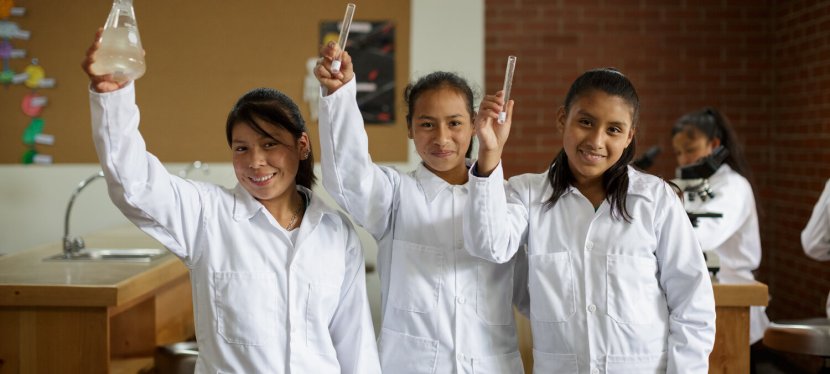
I have another guest blog to share today! This post was written by Isabela Lyrio and was first published on the MAIA Impact School website. As we approach International Women’s Day on March 8, this is a timely reminder of how much progress women have made in terms of gender equality as well as how much room there is to still grow. Isabela’s piece focuses on STEM education for girls broadly, and specifically on how the MAIA Impact School incorporates STEM learning into the curriculum. The feature picture I chose of MAIA Girl Pioneers working in a lab is groundbreaking in its historic significance. This intentionality around vastly expanding education and opportunity in every dimension imaginable for this overlooked population is game changing. These young women are examples of hope in action, personified. And with that, take it away Isabela:

Why is it important for girls to learn and excel in STEM not only in the classroom, but in the workforce as well? STEM is science, technology, engineering, and math, careers considered to be the changing forces for the future. It is estimated that 65 to 85 percent of jobs today will no longer exist in the next 20 to 30 years, in large part due to automation and ever-changing local and global economies. Women in developing countries are most threatened by this change because they are overrepresented in occupations that are most likely to become automated. The STEM fields are some of the fastest growing sectors of the global job market; however, women only represent 35 percent of the student body pursuing university degrees in STEM fields.

MAIA believes in the importance of representation. When girls and women lead innovation, they make it more inclusive, impact a larger population, and act as role models for more girls to get involved in this field in the future.

In Guatemala, the opportunity for indigenous women in STEM is almost nonexistent. This marginalization is reflective of greater social context, the poor quality of public education, and gender and cultural norms. According to the Ministry of Education’s 2017 national assessment of high school graduates, only 9.6 percent are considered proficient in math, only .59 percent better than the 2016 results. Similarly, in literacy only 32 percent of high school graduates are considered proficient, a .01 percent improvement from the previous year. This problem is compounded when considering that only 10 percent of indigenous girls graduate from high school and 1 percent receive a university degree.

Scientists at Work
Girl Pioneers in Science Class; Photo by Anna Watts

The MAIA Impact School is working to transform these statistics and provide the tools Girl Pioneers need to have a choice-filled life and become leaders in the industry of their choice. MAIA offers a rigorous, culturally adapted curriculum that is delivered by educators who are pioneers in their own fields and come from the same rural towns as the Girl Pioneers. MAIA’s educators are powerful local role models for girls in Guatemala.

Marlen Cumes, MAIA’s natural science educator, is from a small town in the Guatemalan highlands. When she was deciding on her career path, Marlen wanted to study agroforestry in university but was met with resistance from her family—they believed this was not a woman’s career. Marlen fought for her beliefs and passions and pursued her career as an agronomist. It was challenging for Marlen to follow her dreams and overcome deeply embedded stereotypes of what a woman’s career should be in rural Guatemala. Her graduating class was equally balanced, 50 percent men and 50 percent women. However, only 11 percent of the women were indigenous. During her studies, Marlen became passionate about soil preservation and climate change but would hit brick walls when trying to engage with adults in her community on this topic. Many adults already had their minds made up and would not respect her expertise as a woman in a male-dominated field. That’s why Marlen sought opportunities as an educator, where she could teach passionate young students who have open minds and want to make a difference in the world. Once she was hired as MAIA’s natural science educator at the Impact School, she found that she was in the perfect place to teach the next generation of changemakers in an organization that is breaking paradigms just as she did.

Marlen Teaching
Marlen Cumes, MAIA’s Natural Science Educator; Photo by Livvy Runyon

MAIA is a bold organization that asserts the right of indigenous girls to pursue a high-quality education by emboldening them to use their voice in spaces where indigenous women’s representation has been limited, especially in STEM and technology. Divisions in access to technology reflect socioeconomic divisions and amplify the lack of access to opportunities marginalized groups face in developing countries. By investing in computers, a cutting-edge science lab, talented local educators, and intentional partnerships, MAIA is ensuring Girl Pioneers will have the skills and opportunities to become leaders in STEM fields.
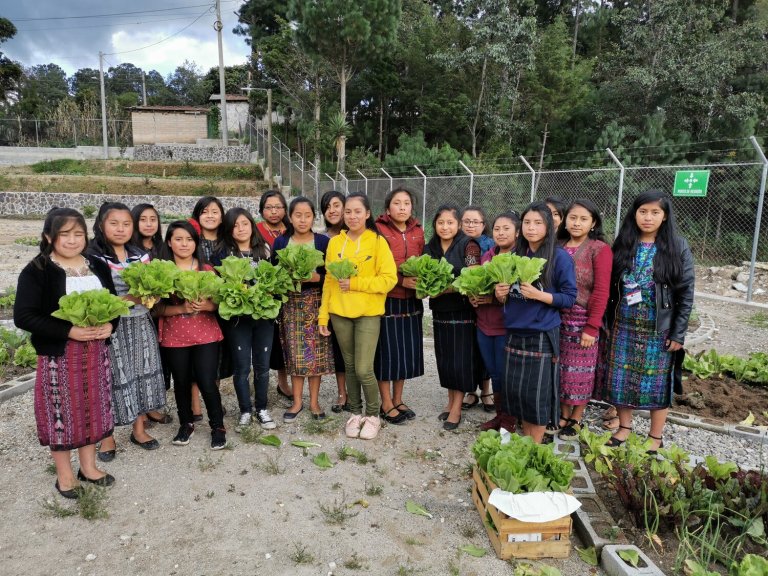
Students and Garden
Girl Pioneers at the MAIA Impact School Zayed Garden; Photo by Layla Rojas

Indigenous culture is integrated with MAIA’s identity and academic instruction, this is important because it creates an environment that is familiar and fertile for learning. One example of the integration of indigenous identity and academics is MAIA’s Zayed Sustainability Garden. MAIA was awarded the 2019 Zayed Sustainability Prize as the most “innovative and inclusive school in the Americas” and received $100,000 to launch the Zayed Garden at the Impact School. The Zayed Garden combines STEM learning opportunities with traditional Mayan farming practices, organic gardening techniques, and nutrition. As part of the Zayed curriculum, Girl Pioneers learn about traditional medicinal plants as well as organic and permaculture gardening. By integrating medicinal plants as part of the natural science curriculum, Girl Pioneers learn to integrate the knowledge of their ancestors with STEM subjects, giving them unique insight and experience in this field.

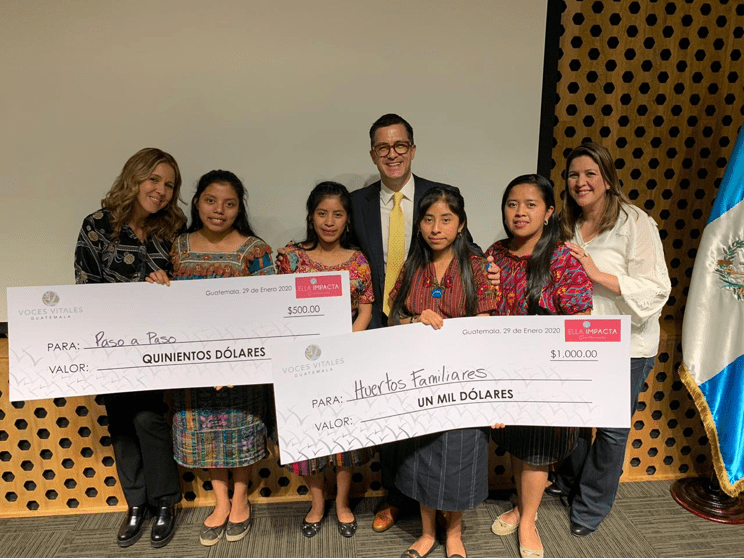
Claudia Marisol, a 10th-grader, recently participated in Ella Impacta, a competition sponsored by Vital Voices in Guatemala City, and competed against students from elite schools from all over the country to receive seed funding for community-based projects. Claudia proposed a project of family gardens, where families grow organic vegetables in their homes, with the goal of increasing access to fresh vegetables but also to address the problem of malnutrition in her community. This project would increase access to nutritious organic vegetables and diminish the use of chemicals and pesticides in rural communities, thereby fortifying nutrients in the soil, protecting water sources, and sharing information and resources about the advantages of organic gardening with community members. Claudia Marisol won $1,000 in funding for her project, and is applying what she learned at the MAIA Impact School to become a changemaker in her community. She’ll use the intersection of traditional permaculture techniques and the natural science curriculum (with support from her educator, Marlen).

Ella Impacta Win
Girl Pioneers with their Ella Impacta seed funding and Xoco MAIA Supporters in Guatemala City

It is essential to establish a sense of belonging for female minorities in STEM fields. According to a study in the STEM Education Journal, the biggest reason minority groups drop out of STEM majors in university is that they feel they don’t belong in that space. This is attributed to  interpersonal relationships, perceived competence, personal interest, and science identity. At MAIA, we create a positive learning environment in STEM and other culturally relevant subject areas, so Girl Pioneers feel a sense of belonging rather than alienation in these fields. We ensure they know they have the ability and expertise for any field of their choice, and if they choose to pursue a career in STEM that they have the tools they need to become leaders.

Marlen is a trailblazer in her community, ensuring younger generations can learn from her and follow her example. We see Girl Pioneers like Claudia Marisol following this path and multiplying impact to benefit the community. At MAIA, we are guided by the question “how far can she go?” and we are just beginning to witness the infinite impact of Girl Pioneers and their passion for learning and social transformation.
The secret to change


Guiding the Way to a Sweet Family Life

This a guest post from Best for the Moment‘s blog writer Amy Jackson. She cheers on working moms in any way she can. Check her out on her blog!

This specific piece profiles a working mom, Nicole Seawell, from the post-baby struggle to find career and family balance (can anyone relate to that?) to what she is up to today as a mom and life coach (plus so much more!). Nicole was my roommate when we met in Guatemala just a year and a half ago. With some people, friendship is magical, instantaneous, and forever. Nicole is one of those people for me. Click here to get to know her current life work with Sailor’s Sweet Life and read on for her story:

Nicole Seawell was a high-achieving attorney when her first baby plotted his own course by arriving three weeks early. Now with three teenage boys, she’s learned how to navigate the unique personalities within her family, channel her peak productivity, and ultimately guide others to do the same.

“My professional life kind of went topsy turvy,” she says about her jolting start to motherhood. “I didn’t value the supporting role enough. Once I did, I realized I’m actually excellent at supporting others to get done what they want to, and that has taken me from a good attorney to a great one.”

Nicole found her sweet spot when she “worked one leg in the business world and one leg in the legal world,” because she liked the fast pace of business.

“Where I found my special power was being able to be in both worlds,” she says.

“I was born under a productive star,” says Nicole, adding that she’s been told by Tibetan monks and Guatemalan ancient women that “I have a way of tuning into my ancestors’ wisdom and youth energy.”

“I’m able to see the path forward in any situation.”

Today, that means weaving together her work as an attorney with her husband’s law firm and her coaching business, Sailor’s Sweet Life, which is named after her golden retriever.

“I can’t have a more supportive partner in my legal work than the father of my children and my co-creator in life,” she says.

The ability to tap into prime opportunities for creativity and productivity has also helped Nicole’s coaching clients. In fact, she’s learned it’s not about dramatic, sweeping changes.

“Really what they’re looking for is helpful tweaks,” she says. “Inherently they are them, and they want to stay that way, but they want to be a more productive, more enjoyable version of themselves.”

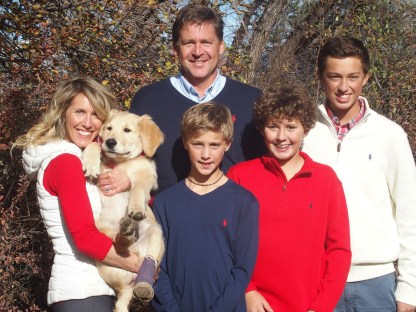
Nicole and Family

It Takes a Village

At the root of Nicole’s mission to help families maximize joy and decrease stress are tools like Enneagram to learn about the unique personalities that can form our families and support systems.

“Ninety percent of the time you have good intention by people,” she says. Instead, “it’s miscommunication; people speak to one another like they’re speaking to themselves” that causes tension and stress within a family.

“There’s no better way than honoring each other by speaking to that person or acting with that person the way they want to be treated,” she says.

For Nicole, learning about her sons’ different personality types has been a game-changer.

She recalls feeling frustrated, thinking at the time, “I don’t understand, I’m doing the same thing” as a parent, until she realized, “they’re three different people.”

“It was like a light shone upon our family and so much stress disappeared,” she says.

As a fellow fast-talker, I found my conversation with Nicole energizing. But with her boys she’s learned to change her cadence and count in her head to give her son 20 seconds to respond.

“So much with teenagers is letting them talk when they want to,” she says.

Even so, Nicole believes that every stage of parenting comes with its own challenges. She believes the “enjoy every minute, it goes so fast” reminder commonly dished out to parents of young children is “cruel advice.”

“It is magical, but it’s absolutely exhausting,” she recalls.

And if you don’t love every stage of parenting, Nicole doesn’t believe that mom guilt is necessary either.

“Spare yourself all of that and be your own champion by arming yourself with tools that help you get through it,” she says.

“Along that whole spectrum, if you know you and if you’re doing this with someone else and you know them, this can be so much more of an enjoyable journey.”

As an achiever married to a perfectionist, Nicole and her husband took the time to learn about each other’s personalities and communication styles.

“We conscientiously–when they were real little–figured out how we work well together and how to honor that,” she says. “I can see when I trigger him and he can see when he triggers me, and then as your kids grow you can pull them into the fold.”

She also believes this insight can be applied to other caregivers and extended members of the family.

“Our mentors, our people who teach us, are all over the place in our lives, so being open to that is really important,” she says.

How this Mompreneur Makes it Work

Self-care as a goal can feel intimidating until you know yourself and “what feeds your soul,” says Nicole.

“I love being in nature and that’s one of my coaching principles to reset the heart and reset the mind, but also to open us up to creativity,” she says.

Nicole takes a “brisk walk” early each morning and in the evening with Sailor, no matter what the weather brings in her home of Colorado.

“Unbelievable solutions come and brainstorming that you didn’t think was possible,” she says about recommending afternoon walks to her clients.

She incorporates the “science of timing” in her practice and to plan out her day, based on the book When: The Scientific Secrets of Perfect Timing by Daniel H. Pink.

“On the whole, the way that the world operates and the way that the majority of humans do is that you have an uptick of analytical activities first thing in the day,” she describes.

“There’s a slump that we all kind of recognize around lunchtime.”

According to statistics, more mistakes are made in mid-day surgery, and “judges are more cantankerous, less likely to be compassionate in the afternoon,” says Nicole.

“Afternoon is good for creative, restorative activity, quiet work, collaborative work,” she says.

As a parent who experiences the daily “witching hour” with my boys, I wasn’t surprised to learn that around 4:00 or 5:00 p.m., we all get an energy uptick.

Fortunately for Nicole, she has plenty of it to go around, which she channels into “nourishing” her teenagers after school and at dinner time.

While the path through each stage of motherhood looks a little different, Nicole believes that there’s wisdom to be gained along the journey.

“This is an amazing set of skills and experiences that you’re having,” she says about parenting young children.

“It won’t be forever but put that framing on the whole ride–that you’re an amazing supporter–and you’ll have so many wonderful opportunities.”

A Clean Sweep – and a Win for the Power of Hope, Resiliency, and Perseverance

Dear Readers,

Let me start by saying thank you for reading! I am so grateful for your interest and your time. I certainly have days, sometimes full strings of days, where I can’t read beyond the news headlines let alone a deep dive into a blog post. So, thank you for setting aside time to read on! As I have mentioned before, I also have days in which I wonder what’s the point, does it really matter, is anybody out there? But then I hear from readers who tell me that what I wrote changed how they felt and, well, that is the very definition of making a difference.

Imagine: if in our daily lives we are confronted with feelings of “what’s the point?”, “it’s bigger than me,” “I couldn’t possibly make a difference,” what must it be like as an indigenous girl in rural Guatemala, where from any early age you are taught that you have no worth and where everything you experience tells you that you are an afterthought? Worse, as you get older, the tide pushes ever harder against you because of cultural norms and systemic racism, poverty, limited and inadequate educational options, no professional network, the wrong last name. How many times must these women feel hopeless and powerless in the face of forces much bigger than them?

But then someone with a bold and completely audacious vision steps in and begins to construct the building blocks to change all that by educating one girl, one family at a time. And guess what? OH MY GOSH, it is working! MAIA set out ten years ago with a mission to unlock and maximize the potential of young women to lead transformational change. And the MAIA Girl Pioneers are doing it!

The most recent proof of that? On Wednesday night three Girl Pioneers competed in the final round of a national competition called Ella Impacta (She Impacts). The contest, sponsored by the international organization Vital Voices, focused on giving young women a stage to share their social impact visions. Contestants came from across Guatemala, including the elite private schools and universities. Over the past few months, the contestants received mentorship and training on how to design and present projects. On Wednesday night they each made their final “pitch” to a panel of judges.

MAIA Girl Pioneers won 1st, 2nd, and 3rd place! 

MAIA Contest Winners and XocoMAIA
MAIA Contestants with their Mentor and XocoMAIA (Guatemala City) Supporters

Remember, in Guatemala, the average Maya teenage girl obtains only 3.5 years of education. Only 10 percent of indigenous girls in rural Guatemala are enrolled in secondary school, and fewer than one percent continue on to university. Add to those disturbing statistics that even when families do invest in the promise of education, the substandard quality of Guatemalan schools fails them. According to the Guatemalan Ministry of Education only 10 percent of high school graduates meet international standards of literacy, and only 9 percent reach the standards of math comprehension.

Given all of those statistics, it’s incredible that these girls are even at the table. But a clean sweep of the competition?!?!? These pioneers are no longer in the shadows. They are striving forward, proving out a model for change. The formula: bold, audacious, committed action towards a vision; building robust partnerships within the community and beyond, from mentors to the XocoMAIA supporters in Guatemala City to Guatemalan and U.S. donors; living a growth mindset, perseverance and resiliency daily. You want an example of grit? MAIA and the Girl Pioneers live it every single day.

So, what were the projects that these pioneering young women put forth?

The first place winner, a 10th grader named Claudia Marisol, designed a project called Huertos Familiares (Family Orchards) to address malnutrition in her village by growing diverse fruits and vegetables locally. This project builds on her experience with the MAIA garden plot that was jumpstarted by the school’s 2019 Zayed Sustainability Prize award. Claudia received $1,000 as seed money to launch her initiative and will travel to New York City for the next stage of the competition.

The second place winner, Norma Alicia, pitched a pre-school called Paso A Paso (Step By Step) for her community to give kids a running start into elementary school. She won $500 to begin her project.

The third place winner, Rosa Angelica, proposed a social entrepreneurship project to augment the opportunities for female artisanal crafters in her community.

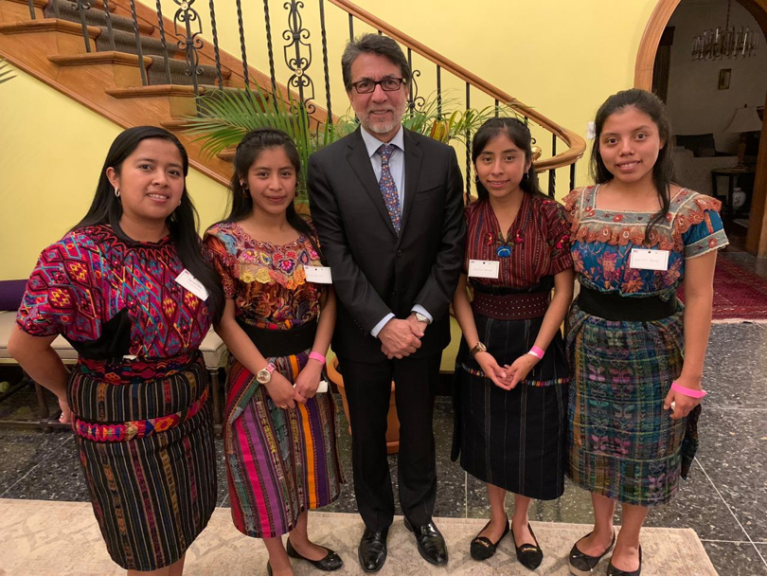
MAIA Students with US Ambassador
(Left to Right:) MAIA Mentor Silvia, MAIA Student Rosa Angelica, U.S. Ambassador Luis Arreaga, MAIA Student Claudia Marisol, and MAIA Student Norma Alicia

What’s the point? This, this right here. The problem is too big? It is big, and there are lots of big problems. You couldn’t possibly make a difference? Start by making a difference one person at a time. A small kindness, a shared story, an honest vulnerability, an unexpected smile to a stranger, a hug and gentle reassurance to an Alzheimer’s patient, even if they won’t remember.

Dive in! Too many too big problems means there is ample opportunity to create meaningful change and make an impact in someone’s life. It’s amazing what people can do with hope, a path, resources, and support. And, if you are very lucky, one day you get the chance to watch them soar. Today is my lucky day. Congratulations to all of the students and staff at MAIA Impact School! Abrazos fuertes a todos!MAIA Logo


Always Seek the Sweet

Welcome 2020! A new year. A fresh start. And such visual symmetry. Sublime.

I loved this year’s holiday season because the timing worked perfectly for the ultimate in relaxation. People reading this outside of the United States may not understand this (and, fair enough, because it is sort of insane), but it’s rare here to get more than one week off. And, oh my goodness, what a heavenly gift it is! It took me that whole first week just to settle down, relax a little, and stop habitually mentally scanning for what to do next. I had more rest in the last week and a half than I have probably had in one time period for over a decade and, lo and behold, I actually have some perspective as a result. Well-rested is a phenomenal vantage point from which to intend to do amazing, brilliant, challenging things!

Traditionally this is the time of year where many set goals, resolutions, intentions – whatever you want to call them – to make the positive life changes that they have been feeling are needed. Despite my innate aversion to joining the herd in general and particularly with regards to new year’s resolutions, I feel so ready to take on what lies ahead and am zooming into this new year with passion and drive, optimism and a less waffley inner compass. I am committed to living more boldly, to taking a stand (even if it’s just in my small way), to sticking to a low-bad diet and to saying no to negativity (Wall Street Journal, December 27, 2019: For the New Year Say No to Negativity). I am also (mostly) avoiding refined sugars (at least for the month of January). Sweetness can be found everywhere in life and I am determined to pursue it in every direction except the bakery!

All this energy and enthusiasm is AWESOME. Until February (or mid-January?), when the year ahead is looking awfully long and old habits so comfortable and familiar. Did you know that it takes at least two months to develop a new habit, according to a 2009 study published in the European Journal of Social Psychology? We are all human. Eventually, the excitement will wear off and no amount of stored up sleep or goodwill will be able to fuel us adequately through whatever life has in store. We get tired. We get complacent. And we start to slip, even with the best of intentions. Personally, I suffer from “What’s the point?”-ism, which is akin to hopelessness. Does anything little old me ever does really matter?

Here is an example: I used to wash and re-use my plastic sandwich bags. Some nice person even gave me a dry rack like the one pictured below for a wedding present. It was just what I wanted!Dry rack for plastic bags

But I gave up on washing out, drying and re-using my plastic bags because at some point I looked around and saw people throwing away all manner of things, idling big old gas-guzzling vehicles without a thought, not to mention the absurd destruction and desolation of war. My plastic bags seemed quite small and inconsequential. My idealism felt quaint and silly. Hopelessness set in and infected me with what’s-the-point thinking. So I gave up. For a little while it felt so indulgent to pretend I didn’t care. How liberating to just mindlessly throw stuff away!

It didn’t last long, though. You see, when I am not suffering from what’s-the-point-ism, I approach life with unfettered openness, curiosity and hopefulness. Eventually, I swing back to thinking that I may be just one little person, but at least I can say I tried. I stood by my values and set my intention to do right and I tried. No one else is washing their plastic bags? Well, fine. To be fair, it’s time-consuming and takes up a lot of counterspace as well. I think I’d rather just not use plastic bags. Plastic isn’t any good for us anyway.

The wall of apathy constructed by what’s-the-point thinking extends well beyond plastic sandwich bags. I have talked myself out of a whole bunch of good work using the rationale that there are so many big problems in the world, what could I possibly change? I am but a drop in an ocean (of floating plastic detritus, to keep with the plastic analogy). When you look at the news every day, why the heck wouldn’t you feel hopeless and inconsequential? It turns out, according to research highlighted by the Wall Street Journal (WSJ), that our brains are hard-wired with a negativity bias. There is “a universal tendency for bad events and emotions to affect us more strongly than positive ones.”

However, the negativity and hopelessness that pervades our thinking is often a false construct. Studies have shown that “we focus so much on bad news that we don’t realize how much better life is becoming for people around the world…just about every measure of human welfare is improving except one: hope. The better life gets, the gloomier our worldview. In international surveys, its the rich who sound the most pessimistic – and the worst informed.” (WSJ)

We all slip, in big ways and in small. Should being infected with hopelessness make us quit on our intentions entirely? Or be cause for shame or remorse? Or, worse, for not trying in the first place? No way! You fall down, you pick yourself up. Re-commit to what matters to you and try again. Remember that because of how our brains are wired it takes four good things to overcome one bad thing. Surely the most important stuff in life is learned through failing, learning from that experience, and then trying again.

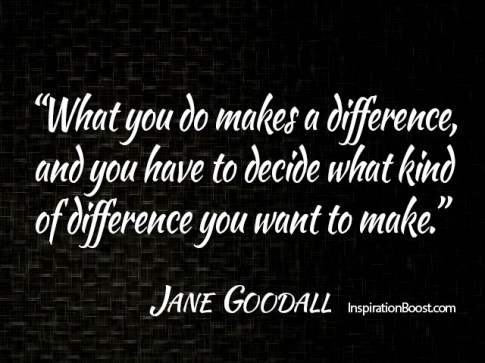
Jane Goodall quote

There is nothing enlightened about negative thinking. Hopelessness is not a good or helpful place to be. Helping just one other person (animal, place) makes a huge difference – for that one person (animal, or place) anyway. We can’t lose hope and close ourselves off in the face of the enormity of the world’s problems. Every little bit matters. We each as individuals matter. “We do good things not because we can save the world all alone. We do good things because it is right, and because we can.” (Bear Grylls)

Be the ray of hope for just one person today and notice what a difference it makes – for them and for you! Cherish and encourage creativity. Read a great book. Be bold and courageous. Surprise yourself. Be curious and be kind. These are some of the essential wonders of life, of being human. THIS is the sweet in life, no sugar added.

#lowbaddietsaregoodforyou


What Would Light be without Darkness?

Apparently the existential thinking of my French studies sunk in somewhere after all despite the fact that I would desperately wish for the French novels and films of my academic years to come to a conclusion or point of some sort. Mercy!

Several decades later, as I travel in my little world, I notice how the holiday lights proliferate by the day and how the reflecting snow augments their brightness. It’s no mystery that the season of light happens on the longest and darkest of days as we (in the northern hemisphere, anyway!) descend towards winter. As I witness and delight in the decorations springing up around me, and as I set up my own decorations, I can’t help but also think about the darkness.

Darkness usually has such a negative connotation. Certainly at this time of year, darkness comes ever earlier and, as the sun sets, the cold burrows deeper into your bones. Personally, I have trouble leaving the warmth of my home to venture out into the dark. As far as I am concerned, when it’s dark the day is over. That doesn’t work out so well when it is dark at 4:30 in the afternoon. But as I set up my decorations, I find myself anticipating the dark, knowing that the lights are muted, invisible, meaningless without it.

Maybe I’ve spent too much time freezing my toes off in a snowbank recently, but my brain has been firmly veering toward the existential. What would light be if we didn’t have darkness? Not much. It turns out, the darkness I generally dread is the platform for the delight of the glimmering lights all around me. This makes me think further about gratitude and love: Would we even understand our good fortune without suffering? Isn’t grief one of the deepest and most profound expressions of love?

I think about the trials I have faced in my life, about times and places I never want to revisit or repeat, about the people I have loved and lost (or am still losing slowly, every day). I recognize how the challenges transformed me into the person I am today, that the slow loss of my mom to Alzheimer’s forced me to pay attention and to spend extra time with her while we could still talk, that the sudden loss of my aunt drew me closer to my uncle and cousins, that “grief is just love with no place to go.”

Grief is really just love quote

Adversity and challenge can be blessings in disguise. With them comes introspection, awareness, knowledge, compassion, connection, and gratitude. Without them is a life unquestioned, many paths not taken. Adversity led me to work in the woods of northern Maine and to travel to the other side of the world to study in Madagascar. It was the discomfort and emptiness of my questioning, who-am-I-and-where-do-I-fit teenage years that gave me courage, that forced me to stretch myself, that showed me who I really was and helped me define my passions, and that taught me to see with gratitude the blessings that exist every day in my life. Once again, the darkness was the platform for the light.

At this consumeristic time of year, I am even more mindful of my many blessings, especially the basics. Here is my short list of cherished things. We should never take these (and many more) for granted. Trust me.

  1. Shelter – I see the snow on the ground, hear the wind howling outside. I have woken with wet toes when the bottom of my sleeping bag slid out from under the tarp that protected me from the rain; I have slept outside when temperatures have dipped below 20 degrees, every article of clothing I could carry on my body, my sleeping bag hood drawn down to my eyes around my head. But my nose was still so cold I had trouble sleeping. I am so grateful to have a roof over my head and heat to keep to me warm;
  2. Umbrellas – You only have to get soaked in a rainstorm once to understand what a wonderful invention these are. Live in the woods working days on end in the rain and you will never forget the comfort of being warm and dry;
  3. Washing machine – As a mom, laundry is, admittedly, the bane of my existence at times. But, oh my gosh, the machine does it all by itself! And we are fortunate enough to have one in our home. One bout of stomach flu running through the family is all it takes to realize how awful life could truly be. Imagine walking your laundry to the laundromat down the street when you are recovering from the flu. That’s right. We are blessed beyond measure.
  4. Clean water – I fill my water bottle directly from the tap. If you have never experienced anything else, it’s easy to see how having clean water, on demand, anytime you need it wouldn’t register as a luxury. But many countries don’t have treated water and many women spend the better part of their days fetching water from miles away. I knew that the parasites and bacteria in untreated water wreaked havoc on more delicate American and European GI systems (sometimes called Montezuma’s revenge), but only recently did it strike me that those who live in developing countries also get sick from the water. Water they drink every single day. Five months in Madagascar taught me clearly how impossible it is to work, go to school, be healthy and strong – live – with constant tummy troubles.
  5. A quality education – Education is a much less tangible “thing,” but it’s so critical that I have to include it. An education is both a foundation and a launchpad. A quality education is something that should be a right and a guarantee. But it isn’t, not in many developing countries (where many girls are fetching water instead of going to school), but also not equitably in the U.S. An education provides a path toward financial security, a way to access broader opportunities, and, fundamentally, hope. She’s The First recently launched a powerful video about how imperative and transformative an education is. One of the extraordinary women profiled is a graduate of the MAIA Impact School in Guatemala.


I could go on. But those are my top five.

Hopelessness is the darkest of places to be. In this season of light and giving, I encourage you to think about how you can shine your light into the darkness. Shine your light on all of your blessings, no matter how small they may be. Reach out to those who are in need of hope. If each of us were to be a ray of light for even just one other person this year, think about how much hope we could fill the world with. Let’s make 2020 EXTRA-ordinary, each in our own ways.

In thinking about something bigger than us as individuals, and in the giving spirit, here are some of my favorite organizations that are doing the difficult, audacious, and awesome work of providing high-quality education, clean water, and recognizing our common humanity across the world. I am holding them and all of my readers in the light this holiday season.

MAIA Impact School – Unlocking and maximizing the potential of young women to lead transformational change.

Water for People – We believe in a world where everyone has safe drinking water, forever.

One Revolution – It’s not what happens to you, it’s what you do with what happens to you.

Brokeness of world quote


The Magic City Beckons

It’s the most wonderful time of year!!!!

Do you think I am talking about the holidays? Naaawwww, that’d be so predictable. I’m talking about getting your freeze on for a reas-on at the Millinocket Marathon and a Half this Saturday, December 7, in the Magic City (aka Millinocket, Maine)! It is the most warm and fuzzy event in one of the coldest paces in New England – and it truly is magical.

welcome runners

No matter the weather, approximately 2,500 runners are planning to participate in this fully subscribed event. In fact, the town is expecting as many visitors to descend for the weekend as there are residents! And the northern Maine hospitality machine is ready, with an artisan’s fair, spaghetti dinners, warming huts, pre- and post-race gatherings, and logging trucks to mark the start and finish.

Run between the trucks
Running between the trucks. Photo courtesy of Millinocket Marathon and a Half

As with the four prior years since the race’s inception, there is no entry fee. The idea is to entice visitors to this stunning area to spend money in a town that has weathered severe economic downturn since the paper mill, its primary industry, faltered, stumbled, and finally shuttered, over a decade ago. It takes place during a time of year that can otherwise be pretty quiet and challenging for businesses. It’s a shot of adrenaline for local businesses and residents when they need it most. In its fifth year, the event has become a tradition for runners and residents that everyone looks forward to.

And, this year, my husband is running the half and I will be there to enjoy being in one of my favorite places on Earth and to cheer on all the runners.

The marathon is, for my husband and I, this incredibly synergistic convergence of our passions. Often our passions look something like this, with his on the left and mine on the right:

Fortunately, we appreciate each other’s interests and passions and accept that we don’t necessarily share the same ones all the time! Our relationship is fundamentally grounded in respect for the other person and their interests. We have enough overlap that it’s not an issue, though it’s taken some ironing out along the way to understand what drives each of us for sure. I didn’t realize, for example, what an offense it was to not actually pay attention to the game when we would go to Fenway Park. I like the atmosphere, but the game? Not so much. On the flip side, I used to be a park ranger in northern Maine, headquartered in Millinocket, and love the peace and solitude of the north Maine woods. He can’t quite understand the appeal of climbing a mountain (for fun?) and spends most of his outdoor time swatting away every biting bug from within a 100-mile radius that descends to attack him as soon as he steps out of the car.

So imagine my surprise when I told him about the Millinocket marathon and a half and he said, “Wow, that’s pretty cool. I’d like to do that some day.” I mean, for as much as I love it there, I personally thought it was a kind of crazy idea to drive over 5 hours to voluntarily run 13.1 or 26.2 miles in winter in that rugged country. I was pretty sure he’d have the same reaction. Instead, he watched and re-watched the Running with Cameras race video (which, incidentally, won an Emmy for the New England region in 2019!) and got ever more excited about it. He up’ed his fitness efforts and his running game. And he signed himself up as soon as registration opened for the 2019 race.

Here we are now, a couple of days away from the race. We are finding that both of us are excitedly anticipating the drive North and being a part of this event and this community, each in our own ways, but also together. He is anticipating the challenge of the run, the camaraderie of the event, and being part of something that helps a place he knows I love. I can’t wait to see Millinocket thriving and alive, to be close to those mountains, and to cheer on my husband, all the other runners, and this community that I have come to love over all my years of living and visiting there.

As the Millinocket Memorial Library t-shirt says, “Don’t Millinocket ’til you try it.” The Millinocket Marathon and a Half is fundamentally about connecting with other people and a new place (or an old place in a new way); about both opening our eyes to the challenges other people and their communities face, and also about opening our eyes to the natural beauty that surrounds us, even in winter; about taking action by showing up and participating fully as partners in making ripples of change; about taking a chance, and second chances; about caring so much for your spouse and what they love, that you are all in to support them (and vice versa); and, of course, about hope, both having it as well as catalyzing it. I can’t think of a better reason to put on every ounce of clothing I own to stand outside and freeze! Go runners!

Don't Millinocket Till you try it
Don’t Millinocket t-shirt fundraiser for the Millinocket library


Finding the Spark: How to Make Change Happen

Back in grad school, one of my professors asked us to define the spark that engenders change. What causes some stuck (people, projects, towns, cities, countries) to evolve, change, revitalize, or otherwise transform while others stay stuck? After much discussion, there was no definitive answer. The mystery of successfully effecting positive change – of figuring out the spark that finally ignites transformation – is something that I have been thinking about and trying to answer ever since.

Today I had a whole elaborate plan cooked up in my head to reveal the (honest-to-goodness-I-keep-lists-of-this-stuff) five elements that most characterize effective change. But, honestly, it’s reading like a research paper and I am, ironically, feeling stuck (and a tad bored) as I write it. So, instead, I am going to illustrate effective, BOLD change with an awesome, feel-good, hope-filled story.

So, here it is: last week the middle school students at the MAIA Impact School celebrated their promotion to high school!!!! This is HUGE. This is unprecedented! This is transforming lives and creating a path that’s never been trod before.

Remember from previous posts that MAIA is a secondary school designed specifically for rural, poor, indigenous Guatemalan girls. Any single one of those factors creates a challenging situation. All four combined seems insurmountable.

In Guatemala, the least equitable society in the Western hemisphere, Mayan girls are an after-thought. Families live hand-to-mouth, scraping by, tenuously surviving, with no opportunity for better – for generations, for the entire scope of their pasts and futures. Education, especially for girls, has historically been neither an option nor a priority.

By supporting their daughters to attend MAIA, these families have both courageously attempted something that is totally new to them while sacrificing someone to help out at home now for a better future for their child, their family, and, ultimately, their country later. When they completed sixth grade, these girls had already exceeded the cultural norms for their education. Now they have completed all of middle school and are off to high school! Grab your tissues and check out this highlight video from the graduation ceremony.

MAIA’s new school building in Solola opened just one year ago this month. Rob Jentsch of MassInsight, the behind-the-scenes education guru and co-architect of the school, observed: “Beyond the fields of the Esturctura de Elementos Esenciales at least once per trip I have a moment where I get a little overwhelmed by seeing how well you all are bringing to life what is at its core an extremely ambitious proposition. So ambitious in fact that literally no one I’m aware of has attempted it. I just had that moment. There are 150 indigenous girls, led by an indigenous staff of teachers, who are at school on a random Tuesday learning and growing at a depth and pace and in an environment that any parent in the world would wish for their child.”

The preschoolers who attend school in a space at the MAIA Impact School also graduated last week. Mostly I am including their pictures here because they are just so unbelievably adorable. But also, think about what they and their families are witnessing every day as a real possibility for their futures. The sign behind their heads reads “Bienvenidos a la Clasura Aula Magica,” which means, “Welcome to the Magical Classroom.” This truly is magical. And it’s also what hope looks like in action. A future of opportunity in the making. Ripples of change expanding ever wider, generation to generation.

My list of what it takes to create change and shift the status quo doesn’t mention the word ambitious, but I think I will add it. Fundamentally, change starts with a bold and audacious vision (anchored with proven best practices and measurable milestones). It demands courageous action, commitment, and perseverance, every single day. And it requires leadership that’s realistic, that recognizes the formidable odds and all the problems (and they are manifold), but doesn’t get quagmired in or paralyzed by dwelling on them. When you have all that, well, it’s a start. Usually change on this scale is incremental and takes an incredibly long time, a slow shift in the sands, a ton of work happening behind-the-scenes for years before a vision becomes reality. MAIA is all the more remarkable for asking themselves “how far can she go?” and then laying out a path for these girls to see just that. MAIA is transforming an ambitious vision into reality at an unprecedented pace within Guatemala and on the international stage (the photos below are from the United Nation’s Day of the Girl in October where MAIA presented a Girls Bill of Rights!).

In this often frantic time of year, step back from time to time, take a deep breath, and a good look around. The essence of human life – connection with others – happens before our very eyes in the Target parking lot, in the checkout counter at the grocery store, at a highway rest stop – if you let it. Flood your heart with hope – for the courageous MAIA students and their families in Guatemala and for positive change in your own life. Recognize with deep gratitude all the good in the life you have; the wonder and fundamental good in this world; and the potential of us all, and for our common humanity.

Smile. Connect. Hope. Gratitude.

Thank you for reading, and Happy Thanksgiving!

In this season of giving and gratitude, if you are so inclined to support the MAIA students as they chart a bold, new trajectory, please give at www.maiaimpact.org/donate

MAIA Logo“If the only prayer you ever say in your entire life is thank you, that will be sufficient.”  (German theologian and philosopher, Meister Eckhart)

Coming into the Light – 10 Life Lessons from a Year of Writing and Living Courageously

A year ago, a friend asked me to create a blog about our trip to Guatemala. I had never set up my own website before or blogged (gosh, I still detest how that word sounds) or publicly written much at all to that point. But she knew that I liked to write, having watched me carry my journal everywhere back in our days together in Madagascar in the 1990s and then again as we traveled around Guatemala. I assumed I could figure it out, and it seemed like a good challenge.

What I discovered is that there is more formatting and behind-the-scenes work needed to get a website set up than I expected. It’s more time-consuming than it is difficult, and I spent ages just trying to think of a website address. I eventually settled on “Put Your Own Oxygen Mask on First” thanks to a sticky note that sits on my desk as a reminder to myself. At a certain point, I just needed to get writing. So I plugged it in, and after confirming that no one had claimed it yet, I went with it. I know it’s probably too long, but it was time to unstick myself from the nitty-gritty details and get down to writing. As time passes, I adjust and tweak the site’s format and layout. As with so much in life, greater clarity comes with time. You can perfect – or improve it – later. The most important part is to just get started.

First draft yoda

And start I did. I published my first post on November 15, 2018. Looking back at the past year, I am astonished for many reasons, but especially with how this writing endeavor has blossomed and grown. In the past year I wrote 50 blog posts. FIFTY. That’s a lot of 5am wake up calls. The lesson here is that writing is most effectively accomplished with focused, uninterrupted time, and for many writers that’s early in the morning. The other lesson is that I can pretty much turn any pursuit, even if it starts as a passion project, into work. The good news is that I noticed it happening and backed off a bit. That’s the gift of being in your 40’s – perspective and life experience!

Throughout this year I have had days – okay, weeks – where I have become discouraged and self-conscious. My strong and judgmental inner-voice has ruled my thoughts saying, “Who really wants to read this stuff?” and “Isn’t this a little self-indulgent?” I hear a Sarah Palin-esque derogatory and snarkily delivered, “How’s that hopey changey stuff working out?” in my mind and wonder, “What’s the point? Does all this – any of this – really matter?” I am but a drop in an ocean of snark and negativity, and does anyone really care about what I have to say anyway?

Anais Nin quote

But I carried on, because I like writing and how it helps me sort through my thoughts and experiences. About halfway through the year I began to pitch essay ideas to journals and newspapers, partially out of curiosity and partially, to be honest, to see if the pros though my writing was any good. And I was delighted that a couple pieces were chosen to be published! My essay The View from a Chicken Bus, about an indigenous girl’s journey to school in Guatemala, was published by Sky Island Journal in their Issue 9 in June. It has since been nominated for Sundress Publications’ “Best of the Net” and the Pushcart Prize. My essay on being a sandwich generationer and a child of Alzheimer’s was published by the Washington Post in August and then picked up by the Boston Globe, the Chicago Tribune, the Baltimore Sun, and eventually by Maria Shriver who published it in her Sunday Paper on November 3, 2019.

What a thrill and unexpected gift it has been to watch my words travel around the world! Talk about validation! The feedback I have received from readers has been astonishing, compelling, heartening, and uplifting. I am amazed that my words can bring others to tears, or lift their spirits, or provide a new perspective to set the tone for their day or week. Other caregivers who have walked the long, lonely, difficult road of caring for a loved one with Alzheimer’s reached out to me from all over the country to express their sorrow at my loss, but also to share with me their journeys and their pain.

The fact that my experience resonated with so many other people, that my words touched people’s hearts and inspired them to open up to me, highlights how important connection is, how critical it is to break down the feelings of loneliness and isolation – be it from our circumstances or our modern culture – that can overwhelm us. A friend shared, as she observed my writing journey: “I had never really considered how sharing an experience, beyond an in-the-moment conversation perhaps, could help others.” But it does. I think, in some way, I have always felt that innately, but evidence is mounting about how much it matters (and is missing). According to the results of a recent scientific analysis, loneliness is becoming a worldwide epidemic, and not just for caregivers. Fostering connection with other people, providing a means to have hope, it turns out, are critical remedies to a burgeoning public health issue.

Hope is what drives all of us forward. When all else is lost, what propels us forward besides our hope and our connection to other humans and those we love? So, then, why not be guided by hope? Why not seek connection with others (and, when I say connection, I mean authentic, genuine connection, not Instagram likes or FB “friends”). The alternative is so bleak. Everyone struggles. Everyone seeks a purpose and for their lives to have meaning. Having hope is not an absence of difficulty, or an avoidance of reality. It’s the light at the end of a tunnel of darkness; it’s the anchor that keeps you moored in stormy seas; it’s an intangible but absolutely critical feeling that is sometimes found in the unlikeliest of circumstances and where you least expect it. It matters immensely. This coming year I will redouble my efforts to share stories that give hope, especially where and when we least expect it.

Walt Disney storyteller quote

This year has been an exercise in writing, personal growth, and reflection. There is plenty of room to continue to grow in all of those areas. As author Rob Buyea has said, “The largest room in the world is room for improvement.” Isn’t that the truth? I will forever battle the internal judgement that says that no one wants to hear what I have to say, or that I have to prove myself, or that I am only as good as my last published article. I continue to find room to breathe into the self-doubt, to practice empathy and self-compassion. I live and write with integrity and intention. Or I try to. And I am blessed by this purpose-filled life that has grown out of the sometimes tumultuous and quagmired quest for who I wanted to be when I grow up. As I look back, here are the lessons I have learned through this year of writing (plus a couple of years of living):

  1. Don’t let the details be your undoing; as with writing, the first draft usually stinks but it has to be written to get to the next draft; so it is with life – get started and keep going;
  2. My biggest critic is myself – and I suspect I am not alone in that (why else would the imposter syndrome be a thing?). Check the narrative. The feelings are real, but is the story they are telling you true? Monkey mind is how Buddhists describe it. I guess I’ve always been a storyteller of sorts ;-).
  3. Be open to new perspectives about who you are and what you can do. As I began to think of myself as a “writer,” it opened my eyes to new opportunities and to connecting with people in a new way. I have made new friends this year that I would never have known or had occasion to overlap with a year ago;
  4. Curious gets you a lot further than furious when it comes to connecting with and understanding other people;
  5. If you’re at all like me, learn to check yourself when what started as a fun pursuit becomes a deadline-driven project; remind yourself who is in charge – or should be – you or your to-do list?;
  6. Being vulnerable is uncomfortable; it is also real, human, and relatable;
  7. Conformity is boring. Be uniquely you. Always;
  8. Sharing our stories is how we relate to and connect with one another;
  9. Storytelling is an art, and it’s an important part of helping humans understand their purpose and their past;
  10. Thank you for reading!
  11. BONUS – I like lists (and post-it notes).

First draft Anne Lamott

“My deepest fear is not that I am inadequate. My deepest fear is that I am powerful beyond measure.

It is my light, not my darkness, that most frightens me.

I ask myself, who am I to be brilliant, gorgeous, talented and fabulous? Actually, who am I not to be?

I am a child of God.

My playing small doesn’t serve the world. There’s nothing enlightened about shrinking so other people won’t feel insecure around me.

I am born to manifest God’s glory within me. It’s not just in some of us: it’s in everyone. And, as I let my own light shine, I unconsciously give other people permission to do the same. As I am liberated from my own fear my presence automatically liberates other.”

-Marianne Williamson


What are We Without Our Memories?

My mom forgot my birthday for the first time six years ago. As an almost-forty-something, I didn’t need a big birthday party or lots of attention or anything like that. But it is a stunning milestone for a mother to forget the day that she brought her baby into the world. And for said baby, it was incredibly painful the first time it happened. There are some things that seem like they would be impossible to forget.

Especially for my mom, a woman who embraced motherhood fully and in every way. Raising my brothers and I was the best job she could dream of. That’s not just me putting on rose-colored glasses and saying so – she told me that. When I say our mom was our biggest fan, I am not exaggerating. She showed up in so many ways. She was on the sidelines for all of our games, only missing them if there was a conflict with another sibling’s schedule. She attended every ballet recital (a bouquet of flowers in hand), swim meet (day-long affairs in over-hot, heavily-chlorinated air to see your kid swim for 30 seconds), soccer game (sometimes taking up entire weekends for months on end, game after game), hours and hours of shuttling us to music lessons, baseball practice, soccer, tennis – you name it, we played it. Even in the early stages of Alzheimer’s she was there on the sidelines for Kindergarten soccer and witnessed her grandson’s first goal ever. It was 28 degrees, the field was covered in frost, her memory was failing, she was frightened about the future, her world was shrinking – and there she was. She showed up time and again – for us, for everyone in her family, and for her friends.

Don’t get me wrong, we were far from perfect and I am pretty sure she had her moments when she wanted to run out of the house screaming to escape from us and the insanity we were causing her. In fact, she actually did so on at least one occasion, prompting our next-door neighbor, who had been out gardening, to come over and put his arm around her to comfort her. It kind of became neighborhood lore. So I know she thought we were royal pains in the ass sometimes – and we were – and surely she was overwhelmed keeping track of us and our schedules and our issues and, of course, the never-ending laundry. I imagine she had her moments of cursing us quietly under her breath, or venting to her friends or sisters on the phone. I am certain there were lots of things that got missed. My mom was chronically last minute in her approach to life. Her desk was a jumble of papers, binders, and – to my mind – complete and utter chaos. It looked like she didn’t sweat the small stuff, but I think the truth is that she was the world’s biggest procrastinator. You could count on her, but she’d make you sweat it out, tumbling through the door with the cake or hors d’oeuvres or whatever she had promised to bring just seconds before the start of a big event.

For my birthday, she would hang streamers in the dining room and bake a cake from scratch. She took cake-decorating classes to improve her skills, and – as cliche as it is to say it – she baked love into every morsel of every item she made. She planned epic treasure hunts in the woods for my friends and I – two-hour hikes with elaborate clues and “treasure” hidden along the way that ended at a river where we would feed the ducks with stale bread she had been collecting and freezing for months. It only occurs to me to wonder in hindsight how she got the clues placed and the treasure hidden all while baking and decorating the cake, organizing the party, and keeping up with my brothers and I. While those more elaborate birthday celebrations faded away as I got older, if I was home my mom would always bake her famous chocolate chip vanilla cake with cream cheese frosting (recipe below). If I was away, she sent a card and called. She was never extravagant, more of a simple but elegant woman. But she always acknowledged what a special day my arrival was for both of my parents and how much I meant to them. Like I said, this is the stuff that you would think you could never forget.

But forget she did, first six years ago and increasingly each year since as time for her becomes more and more of a loose construct and words and their meaning elude her. This year I baked her famous cake for my daughter’s birthday and brought her a slice to see if the taste brought back any recognition of all of these wonderful, deeply held memories. She liked the cake, smiled while she ate it, but otherwise was blank. For my birthday, I brought tea and cookies to her care home to celebrate. Because, really, my birthday is about us, maybe even more about her than it is about me if you think about it! She was happy as usual to see me, springing from her chair with delight, her hands swinging dramatically in the air to wave me over, a huge smile across her face. She loved the idea of a party, but I don’t think she really understood the birthday part. She used to break into song, part of her brain holding onto familiar tunes like Happy Birthday better than other things. But she didn’t sing this time. She just enjoyed her cookie and her tea, and I enjoyed her company. Despite all that I have lost of her, I still have that.
I am left wondering time and again as we face into Alzheimer’s ever more deeply, what is life without a memory? I read Atul Gawande’s book Being Mortal: Medicine and What Matters in the End and, while inspired, grateful for this new perspective, and appreciative of the recommendations for aging and dying well, I found myself wondering how one can have a meaningful, purpose-filled life and live life to the fullest until the very end if you can’t remember anything. Who are we without our past? It’s one thing to live in the moment, moment to moment. That’s enlightenment. But isn’t life, ultimately, a collection of memories? Isn’t that what we all aim for, to create wonderful memories? So many of my conversations start with, “Remember when?” What happens when you don’t? Without memories, what does it mean to be alive?

I don’t have any good answers. I just wonder. And I wonder what goes on inside my mom’s head, what she is seeing when she points to things that aren’t there, what she is trying to describe when she can’t find the words, what it feels like to entrust yourself and your well-being completely to another person.

Where is the hope in this? I don’t know. But there is definitely connection. There is some deep, biological recognition of one’s own, no matter what else has departed. And I guess there’s hope – or magic of some sort – in that. And there’s always cake.

Bethie O’s Famous Chocolate Chip Vanilla Cake

1 cup yogurt (plain or vanilla)

1 cup oil

2 cups sugar

3 cups flour

2 heaping teaspoons baking powder

3-4 eggs

1 bag mini chocolate chips

2 teaspoons vanilla

Mix. Bake at 350.

Tube cake – at least 1 hour

Flat cake – 30 – 35 minutes

Cupcakes – 20 – 25 minutes

Cream Cheese Frosting

1 teaspoon vanilla

3 ounces cream cheese

Confectioners sugar

Dab of milk

Mix to taste and consistency. And enjoy!

Just because you carry it well

Hope and Humanity at the U.S. Border

I’ve been meaning to write – for ages – but time is not on my side. Life happens and I have been swept along with it. I expected September to be a loss with the deluge of emails and activities that accompany back to school. But October seems to be well on its way to disappearing as well. I am not complaining, just explaining my absence!

So, where do I start? I wanted to share Jennifer DeLeon’s article Migrant Stories from McAllen, Texas: Finding Hope and Humanity at the Border that was published on WBUR’s (NPR’s Boston channel) Cognoscenti on September 5, 2019. I fully intended to post it then, but I am only getting to it now (life: see paragraph 1). It’s still relevant and what she witnessed there, plus countless new stories, persists.

Jennifer’s article struck a chord with me on many levels, but I especially love that her story’s title includes the words hope and humanity. I am always trying to find those stories. The whole original intent of this blog was to shine a light on stories of hope where you might least expect to find them. I have no doubt that the situation at the border, as well as the situation that migrants are both coming from and into, requires some fortitude and digging in order to find hope.

Hope, and compassion, come alive through authentic human connection. That’s part of what Jennifer experiences in McAllen. Authentic human connection. Meeting people where they are. Seeing the world through their eyes. It’s not easy. But it’s so rewarding, and so human(e).

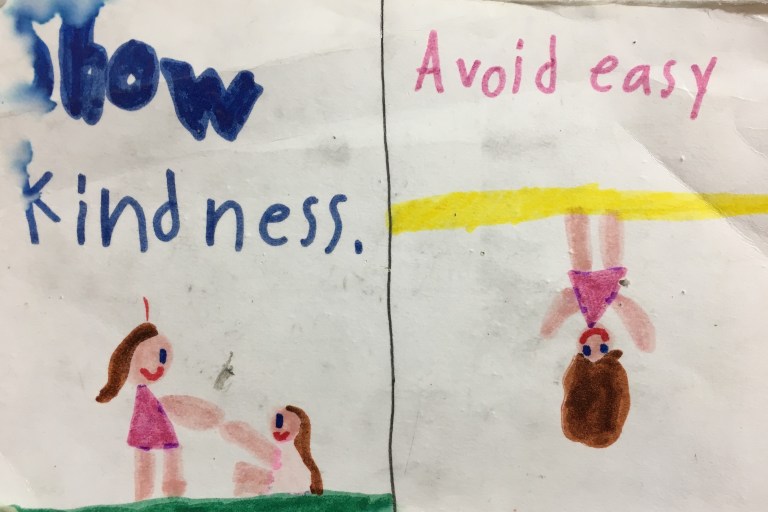
Freddie is the name of the nine year old Honduran child that Jennifer profiles in her article. When my daughter was in second grade – about Freddie’s age – she brought home the artwork shown in the image below. It reads: “Show kindness. Avoid easy.”

Imagine a world where we were all guided by these simple tenets. Many adults seem to have forgotten the basic and common humanity and innocence that underlies what these 8 and 9 year old’s already know. Show kindness. Avoid easy.

Show Kindness Avoid Easy