Legacy and Impact

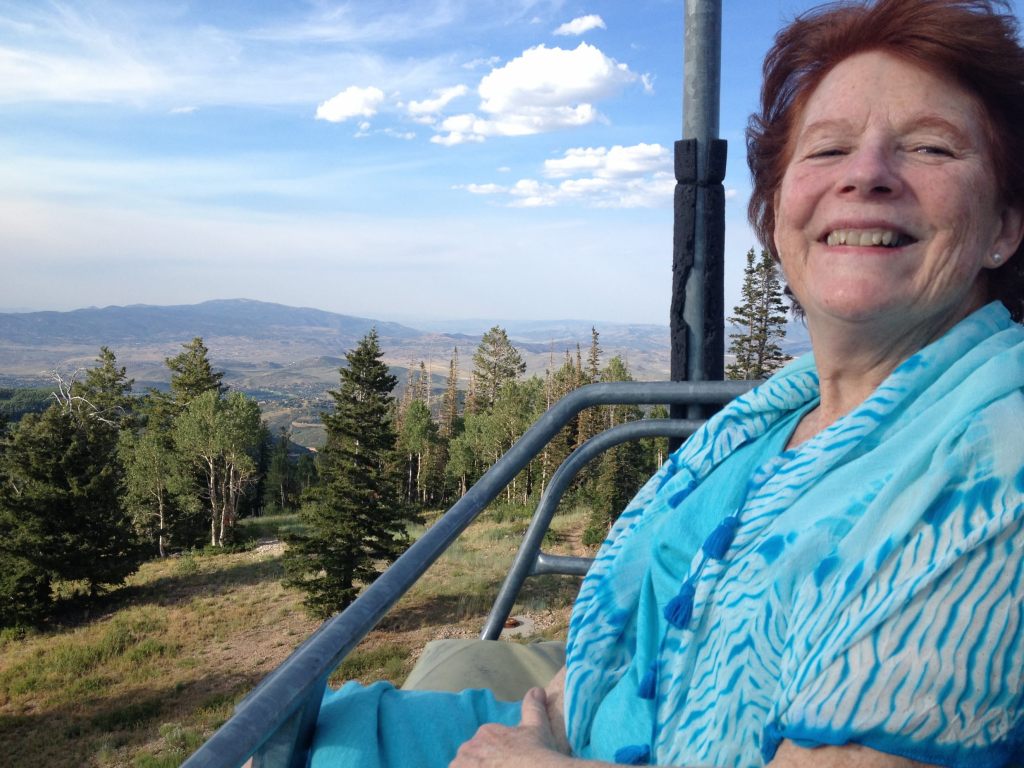
My mom passed away earlier this month. I realize now that her legacy isn’t just in what she did during her life, it’s in who I am in mine.

As with so much of our Alzheimer’s journey, it was a slow moving end. She was just subtly different one day to the next and I found myself in a strange(r) waiting period for several months. I spent a lot of time sitting with her – sometimes she was awake, but often she slept – and thinking. After all these years, my brain can’t understand that she is gone. I knew she was mortal – though she did have a knack for making me question that – but it’s still a complete mental doozy. Grief in the traditional form of reckoning with her absence from this Earth altogether sits in my peripheral vision. It’s there, but somehow I am not ready for it yet.

There are so many threads to pull on from these last several months that merit further reflection, but the most revelatory at this stage for me is the idea of my mom’s legacy. I have always known how much I loved my mom and how deeply she cared about me and my brothers. Through the lens of her life in review, which somehow only became more accessible when the end was approaching, I see more clearly what she passed on to me. There are obvious things, like my eye color and my curly hair. And then there are the more subtle, nurture things. As I worked to capture who my mom was in her obituary, all the ways she served her community became abundantly clear. I was telling someone just yesterday that one of the first things I did when I got to college was to join the student volunteer center. It struck me then how my mom quietly did her thing and influenced the person I became without me even really noticing it. In other ways she was more overt. I have thought a lot over the years about how freaked out she was when I took a semester off from college. She worried that I wouldn’t go back. All this time I’ve maintained the narrative, “Didn’t she know me at all? I was always going to go back.”

But, now, I see it more clearly. It didn’t have to do, exactly, with knowing me. It was about what she wanted for me. She did everything she could for our entire lives to make sure my brothers and I had a smoother path and better opportunities than she did. She graduated from college when she was 49 years old. I was 16. It could not have been easy with 3 kids, our endless sports schedules, and her school work – and yet she still managed to get us where we needed to be and to put dinner on the table. She wanted me to finish college while I was still young and unencumbered, to just have that college degree in my back pocket.

It makes me think about the parents of the Girl Pioneers at MAIA that I work with in Guatemala. By choosing to educate their daughters, they chart a different path for their families with the hope of improving the future for the next generation. This path is unfamiliar to them and requires real courage, commitment and selflessness. But they want better for their children so they take a chance on this opportunity.

Several years ago MAIA ran a fundraising campaign called Nim Mama, which means “Great Mother” in the Maya Kaqchikel language of this region of Guatemala. The campaign focused on honoring mothers and their collective strength, beauty, and transformative power. The images of the pioneering, brave girls of MAIA with their mothers at their side brought me to tears. They reflected back to me my own mom’s strength and guiding light and reminded me how important my education was to her.

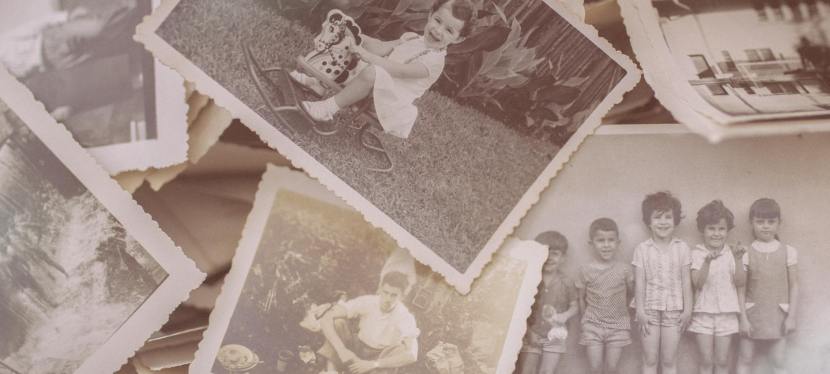
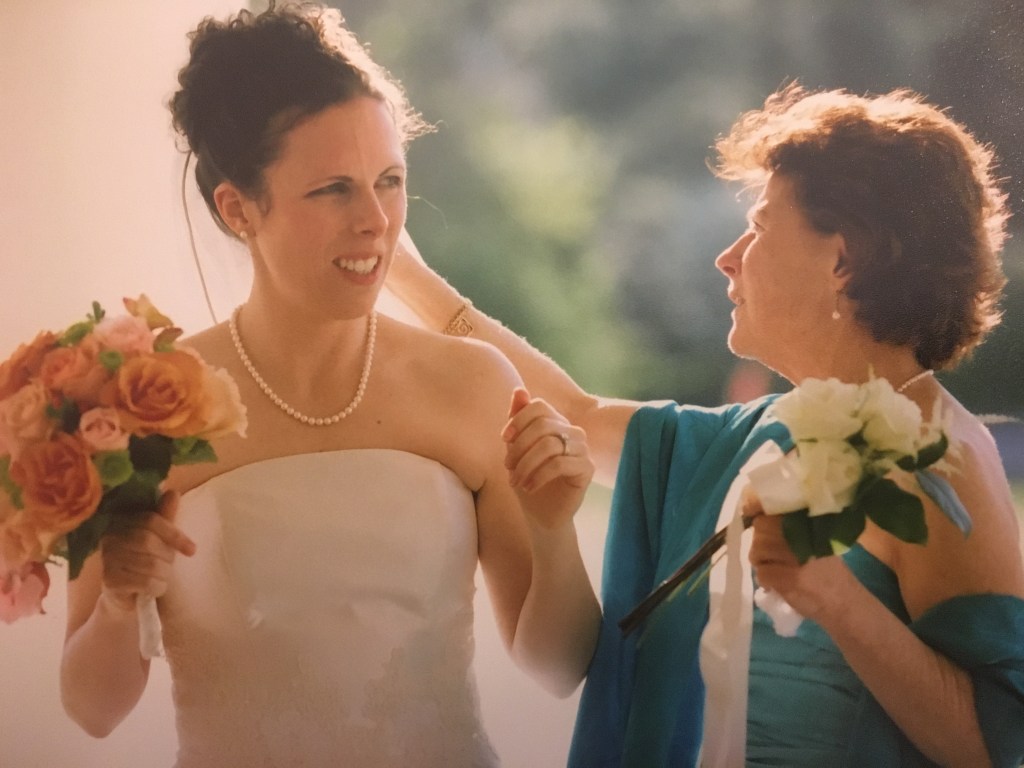
As I go through old photos of me and my mom I think about the legacy of what she gave to me. She stood alongside me, literally or figuratively, my whole life in the same way that the mothers of MAIA stand alongside their pioneering daughters. I realize now that my mom will live on through me – in who I am, in how I tell her story, and by paying it forward like she did so that the next generation has more opportunities and a smoother path still than I did.

I am the same age now that my mom was when she graduated from college. I have two great kids and a loving husband. That college degree that I earned at 22 has opened doors for me. As her primary caregiver for the last decade, our roles reversed for a while as I became more and more responsible for her well-being. I accompanied her to her last day on this Earth to the best of my ability. And I know she is proud of all of these things. It helps me to imagine that she can see it all now and can feel really good about how well she guided my way.

I turn 50 next week. As my way of celebrating my 50 years on this Earth as well as the nearly 50 years I got to spend with my mom, I’m raising funds for MAIA. Paying it forward for the next generation is the best gift I can imagine receiving. Please consider joining me. https://donorbox.org/meg-s-50th-birthday-fundraiser-for-maia-guatemala
What Are We Without Our Memories? – Reflections Six Years On

This post follows up on a piece I wrote in November 2019. I asked in that post: what is life without a memory? I didn’t have any good answers at the time. And I still don’t, not really. But I spend a lot of time wondering about this. In fact, I woke up in the middle of the night the other night wrestling with this question. My middle-of-the-night-brain thought I should write about it only to discover when I woke up that I already had. Six years ago. Which just confirms that everything old is new again in my brain.

The big questions I have are what – and who – are we if we don’t have a memory? I also wonder what goes on inside my mom’s head – what is she seeing when she points to things that aren’t there, what is she trying to describe when she can’t find words, is more of her there than I realize, should I be more patient and move more slowly when trying to engage her, what does it feel like to entrust oneself and one’s well-being completely to another person, what is she holding on to this version of life for?

The mom I have now isn’t the mom who raised me, except in glimpses of a smile or a laugh or a familiar look (she was – and remains – a superior eye roller). She has no agency – she has no decision-making or verbal capacity, is completely wheelchair bound, and requires a mechanical lift to transfer her from chair to bed. She is quite literally a body without the instructions that typically come from a mind. But this body of my mom’s and the essence of who she was and who she remains to me are still here on this Earth, a living, breathing human being who exists, who needs food and care and love even though it’s hard to tell what impact any of it has on her. Ah, except for music. If she is awake, she still responds very clearly and enthusiastically to music by tapping her fingers or bouncing her foot.

Prior to my 2019 post, I had read Dr. Atul Gawande’s book Being Mortal: Medicine and What Matters in the End. I was inspired and grateful for the new perspective he presented, appreciative of his recommendations for aging and for dying well, and encouraged to see the emphasis on quality over quantity when it comes to facing terminal illness and one’s mortality. I found myself wondering, though, how one can have a meaningful, purpose-filled life and live life to the fullest until the very end, which are the premises of Gawande’s book, if one has no agency and can’t remember anything. It’s one thing to live in the moment, moment to moment. That’s enlightenment, or approaching it. But isn’t life, ultimately, a collection of memories? The best parts of life are the living of it and then the reliving of our favorite memories through pictures and sharing stories, anecdotes, and things learned along the way. When someone dies we bask in the memories of our times with that person. So many of my conversations start with, “Remember when?” What happens when you don’t? Who are we without our past? Without memories, what does it mean to be alive?

Since 2019, I have tried to connect with Dr. Gawande a couple times to see how he would answer those questions or what he would recommend. I have not had any luck finding a good email address for him so what I have sent has gotten bounced back. Rather than waste more time trying to find his email address, I instead tried to answer my questions on my own by digging around on the web to see what he has said on the subject. The answer isn’t super straightforward – with cognitive issues it seldom is – but it leans on the importance of dignity, joy, and connection, even if they only occur in one moment and then the next moment and then the next.

Gawande challenges the idea that memory alone defines us. Though he doesn’t minimize the loss of being alive without a memory, he invites us to expand our definition of “being alive”:

  • It’s not just what we remember, but how we feel, how we’re treated, and how connected we are.
  • Meaning can be found not just in grand narratives but in small, sensory moments.
  • Even as memory fades, the present self still experiences emotions, relationships, and little pleasures—all of which sustain identity and meaning.

Gawande’s core insight is that:

Memory loss may chip away at the narrative of self, but not the essence of life.

Even without remembering yesterday, living today—with dignity, comfort, connection, and choice—can still be deeply meaningful. The best we can do is to provide as much autonomy, purpose, joy, dignity, and connection as possible. The emphasis becomes the small moments and an identity rooted in feeling versus memory.

It’s surely not the life my mom would have wanted, but by reframing my expectations in this way at least I know that my mom has all of the elements of a quality life.

Considering. I am not so enlightened and rose-colored-glasses that I completely accept this reframe. It definitely feels like a consolation prize, though I do appreciate the perspective shift and the reassurance that what little moments of joy and love and music my mom experiences throughout her days matter.

As to wondering what is actually going on inside her mind, well, that’s actually a WAY more interesting subject I plan to delve into further. A friend recently recommended the Telepathy Tapes podcast, which “explores the potential telepathic abilities of nonspeaking individuals with autism.” That is cool in and of itself. What does this have to do with my particular plight? Well, there’s an episode on telepathic communication with Alzheimer’s patients as well. Woo woo? Perhaps. Worth trying? Abso-freaking-lutely. Imagine what I could learn from sitting quietly a bit more, breathing deeply, and listening. Maybe I’ll hear my mom’s voice and gain deeper insight in our journey together. If nothing else, it’s good practice for putting my own oxygen mask on and finding my peace, quiet, and stillness.

My mom was – and remains – a beautiful and incredible human.