What Are We Without Our Memories? – Reflections Six Years On

This post follows up on a piece I wrote in November 2019. I asked in that post: what is life without a memory? I didn’t have any good answers at the time. And I still don’t, not really. But I spend a lot of time wondering about this. In fact, I woke up in the middle of the night the other night wrestling with this question. My middle-of-the-night-brain thought I should write about it only to discover when I woke up that I already had. Six years ago. Which just confirms that everything old is new again in my brain.

The big questions I have are what – and who – are we if we don’t have a memory? I also wonder what goes on inside my mom’s head – what is she seeing when she points to things that aren’t there, what is she trying to describe when she can’t find words, is more of her there than I realize, should I be more patient and move more slowly when trying to engage her, what does it feel like to entrust oneself and one’s well-being completely to another person, what is she holding on to this version of life for?

The mom I have now isn’t the mom who raised me, except in glimpses of a smile or a laugh or a familiar look (she was – and remains – a superior eye roller). She has no agency – she has no decision-making or verbal capacity, is completely wheelchair bound, and requires a mechanical lift to transfer her from chair to bed. She is quite literally a body without the instructions that typically come from a mind. But this body of my mom’s and the essence of who she was and who she remains to me are still here on this Earth, a living, breathing human being who exists, who needs food and care and love even though it’s hard to tell what impact any of it has on her. Ah, except for music. If she is awake, she still responds very clearly and enthusiastically to music by tapping her fingers or bouncing her foot.

Prior to my 2019 post, I had read Dr. Atul Gawande’s book Being Mortal: Medicine and What Matters in the End. I was inspired and grateful for the new perspective he presented, appreciative of his recommendations for aging and for dying well, and encouraged to see the emphasis on quality over quantity when it comes to facing terminal illness and one’s mortality. I found myself wondering, though, how one can have a meaningful, purpose-filled life and live life to the fullest until the very end, which are the premises of Gawande’s book, if one has no agency and can’t remember anything. It’s one thing to live in the moment, moment to moment. That’s enlightenment, or approaching it. But isn’t life, ultimately, a collection of memories? The best parts of life are the living of it and then the reliving of our favorite memories through pictures and sharing stories, anecdotes, and things learned along the way. When someone dies we bask in the memories of our times with that person. So many of my conversations start with, “Remember when?” What happens when you don’t? Who are we without our past? Without memories, what does it mean to be alive?

Since 2019, I have tried to connect with Dr. Gawande a couple times to see how he would answer those questions or what he would recommend. I have not had any luck finding a good email address for him so what I have sent has gotten bounced back. Rather than waste more time trying to find his email address, I instead tried to answer my questions on my own by digging around on the web to see what he has said on the subject. The answer isn’t super straightforward – with cognitive issues it seldom is – but it leans on the importance of dignity, joy, and connection, even if they only occur in one moment and then the next moment and then the next.

Gawande challenges the idea that memory alone defines us. Though he doesn’t minimize the loss of being alive without a memory, he invites us to expand our definition of “being alive”:

  • It’s not just what we remember, but how we feel, how we’re treated, and how connected we are.
  • Meaning can be found not just in grand narratives but in small, sensory moments.
  • Even as memory fades, the present self still experiences emotions, relationships, and little pleasures—all of which sustain identity and meaning.

Gawande’s core insight is that:

Memory loss may chip away at the narrative of self, but not the essence of life.

Even without remembering yesterday, living today—with dignity, comfort, connection, and choice—can still be deeply meaningful. The best we can do is to provide as much autonomy, purpose, joy, dignity, and connection as possible. The emphasis becomes the small moments and an identity rooted in feeling versus memory.

It’s surely not the life my mom would have wanted, but by reframing my expectations in this way at least I know that my mom has all of the elements of a quality life.

Considering. I am not so enlightened and rose-colored-glasses that I completely accept this reframe. It definitely feels like a consolation prize, though I do appreciate the perspective shift and the reassurance that what little moments of joy and love and music my mom experiences throughout her days matter.

As to wondering what is actually going on inside her mind, well, that’s actually a WAY more interesting subject I plan to delve into further. A friend recently recommended the Telepathy Tapes podcast, which “explores the potential telepathic abilities of nonspeaking individuals with autism.” That is cool in and of itself. What does this have to do with my particular plight? Well, there’s an episode on telepathic communication with Alzheimer’s patients as well. Woo woo? Perhaps. Worth trying? Abso-freaking-lutely. Imagine what I could learn from sitting quietly a bit more, breathing deeply, and listening. Maybe I’ll hear my mom’s voice and gain deeper insight in our journey together. If nothing else, it’s good practice for putting my own oxygen mask on and finding my peace, quiet, and stillness.
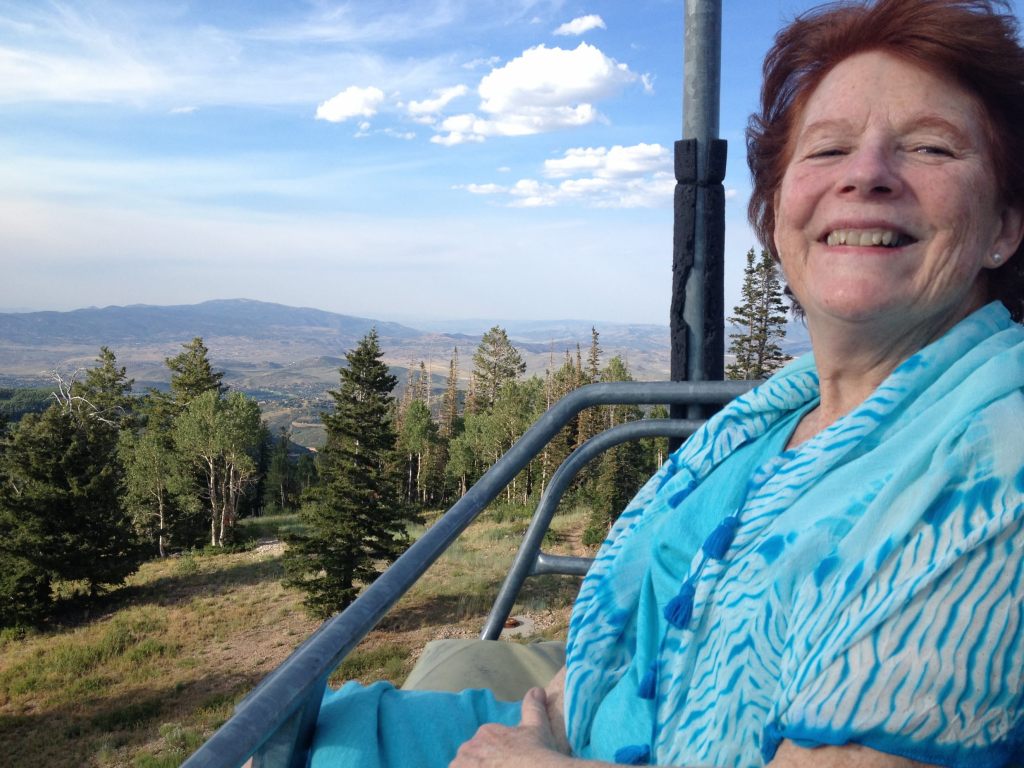
My mom was – and remains – a beautiful and incredible human.

Best Strawberry Smoothie Recipe Ever

21 meals a week. I underestimated that part of motherhood. I am hardly a cook so maybe it should have registered that meal creation could be an issue. But I figured I had survived on whatever it is I used to eat, so I guess I thought they would, too. Many days, though, I find myself STILL in a state of shock about how they can eat so dang much so darn often.

And the complaining! OMG. I can barely make it through the 21 required meals, let alone produce alternatives.

BUT, sometimes you hit a homerun. There is that one diamond-in-the-rough moment when the food/meal/whatever-consumable-item-you-make actually goes over without complaint.

I have had that moment. It’s a rare glimmer of hope in a sea of despair and hopeless meals. The smoothie recipe to follow is a go-to favorite in my house and because it gives me such ridiculously-outsized-for-what-it-is joy every time I make it, I have decided it should no longer be my special secret! Moms everywhere looking for a healthy slam-dunk for their kids – this may be your salvation. It’s healthy AND it tastes good – for REAL. Feel free to share and help spread the joy, one less stressful meal at a time!

Plus, if you know me at all, recipe creation is so far outside of my area of expertise that this could be a once-in-a-lifetime opportunity, folks! So give it a whirl:

1 bag frozen strawberries

1 ripe banana (if it’s frozen, you need a better blender than mine 🙂 but it will work)

1/2 cup plain yogurt

1 cup coconut water (for extra sweetness/flavor try pineapple coconut water)

1/2 ripe avocado (makes it creamy and you can’t taste it, I swear)

1-2 teaspoons almond butter (you can leave this out if you have allergies, this is an intentional add-in for us since we passed our almond allergy challenge!)

Blend it all together and, voila! A calcium and protein-packed marvel for even the pickiest kid. Enjoy!

Motherhood Cartoon


What are We Without Our Memories?

My mom forgot my birthday for the first time six years ago. As an almost-forty-something, I didn’t need a big birthday party or lots of attention or anything like that. But it is a stunning milestone for a mother to forget the day that she brought her baby into the world. And for said baby, it was incredibly painful the first time it happened. There are some things that seem like they would be impossible to forget.

Especially for my mom, a woman who embraced motherhood fully and in every way. Raising my brothers and I was the best job she could dream of. That’s not just me putting on rose-colored glasses and saying so – she told me that. When I say our mom was our biggest fan, I am not exaggerating. She showed up in so many ways. She was on the sidelines for all of our games, only missing them if there was a conflict with another sibling’s schedule. She attended every ballet recital (a bouquet of flowers in hand), swim meet (day-long affairs in over-hot, heavily-chlorinated air to see your kid swim for 30 seconds), soccer game (sometimes taking up entire weekends for months on end, game after game), hours and hours of shuttling us to music lessons, baseball practice, soccer, tennis – you name it, we played it. Even in the early stages of Alzheimer’s she was there on the sidelines for Kindergarten soccer and witnessed her grandson’s first goal ever. It was 28 degrees, the field was covered in frost, her memory was failing, she was frightened about the future, her world was shrinking – and there she was. She showed up time and again – for us, for everyone in her family, and for her friends.

Don’t get me wrong, we were far from perfect and I am pretty sure she had her moments when she wanted to run out of the house screaming to escape from us and the insanity we were causing her. In fact, she actually did so on at least one occasion, prompting our next-door neighbor, who had been out gardening, to come over and put his arm around her to comfort her. It kind of became neighborhood lore. So I know she thought we were royal pains in the ass sometimes – and we were – and surely she was overwhelmed keeping track of us and our schedules and our issues and, of course, the never-ending laundry. I imagine she had her moments of cursing us quietly under her breath, or venting to her friends or sisters on the phone. I am certain there were lots of things that got missed. My mom was chronically last minute in her approach to life. Her desk was a jumble of papers, binders, and – to my mind – complete and utter chaos. It looked like she didn’t sweat the small stuff, but I think the truth is that she was the world’s biggest procrastinator. You could count on her, but she’d make you sweat it out, tumbling through the door with the cake or hors d’oeuvres or whatever she had promised to bring just seconds before the start of a big event.

For my birthday, she would hang streamers in the dining room and bake a cake from scratch. She took cake-decorating classes to improve her skills, and – as cliche as it is to say it – she baked love into every morsel of every item she made. She planned epic treasure hunts in the woods for my friends and I – two-hour hikes with elaborate clues and “treasure” hidden along the way that ended at a river where we would feed the ducks with stale bread she had been collecting and freezing for months. It only occurs to me to wonder in hindsight how she got the clues placed and the treasure hidden all while baking and decorating the cake, organizing the party, and keeping up with my brothers and I. While those more elaborate birthday celebrations faded away as I got older, if I was home my mom would always bake her famous chocolate chip vanilla cake with cream cheese frosting (recipe below). If I was away, she sent a card and called. She was never extravagant, more of a simple but elegant woman. But she always acknowledged what a special day my arrival was for both of my parents and how much I meant to them. Like I said, this is the stuff that you would think you could never forget.

But forget she did, first six years ago and increasingly each year since as time for her becomes more and more of a loose construct and words and their meaning elude her. This year I baked her famous cake for my daughter’s birthday and brought her a slice to see if the taste brought back any recognition of all of these wonderful, deeply held memories. She liked the cake, smiled while she ate it, but otherwise was blank. For my birthday, I brought tea and cookies to her care home to celebrate. Because, really, my birthday is about us, maybe even more about her than it is about me if you think about it! She was happy as usual to see me, springing from her chair with delight, her hands swinging dramatically in the air to wave me over, a huge smile across her face. She loved the idea of a party, but I don’t think she really understood the birthday part. She used to break into song, part of her brain holding onto familiar tunes like Happy Birthday better than other things. But she didn’t sing this time. She just enjoyed her cookie and her tea, and I enjoyed her company. Despite all that I have lost of her, I still have that.

I am left wondering time and again as we face into Alzheimer’s ever more deeply, what is life without a memory? I read Atul Gawande’s book Being Mortal: Medicine and What Matters in the End and, while inspired, grateful for this new perspective, and appreciative of the recommendations for aging and dying well, I found myself wondering how one can have a meaningful, purpose-filled life and live life to the fullest until the very end if you can’t remember anything. Who are we without our past? It’s one thing to live in the moment, moment to moment. That’s enlightenment. But isn’t life, ultimately, a collection of memories? Isn’t that what we all aim for, to create wonderful memories? So many of my conversations start with, “Remember when?” What happens when you don’t? Without memories, what does it mean to be alive?

I don’t have any good answers. I just wonder. And I wonder what goes on inside my mom’s head, what she is seeing when she points to things that aren’t there, what she is trying to describe when she can’t find the words, what it feels like to entrust yourself and your well-being completely to another person.

Where is the hope in this? I don’t know. But there is definitely connection. There is some deep, biological recognition of one’s own, no matter what else has departed. And I guess there’s hope – or magic of some sort – in that. And there’s always cake.

Bethie O’s Famous Chocolate Chip Vanilla Cake

1 cup yogurt (plain or vanilla)

1 cup oil

2 cups sugar

3 cups flour

2 heaping teaspoons baking powder

3-4 eggs

1 bag mini chocolate chips

2 teaspoons vanilla

Mix. Bake at 350.

Tube cake – at least 1 hour

Flat cake – 30 – 35 minutes

Cupcakes – 20 – 25 minutes

Cream Cheese Frosting

1 teaspoon vanilla

3 ounces cream cheese

Confectioners sugar

Dab of milk

Mix to taste and consistency. And enjoy!

Just because you carry it well