I Ran Two Marathons in One Month

Literally it took me a whole month. As in, I ran a couple miles at a time and over the course of a month somehow I managed to run 52.4 miles, the equivalent of two marathons. Could I have run a marathon, or even a half marathon, in one fell swoop? Heck NO. But I accomplished this and it is a pleasant surprise!

I am participating in the Acadia to Katahdin virtual race series to raise money for Acadia National Park and Millinocket, the gateway town to Baxter State Park, both of which are in the state of Maine. It has been a great experience. The race app helps me track not only how many miles I have run, but also where those miles would put me if I were actually running on the roads around Acadia and Katahdin. And, not that it’s a competition (at least for me), but it also tells me where I am in comparison to the other runners who are participating.

My racing stats are far from impressive, logging my progress in one- to four-mile bite-size chunks and averaging about 12 miles per week and about 9 minutes per mile. Some of those miles are walking, some are running. But that’s not the point! The point is that I am doing it. Like anything in life, it’s putting one foot in front of the other and making progress toward a goal. As an RA (Rheumatoid Arthritis) patient, tying up the laces to my sneakers again and going out for even a mile run consistently is nothing short of a miracle. The days of barely being able to hobble around the block are behind me for the moment. Your guess is as good as mine as to why my RA is behaving itself currently, whether it’s diet or exercise or stress management or better sleep or the super perfect prescription cocktail, but I am running with it (literally) while it lasts!

Will I complete the race’s entire 328.5 miles before December 31, 2019? I would say that’s doubtful. Will I run the actual Millinocket Marathon and a Half that will take place this year on December 7, 2019? No, my long distance days are over. I am a short distance runner these days (and a swimmer – low impact is where it’s at!). BUT, I will be there to cheer on the runners, including my husband, as well as that community that is so dear to me. And in October I will attempt to climb Katahdin for the first time in almost two decades, weather gods permitting. And I can’t wait! My heart has ached to walk those trails I used to clamber up like a mountain goat for fun on a day off. I cannot wait to look out from the peak over the vast and serene landscape of the North Maine Woods, to feel the solidarity of accomplishment with fellow hikers, and the peace and calm that comes from being part of that wild world for a short time. I thought having RA had relegated me to only the low-lying, pond-side trails. And I made my peace with that – the view from there is beautiful, too. But, wow, to climb the mountain!??! What an unexpected gift. This hike will be one of deep gratitude, both that I am healthy for now and that I get another chance.

Life is short and life is also unpredictable. Next year is not a guarantee. October is not a guarantee! I am riding the wave while I can. Sometimes you just have to grab a latte, be bold, be brave, and go for it! And, always, always, be grateful.


What Does Courage Look Like?

Today is video day. I have two videos to share, both of which show in images versus words what courage looks like – no, check that – what courage IS.

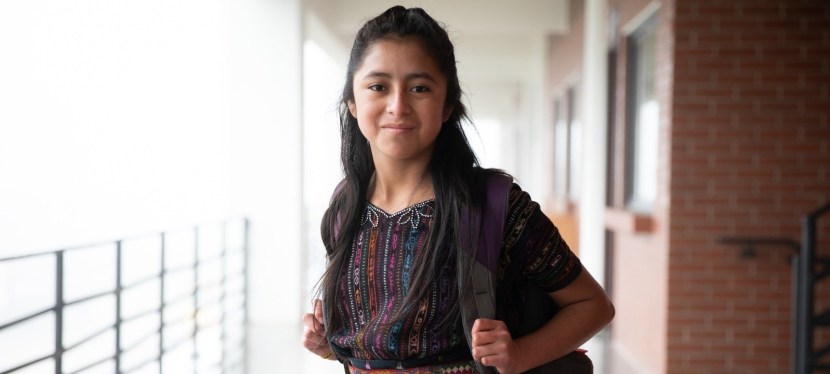
The first is a one-minute video of Vilma Saloj, a young Mayan woman born into poverty in rural Guatemala, giving an empowered and moving speech at the MAIA Impact School annual event in Denver, CO. This video is worth every second of your time spent watching it. For context, most Mayan girls in rural Guatemala are lucky to make it to 6th grade and to learn limited Spanish. Vilma is seen here presenting like a pro, in English, with a bold vision of being part of systemic change in her country. #maiaimpact #wearethesolution

The second is also only one-minute long and features Kendra Smith: kickboxer, stuntwoman, former pro-wrestler, personal trainer, and athlete. She travels to Guatemala every year to teach self-defense and kickboxing to the girl pioneers at the MAIA Impact School. She is currently working on a program to incorporate self-defense as a regular part of the school’s curriculum. #warriors #girlpower #stronggirlsstrongwomen #maiaimpact

Those are my messages of hope and joy for today. I’ll close with a poem written by MAIA 7th grader Wendy Palax:

Indigenous Woman

Fighter and entrepreneur

Strong and capable,

Indigenous woman from the land,

Brave and bold.


You are like the phoenix that rises

From her ashes,

Your traditions

Are wealth.


With your gown of beautiful colors,

Weaved with the hands of your ancestors

Showing a warrior woman

Dancing to the beat of the marimba.


You fight for equality,

Shine among the nature,

Woman dedicated to culture,

Indigenous woman of my town.


You care for your traditions

For your customs

For your family

For your language

For your gown.


You love and care,

Have feelings

Of joy and emotions.

WE ARE THE SOLUTION

The End is also a Beginning, Right?

I find this time of year to be deeply contemplative.

Summer’s end. Back to school. It’s a time of transition and change. The days suddenly have more structure, the nights get ever shorter, darkness falls earlier and earlier. Eventually there will be a chill in the air and the leaves will start to change color. The trees will suddenly be adorned in vibrant oranges and yellows and reds. And then one day the leaves will all fall.

But I am getting ahead of myself. It’s only early September, after all! Labor Day weekend marks the end of summer officially, but it’s not really over. The weather, at least, will stay nice for a little longer. The world doesn’t end just because school starts again.

It’s just that this time of year is full of so many emotions: anticipating seeing friends again, meeting new teachers, establishing routines, starting up with homework and sports and instruments that have gathered dust all summer. I feel both ebullient and completely overwhelmed. I’m not even the one in school, but there’s a sense of frenzy in the air, as well as a sadness and letting go. This fall is exceptionally poignant. Our beloved Fancy Nancy’s birthday is today. As with summer, and all things beloved, she slipped away too fast. Try as I might, I can’t hold on. My mind keeps searching for her, even eight months later. I am still confused about what happened and where she is. I still wonder when I will see her again.

Similarly, no matter how hard I try to hold onto summer, no matter how hard I try to slow down and absorb it, to make the most of it, to bask in its warmth and freedom, it evaporates ever faster before my very eyes and slips away. I try to hold on, but, like kernels of sand on the beach, it slips through my fingers and becomes ever harder to grasp the harder I hold. I can’t stop the long, glorious, unstructured days from slipping away.

I should note, lest I wax too philosophical and you begin to think that this summer has been one long fulfilling moment, that I recently sent a couple of editors a draft essay I wrote entitled “Losing My Mind(fulness) One Summer Day at a Time.” I’ll publish it here eventually, but I mention it to reassure you that it’s not all roses and summer definitely has its moments that absolutely, 100% drag.

Nonetheless, with its bumps and boredom and sunburns and seriously near-constant interruptions, when it comes to an end, it’s still hard to let go. There is a sheen to hindsight and to time-limited moments. There is an allure to remembering only the good times. And summer is full of good times.

So, what to do?

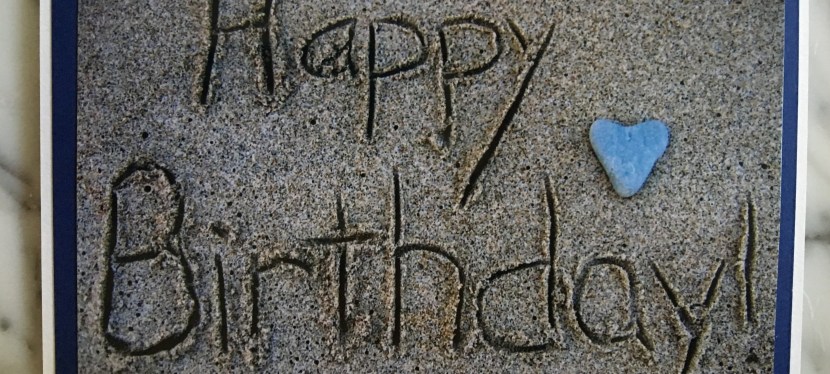
What if the beauty is the sensation of the sand slipping through your fingers? What if the beauty is in the awareness that it is all fleeting, in the good fortune of having another day? What if the beauty is in the pain, of knowing how much you loved and having to let go? What if the beauty is in the sheer joy of doing a cartwheel on the beach for your birthday, no matter your age? That’s what Nancy would do, and that’s what she always did:

What if the beauty is in celebrating all the memories? Because that’s what we’ve got. Tons and tons of wonderful memories, of summer and of Nancy. And it is beautiful.

Happy birthday, Nancy! You are missed, but you continue to teach me through the example of how you lived your life. I long to see your smile again, to feel your hug, and I miss how special you made me feel. I did a cartwheel on the beach for you, but I may have hurt my neck 😊.

More importantly, I try to see joy in all the little things every single day, like you did. I try to push on when I feel melancholic, a sadness and loneliness and loss creeping up on me, when some mornings I would rather just hide under the covers and skip out on all my responsibilities. I know you would rather see us all living and enjoying our lives, so we have lots to report to you when we meet again!

You lived your life as if it were an adventure every day, curious and compassionate and caring, with an open mind and an open heart. That’s the trick, isn’t it? Life IS the adventure. All of it. The mundane and the magical. The sandcastle and the tide that washes it away. Duck cairns out of scattered rocks. Beauty out of stumbling stones. The difficult endings and the new beginnings.


A Meaningful Solution for our Southern Border

I wrote a letter to the editor of the New York Times last month in response to a series of articles Nick Kristoff had published about Central America. It wasn’t chosen for publication there, but, hey, I can publish it here! It’s still relevant, perhaps ever more so.

The problems are clear, manifold and complex.  But so is at least one solution. If we double down on education and create meaningful opportunity, the trajectory changes. Having hope matters. This is a human truth, and it transcends boundaries. A robust education creates hope, opportunity, and a path forward, both in the U.S. and elsewhere. This path requires investment, leadership, humility, and commitment. But this path also produces long-term results, in addition to being one of the most all-encompassing and humane.

June 6, 2019

Dear Mr. Feyer/To the Editor:

Re: “Food Doesn’t Grow Here Anymore. That’s Why I Would Send My Son North” (Opinion, June 5)

Mr. Kristof’s column highlights the conundrum of the immigration crisis on our southern border. In communities without opportunity, where climate change has destroyed harvests and survival is a daily struggle, what choice do people have but to leave?

Antagonizing immigrants at the border isn’t going to change the hopelessness they are fleeing. Creating real and meaningful opportunities for their future does. A robust education is a fundamental pathway toward this goal. The MAIA Impact School, a secondary school for indigenous girls in Solola, Guatemala, is an exemplar of best practices in this area.

MAIA, led by Mayan women, provides not only academic opportunity, but also the mentoring and support students and their families need to navigate this unfamiliar road. Imagine the trickle-down impacts when empowered, educated girls become empowered, educated mothers. Educating girls and family planning are two of the top ten solutions to climate change, according to a study by Project Drawdown. Education provides a transformative solution to systemic poverty and climate change, expanding generationally like the roots of a strong tree.

Sincerely….

That’s what I wanted the New York Times to share. Bold, audacious, selfless solutions.

For more information and recent perspectives on Guatemala, below are links to articles from a range of sources:

https://www.forbes.com/sites/stuartanderson/2019/07/15/a-safe-third-country-agreement-with-guatemala-could-be-dangerous/amp/?fbclid=IwAR1jCK8fA0YyyKa3lbm4oTc8SjVEUrezYfDx0S5_oRWrhJh5jSn6g26QIig

https://brightthemag.com/in-rural-guatemala-this-school-make-the-girl-effect-happen-kipp-maia-education-cbeabb429863

https://www.yesmagazine.org/peace-justice/guatemala-deployment-united-states-migrants-asylum-20190613

https://www.bbc.com/news/world-latin-america-49134544

https://www.wsj.com/articles/the-guatemalan-city-fueling-the-migrant-exodus-to-america-11563738141

https://www.newyorker.com/news/dispatch/how-climate-change-is-fuelling-the-us-border-crisis

And because it’s an awesome moment, here is a video of a band greeting people at the arrivals terminal in the Guatemala City airport.


Millinocket, Marathons, Momentum, and Moose

“Like a pebble tossed into still water.” This is how Gary Allen, the man behind the Millinocket Marathon and a Half, likens his efforts to create ripple effects of ever-widening positive impact and change. For background, check out this post about Millinocket and the marathon from November – Have you ever heard of the Magic City?

Here we are in August 2019, and while it’s hard to believe that New England could be cold at anytime – ever – from the vantage point of this summer’s heat waves, already Millinocket is on the mind and momentum is building for the December 2019 event. Check out singer/songwriter Jenn Schott’s tribute to the Millinocket marathon:

Another cool new fundraising initiative for the region is the virtual Acadia to Katahdin race that starts August 2 (you have until December 31 to log all 328.5 miles). More info on that here.

Interested in running the actual Marathon or Half on December 7, 2019? Sign up here. Remember, there is no registration fee – this is a race designed around showing up and giving back!

The idea of this marathon was bold, audacious, and selfless. The result has been large, broad ripples more like those that result from water cascading off a moose’s antlers as it lifts its head from the pond than from a small pebble.

Moose and Mountain
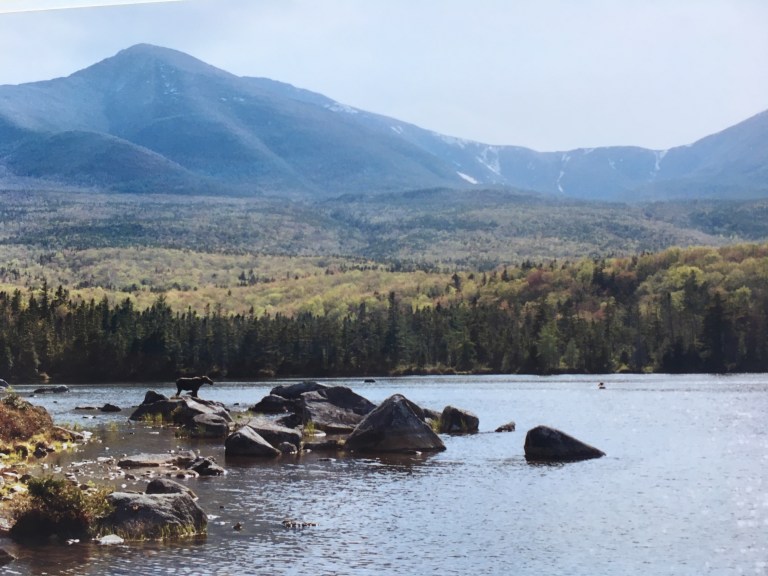
Gratuitous moose pictures, with the majestic Katahdin.

Bold. Audacious. Selfless. I’ll circle back to those themes soon.

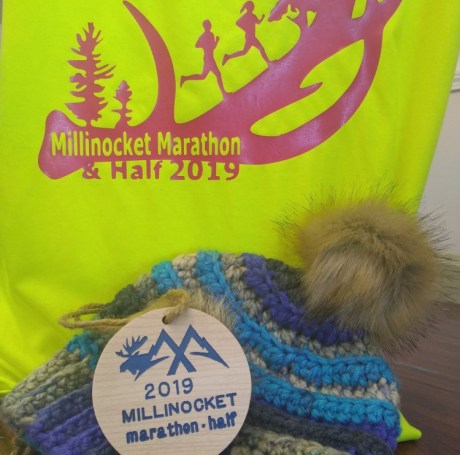
Marathon Hat and Logo


Anaya Tipnis and Access to the American Dream

Independence and self-reliance are two of the most prized American values. We are raised in a culture where individualism is paramount. From an early age we are told stories about how anything is possible if you work hard enough. We are brought up on images of settlers coming to this country seeking freedom from the hierarchy of European society, and then of pioneers bravely striking out for new territories in the west in search of the American Dream.

One is left with the impression that success, then as now, is all bootstraps and determination, and that opportunity is equitably available to all. Facebook and Instagram reflect only the polished finished product. Magazine and newspaper articles tell tales of overnight success stories that seemingly truly happen overnight. In reality, overnight success is often many years in the making. What “got you there” doesn’t make for pretty pictures. The seemingly easy wins, the quick pivot and big idea that gains traction, the rags to riches are built on a lifetime of relationship and skill building.

Working hard matters. But, when you dig deeper into success stories, there is also usually someone in the wings – a mentor, a teacher, a parent, someone or an accumulation of someones – providing guidance and support along the way. The notion of instant success in a complete vacuum is folklore. Is there opportunity to be found by people of all stripes and backgrounds in the U.S.? Absolutely. Do some have advantages over others in the pursuit of these opportunities? 100%.

I’ve been reflecting recently on the enduring impact and importance of a good education. Education creates a solid foundation, a springboard that expands one’s options and from which to make choices in the future. There is incredible privilege that comes with that, from literacy and critical thinking skills that enhance one’s basic ability to function in the world, to the confidence to handle new situations, to a broad professional network and understanding of professional norms. As a child, my siblings and I were given the space, the support, and our parents’ disciplined example when it came to pursuing our studies with vigor and without distraction. Going to college wasn’t a question; it was a priority. I wasn’t aware at the time of the enormous and enduring gift I was being given. Only now do I realize more fully how the core fundamentals of my education – literacy and grammar, critical thinking and data analysis, clean writing, and a challenging of one’s preconceptions – inform who I am and what I am capable of today.

In this context, I think about the MAIA Impact School in Guatemala and how education is poised to change the trajectory of the girl pioneers’ lives. Notably, part of the curriculum at the Impact School includes mentorship. Mentorship bridges the gap between the students’ family and cultural history and a new future of expanded possibility. Working hard and the means to afford an education are obviously critical pieces. But so is having a support system in place to help navigate unfamiliar terrain.

In the United States, the opportunity to attend school exists more broadly for all. Education through high school is both a right and a requirement, though educational opportunity and outcomes are widely variable and often influenced by geography and wealth. The leap to college for low-income and first-generation college students is vast. In some ways, because of the traditional values we are raised on that espouse hard work, independence, and self-reliance, the gap is even wider because it isn’t acknowledged, as though the unique struggles of first-time college-bound students don’t or shouldn’t exist.

Working hard and financial means are only two components of successful outcomes. To pretend otherwise is to be disingenuous about one’s own experience. For students who are trying to break the mold, to chart a new course, the demands are even more rigorous and the reality more isolating. The notion that working harder will remove all barriers is a myth. The Anaya Tipnis Scholarship Fund recognized that, “a high percentage of [low-income and first-generation] students drop out of college for reasons other than solely financial, from lacking a familial support system to an adverse academic environment. While many organizations help high school students secure college admissions, almost none provide vital mentorship for transitioning to and succeeding in higher education.”  They have made it their mission to help first-time college students by closing both these financial and mentorship gaps. In partnership with Upper Bound, Upper Bound Math and Science, TRIO, and Urban Scholars, the Anaya Tipnis Scholarship Fund offers:

●  Cash awards of $3,000 to each accepted student;

●  One-on-one mentorships tailored to each student’s individual needs;

●  Internship opportunities at local institutions and/or organizations.

The award recipients for 2018/19 and 2019/20 are shown in the following picture. You can read more about their individual stories here!

PHOTO-2019-07-26-21-38-44
Anaya Tipnis Scholarship Awardees

This is hope in action. This fund honors Anaya and her life wish. It bridges the gap to achieving the American Dream for hard-working and driven scholars, attempting to level the playing field by creating more equitable access to, and outcomes in, higher education. I’ve said it before and I’ll say it again – Community and Connections Count. That concept may not be as prized or acknowledged as some traditional American values, but it is a more genuine and real one. No one truly goes it alone. And no one should have to.

The Scholarship Fund’s Annual event and award ceremony will take place this year on August 20, 2019, in Needham, Massachusetts. If you are interested in attending or contributing, RSVP through their website at: https://anayafoundation.org/index.php/events

Congratulations and good luck, scholars!!!


In the Shadow of a Blood Moon

I used to earn $50 per week.

Accommodation was provided as part of my job, and we pooled our resources to purchase food in a family meal plan. I lived in T2R9 in the unorganized territories* of Maine at the time, a one hour drive to the closest town. We made one trip to town per week, family-style in a lumbering repurposed Suburban. The town trip consisted of food shopping (family plan), collecting and sending mail, doing laundry at the laundromat, and using the payphone – yes, for real, the payphone. If you’ve never seen one, I included a picture here. There weren’t a ton of extras to spend money on in Millinocket, ME, which suited me just fine since I didn’t have any money to spend anyway. Somehow I managed to break even each week.

Well, every week except for the week that I got my period. Tampons and pads weren’t part of the family plan. And, guess what? They are expensive and, also, essential. The other women on the crew lamented the same issue – every month we slid further into debt. And there was really nothing we could do about it.

You would think that this experience might have made me wonder as I traveled in developing countries how women there handled this issue. I guess I assumed there was some practice handed down woman to girl about feminine hygiene and how female bodies work. I often assumed other cultures were more evolved and open than my own close-lipped, grin and bear it Irish-Catholic heritage. I made those assumptions and didn’t think much more about it.

It turns out, there isn’t a good practice in most developing countries for handling basic health education on this issue. In many countries, girls miss school, are sent to huts together to wait out their “time,” or sit on a piece of cardboard alone in a room until it’s over. Every single month. I only figured this out recently when one of the women I was traveling with in Guatemala brought kits from Days for Girls to distribute to the students at the MAIA Impact School.

Do you understand how vulnerable a group of girls in a hut alone could be? Or how much school is missed when this happens every month? Or, simply, how unhygienic it is not to have a means to deal with this, or a cultural support system to explain why it is happening and what it means? Does teenage pregnancy in these circumstances, inequitable educational attainment between girls and boys, or high maternal death rates really come as a surprise in a world where this completely natural and necessary process isn’t discussed, in many cases is feared, where tampons, pads or pharmacies don’t exist, and where earning $50 per week is more the norm than the aberration?

To begin to address this problem and solve the many ancillary issues it creates, Days for Girls (DfG) developed reusable sanitary supply kits that are hand-made in the United States by individuals and groups committed to creating change for these girls. Sewing groups gather regularly or sewists work independently to make pads that can be discreetly hung on a washing line to dry and that last for approximately three years. The design has evolved over time – 28 different iterations to date – into an effective, durable, reliable and environmentally friendly product. Over the years, Days for Girls has earned the trust of village elders and other decision-makers, winning some semblance of freedom for girls worldwide.

Wisely, these kits aren’t just distributed to anyone who asks. Days for Girls requires the person distributing them to be trained and to teach the recipients about how to use the pads and care for them properly, but also about what is happening with their bodies and why. Kits go where people involved with Days for Girls travel. The number of kits available depends on how many each chapter is able to produce.

My local Days for Girls chapter sent this recent status update: “212 kits will go to Uganda in a week, to help girls stay in school. 10 kits will head to Guatemala in July as a pilot project. 10 more travel to Zambia soon. The last 20 will be donated to Days for Girls’ refugee project. They will be taking 11,000 kits to each of three refugee camps. Imagine fleeing your homeland and arriving somewhere unfamiliar, then living in a camp with thousands of other people, none of whom have access to sanitary supplies. The conditions under which many others live is challenging, to say the least. We hope to relieve some of the misery. The kits have been extremely well-received in the camps in which they have been distributed in small numbers in the past. We will also be sending some kits to Ghana in December.”

I am astonished both by the thoughtfulness and impact of this program as well as by my own ignorance. The provision of these basic supplies has an immense effect on a girl’s well-being, dignity, and potential. Globally, countries that have greater levels of gender equality are safer and more prosperous (World Economic Forum). Educating girls is also among the top forms of combating climate change (The Unsung Solution to Climate Change). In Guatemala specifically, “if women had equal economic participation, in 10 years the Guatemalan GDP would grow by 46%, or $40 billion, or $2,460 per person. In a country with an average per capita income of $4,060, that’s a big deal” (MAIA Impact School). Reducing the number of school days that girls miss matters enormously. This is a really big deal.

To follow are a couple of examples of videos from the Days for Girls website that more fully display the results of providing these basic necessities alongside health education. #daysforgirls #maiaimpact #girlsforgirls.bracelets

*Side note – I know it says unorganized, and I get now what it means (no local, incorporated municipal government – essentially vast swaths of territory with very few human beings), but in my early days in T2R9 I kept thinking the word was “disorganized.” I remember thinking what an odd way that was to describe a place, but, fine, own it, you disorganized territories. Whoever heard of moose and black bear getting organized anyway. That may just be me and it may only truly be funny when you’ve been living in the woods with the same 8 people for months on end, but it still cracks me up.

Update – check out legislation that just passed in New Hampshire! Lack of access to feminine hygiene products should never keep girls out of school – in the US or anywhere else!

Article: https://www.huffpost.com/entry/new-hampshire-passes-bill-requiring-free-menstrual-products-in-all-public-schools_n_5d31bd0de4b0419fd32bd119 

One Year Later

A couple of weeks ago, a good friend commented that she couldn’t figure out how I have time for everything I am juggling currently. From trying to keep up with my writing to spreading the word about the MAIA Impact School to keeping things together at work and at home, I am busy with a capital B. This got me thinking – where did the time and head space for all of this come from suddenly? Ostensibly all of my responsibilities are the same, so what changed?

I spent some time reflecting on this question and I’ve come up with a couple thoughts. One factor, surely, is that my kids are older. With greater self-sufficiency on their part, I have a longer leash. The time saved by them being able to apply their own sunscreen, tie their own shoes, or put on their own snowsuits is immeasurable. Well, okay, it’s probably 5 minutes each day, but those are some of the more tedious daily demands of motherhood so these milestones matter.

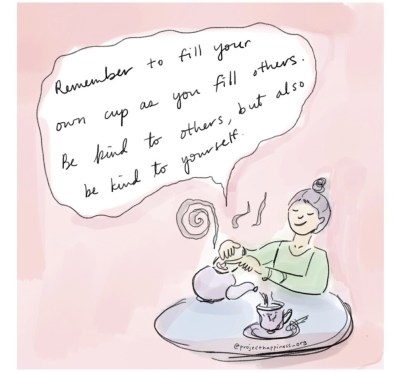
The term “labor of love” also keeps popping into my head. While all of my current endeavors involve work, time, and sacrifice, they also fill my cup. My life is purpose- and passion-filled, and that’s energizing. I used to have a real problem saying “no” so I devoted a lot of time and energy to activities and jobs that left me feeling depleted – or downright stupid and worthless. I am just slightly more strategic about how I spend my time these days. When time becomes a precious commodity, even the most self-sacrificial person learns to guard it more wisely. While I am still horrible at saying “no,” often lapsing into its almost worse cousin “maybe,” I do appear to finally be learning a modicum of boundary setting. Ahhh, your 40’s are good for something!

Fill Your Cup

All that is meaningful and certainly adds up. However, I also lost my aunt this year, the amazing Fancy Nancy, and that sent me into an emotional morasse for a bit. The start of this calendar year I found myself sluggishly crawling through the days after she passed away, trying to get my head around the idea that this woman who was my guiding light and kindred spirit was suddenly gone. I quite honestly still can’t believe it. But these days when I feel scared or uncertain or sad, I can hear her faint but clear voice whispering, “Go. Live!” I think that she has made me braver and more determined.

And then there’s the fact that we moved our mom into a memory care facility last June. As the anniversary of that absolutely gut-wrenching decision and day came and went, I  marveled at what a difference a year can make. I knew as my mom’s primary and long distance caregiver that I was working hard on her behalf, and I was aware that her well-being took up a huge amount of space in my life, but until she was settled into a care home I had no idea exactly how much.

Initially, the interventions necessary for my mom to maintain a mostly independent life were relatively minimal. Over time, as the course of her Alzheimers progressed, though, I spent more and more time triaging issues: making health care decisions, as well doctor and dentist appointments; ensuring communication about appointment outcomes and necessary follow up; staying on top of prescription medications; acting in an HR capacity hiring, replacing, and advising aides; organizing payroll and the weekly schedule; paying bills; sorting through clothes that no longer fit and paperwork that was piling up in her office; fielding calls from her aides and her friends with questions, observations, or concerns, and then doing the research to determine if what we were seeing was to be expected and what to do about it. That’s just a sample. Countless other little things would come up to turn an otherwise uneventful day into a fire drill.

For a while, it was all worth it. And then last spring after a visit to see her, I got the distinct sensation that we had reached the zone beyond the peak of the bell curve. My efforts to prop up my mom’s faux independence were less and less noticed by her and more and more consuming for me. I spent incredible amounts of time working on my mom’s behalf, but had almost no time to actually spend with her. After some intense reflection, I realized that if she had perspective on the situation, she wouldn’t want me to feel so sad and torn between my life with my young family and my responsibility for her life hundreds of miles away. And with that knowledge, I began to visit, and eventually chose, a care home for her.

I’ll tell you what. That process, culminating in leaving her for her first night there, was utter hell. I literally cried into my dinner of a bowl of ice cream accompanied by a glass of wine the day I moved her in. I then put myself to bed early, like an overtired, weepy child, both missing my mom as I grieved this moment in our lives and feeling overwhelmed by the responsibility for her happiness. Rationally, I know that’s crazy – you can’t make other people happy – but I still wish I could sometimes.

Heschel quote

So here we are one year later. She is in fact perfectly happy. I don’t know that she has had one unhappy day since she moved to memory care. Her life exists in this exact moment. There is no past to dwell on, no ruminating about the future. There is just right now for her, and she seems to be quite amused by it. She knows she is loved, by the staff at her home as well as her family, and I think that’s what she always wanted. She has always been guided by what is in her heart, and that emotional clarity remains.

For me, I am my mom’s daughter again, not her business – heck LIFE – manager. It is one of my greatest joys in this mostly horrible Alzheimer’s journey to have my mom close to me again. She doesn’t know my name, but she knows I am hers (maybe her sister, maybe a friend, but sometimes “her little girl”). She lights up when I walk into the room and trusts me absolutely. We go for walks, and we have lunch. Sometimes I just stop in for 15 minutes to check on her. She comforts me when I cry, not understanding at all that I cry for her, for who she was.

Our mom always wanted us to be fulfilled and happy, and whatever our passions were became hers. She championed our efforts and was our biggest fan – always. One year later, I have achieved more balance and found greater purpose. One year later, I spend less time applying sunscreen to others, and more time with my mom. While I am still my mom’s biggest advocate and primary caregiver, it’s not all-consuming. This unexpected time in my life and space in my mind have allowed in more joy and light. If my mom could understand, I can visualize the smile that would break across her face and how her chest would swell in satisfaction. I am doing the best I can with the cards I’ve been dealt, and playing them to the best of my ability. Just like she and her sister taught me. Go! Live!

What if I fall quote


The View from a Chicken Bus

This is an exciting day! My essay, The View from a Chicken Bus, was published today in Sky Island Journal, an online magazine!!!

The View from a Chicken Bus

Meg Ounsworth Steere

The chicken bus dives and weaves along the tight switchbacks, sandwiched between lushly green, undulating volcanic cliffs to one side and a vast, deep cavern open to the expansive lake below on the other. The retired yellow school bus migrated from the United States to rural Guatemala. Here it was given new life and transformed with wild paint, flashing lights, and blaring music into a chicken bus, a form of public transit.

Outside the dirty bus window, an overwhelming cacophony for the senses unfolds – the scenic natural beauty; the chaotic, crowded, narrow road; scents of cooking, burning wood, exhaust; sounds of honking, birds chirping, dogs yapping. Overloaded motorbikes swerve in and out of traffic carrying 2, 3, 4 people. Small 1990s pickup trucks, their beds full of standing riders, scream downhill inches away.

In the smallest openings on the roadside, tourists stop for pictures of waterfalls or the lake and volcanoes. Opportunistic market stands pop-up, their purveyors – women in their village’s colorful and ornately woven dress – mixing, patting, and baking tortillas, frijoles warming and ready to sell.

The bus is crowded, the air stale and warm. It winds its way up from the rural, lakeside villages to the hillsides around Sololá. Passengers, mainly rural Mayans, call to the driver for stops along the way. The men wear tattered jeans; t-shirts or lightweight button downs; a cowboy or baseball hat; work boots. The women are dressed in traditional Mayan clothing – a short-sleeved cotton blouse with brightly colored geometric designs; a thick belt; a calf-length skirt embellished with a colorful, embroidered band; simple pumps, flats, or sandals.

One passenger stands out from the rest as she calls to the driver to stop near the entrance to a large, modern school. The driver and other passengers look on, mystified about this place and this teenage girl, both standing out uniquely in the Sololá landscape: unusual, unfamiliar, a vision for what could be, but also a strange curiosity and maybe something to fear.

The girl walks the uneven, rocky dirt path along the road toward the school gates, clearly uncomfortable that the eyes of every passenger, neighbor, and bystander are boring into her back, their questions, doubts, and hopes piling up on her small shoulders. She sidesteps sewer water trickling down the road, brushes the dust off her shoes, and turns onto the paved drive to the school entrance.

In rural Guatemala, it is rare for anyone to complete more than sixth grade. Most families are generationally poor, stagnated and mired in a life of day-to-day survival by the impacts of racism, gender inequality, insufficient education or health care, and limited economic opportunities beyond what they already know – farming. The harvests have become less reliable with unpredictable and more volatile weather. Being Mayan comes with traditions and cultural norms, and also a history of marginalization and subjugation. During the 36-year civil war that ended in 1996, 93% of those killed were indigenous. About 50% of the general population, but 79% of the indigenous population, lives below the poverty line.

In rural Guatemala, the standard architecture features single- or two-story buildings, with concrete siding. The rusted and battered tin roofs are supported by gnarled, roughly hewn wood beams. The colorful exterior paint, if not the concrete itself, is chipped and worn. Buildings are stacked up the hillsides, one on top of the other, seemingly supporting each other as they claw into the mountainside, grasping to hold on. Roads vary from dirt paths cut into the hillsides to cobblestones or pocked asphalt.

Each year survival here becomes more difficult. Out of sheer desperation and hopelessness, some attempt to migrate north, leaving Guatemala and their history and families. For many, the prospect of leaving all that is familiar, walking all those miles towards an antagonistic and uncertain future, doesn’t seem like a much better option than staying and trying to carry on. Something fundamental must change for survival to be tenable here.

Enter this school and this unique girl. The sign on the school’s brick wall proclaims “MAIA, mujer empoderada…un impacto infinito” (empowered woman…infinite impact). Empowered, indigenous, poor, rural Guatemalan girls. I can’t help but stare and wonder. Historically girls here have been taught to be quiet; that making eye contact is disrespectful; that they don’t need an education. On average, women in Guatemala, especially Mayan women, only complete 3.5 years of school. Narrow options and limited health information result in Guatemala’s top ranking for the highest fertility rate and youngest population in all of Latin America.

How valuable is this young girl, full of talent, courage, and a desire to succeed? How powerful is the concept that by providing educational opportunity and modern learning tools, alongside mentorship and support for the students and their families, real, systemic change could trickle down and spread roots generationally? How courageous must these girls and their families be?

Every day these families make a conscious choice not to shrink back. Every day they bravely face the ingrained, negative messages that say that girls don’t matter; that they are silly and stupid, unworthy and worthless. These girls must sense their differentness, an isolating notion that can seep in and slowly ebb away at their drive and their souls if they let it. Their path is long and challenging. It takes the power of a sprinter and the endurance of a marathoner. They face the academic and emotional challenges of any middle or high schooler, but also the burden of being the first to break the status quo, push the boundaries of cultural norms, and change the narrative for themselves, their families, and their country.

The dense clouds overhead release suddenly, the splattering rain interrupting my reverie and fogging the view. The bus driver pulls the door handle, hinges squeaking, and the bus roars into gear. Through the rain-streaked window I see the girl cover her head and rush to catch up with her classmates. Together they pass through the school gates, a small but determined caravan of hope.

Click here to see the full issue: https://www.skyislandjournal.com/issues#/issue-9-summer2019/


On Becoming Powerful and Empowered

I have been writing a lot recently about the MAIA Impact School and my fight for girls’ education (rights, life – hope!) in Guatemala. Today I am bringing empowerment Stateside.

A couple of years ago, my Rheumatologist recommended adding weight-bearing exercise to my routine. Instead of doing what normal people do, you know, lift some weights here and there at the gym, maybe do the circuit equipment, I joined CrossFit Launchpad (CFLP). My Rheumatologist’s jaw dropped when I told her that. It was pretty funny, actually. I could see the wheels turning in her head, “Crossfit? Really? Do you always have to push the outside edge with this disease?” Why, yes, yes I do.

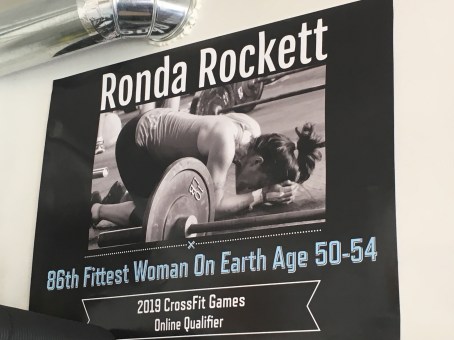
You see, I know myself, and it’s a fact that I will not pick up a weight unless I am instructed to do so. Accountability counts. Plus, the gym owner, Ronda Rockett, is a Primary Care Physician, so she knows all about body mechanics and physiology. When I told her that I have RA I felt safer knowing that she knew exactly what that meant. Plus, she seriously knows about health and fitness.

Crossfit Coach
Crossfit Coach and Athlete Ronda Rockett

Needless to say, I started showing up to these classes, at first cutting workouts in half and still hobbling around on pulled and tired muscles for days afterwards. I have been going long enough now that not much fazes me, the lingo all sounds familiar, and I have watched our crossfit community grow. The other day it struck me as I watched people moving around the gym, stretching and warming up, gearing up for the workout, asking questions of the coach – this small gym is a microcosm of society, a seemingly ever more rare reflection of what an inclusive, supportive, caring community looks like. The idea is to work hard personally, but not to leave anyone behind (even the family dog).

This tenet applies to everyone who comes to the gym – men, women, and children. People join CFLP for a whole range of reasons, including some who haven’t exercised in a long time; who weren’t “athletes”; who have weight they want to lose that just won’t budge or health issues they can’t shake and are sick of not feeling well. I notice them shyly standing in the corner, hoping to blend into the walls and go unnoticed, deferentially allowing others to go first, reviewing the WOD (Workout of the Day) saying things like, “I don’t think I can do this.” The weekly schedule reflects the scaled workouts and WOD modifications designed for them. I see how hard they work, and how it just wipes them out, sweaty, panting, red-faced, and exhausted at the end.

Over time, I witness a slow evolution brought about by hard work and perseverance. Not only are these budding athletes literally becoming more powerful by lifting ever heavier weights or accomplishing more sets in a workout, but they are also becoming more empowered. Being part of this community ignites a light within. Here, a strong core means much more than six-pack abs – it’s about your spirit and celebrating everything that makes you you. Given the right support and encouragement, it turns out you can do anything – in the gym and outside of it.

Scientific studies suggest that strong, healthy, active parents raise strong, healthy, active kids. According to Dr. Christine Carter, “the first step in the science of raising happy kids is to actually be happy yourself.” Check out this Time magazine article from 2014 about how to raise happy kids (10 steps backed by science). Here’s the summary list:

  1. Get Happy Yourself
  2. Teach Them To Build Relationships
  3. Expect Effort, Not Perfection
  4. Teach Optimism
  5. Teach Emotional Intelligence
  6. Form Happiness Habits
  7. Teach Self-Discipline
  8. More Playtime
  9. Rig Their Environment For Happiness
  10. Eat Dinner Together

At CFLP, Ronda and the other coaches encourage us beyond the amount of weight we can lift. We talk about setting (achievable) goals, forming new habits, nutrition and sitting down for a healthy meal as a family (not in front of the TV!), working hard, and gratitude. We are creating new pathways for ourselves, and also setting an example for our children. We are modeling what it means to be healthy and strong and to expect effort, but not perfection. We are also teaching them about building relationships and how a supportive and caring community behaves. I’ve said it before and I’ll say it again – no one goes it alone. Everyone needs support and encouragement somewhere along the line.

The other day, we finished the prescribed workout with a little time to spare. One member, the one guy in the room that class, suggested that we add on a little extra to finish out the time. This particular athlete had finished the workout well before the rest of us, and then stood there patiently swigging his water, cheering for each of us, and waiting for us to finish. When the coach asked him what he wanted to do for extra work, he responded, “whatever the team wants.” This is an attitude to emulate. Imagine our world if everyone strove to lift others up versus pushing them down; where unity was sought over division, support given versus criticism; where we meet face to face, put the screens away (for an hour!), and cheer hardest for the one who is coming in last; where our common humanity – our community – is celebrated and flourishes. Go team!

“It is not the critic who counts; not the man who points out how the strong man stumbles, or where the doer of deeds could have done them better. The credit belongs to the man who is actually in the arena, whose face is marred by dust and sweat and blood; who strives valiantly; who errs, who comes short again and again, because there is no effort without error and shortcoming; but who does actually strive to do the deeds; who spends himself in a worthy cause; who at the best knows in the end the triumph of high achievement, and who at the worst, if he fails, at least fails while daring greatly.” ― Theodore Roosevelt

Continue checking my Resource page for updates, including curated articles related to my blog posts, life coaching references, holistic travel kits, and book recommendations!